
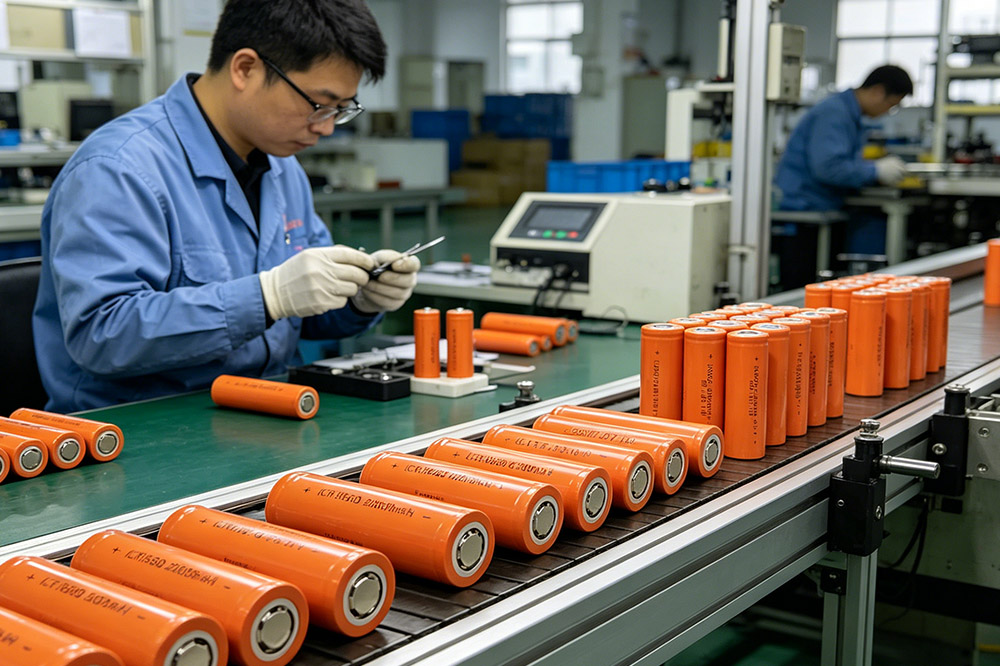
Introduction
If you’ve ever sourced 18650 batteries before, you already know this:
spec sheets don’t tell the whole story.
On paper, most suppliers look similar — same 3.7V, same 2200mAh, similar datasheets.
But once you place a bulk order, the differences start to show:
- Capacity inconsistency
- Shorter cycle life
- Delayed shipments
- Missing certifications
This is exactly why choosing the right supplier matters more than choosing the product itself.
In this guide, we’ll walk through what serious buyers actually check before committing to a bulk order of 18650 2200mAh batteries.
1. Cell Quality: Are You Getting Real Capacity?
Not all “2200mAh” batteries deliver 2200mAh.
In bulk supply, cells are often graded:
- Grade A → stable performance, consistent capacity
- Grade B → lower cost, but higher variation
What to ask your supplier:
- Is the capacity tested individually or by batch?
- What is the actual discharge performance?
- Do you provide test reports?
If a supplier avoids these questions, that’s already a signal.

2. Certifications: Can You Actually Ship These Batteries?
For international buyers, certifications are not optional.
At minimum, you should confirm:
- UN38.3 (transport safety)
- MSDS
- CE / RoHS (depending on market)
Without these:
- Your shipment may be delayed
- Or worse, rejected at customs
Reliable suppliers will have these ready — not “we can provide later”.
3. MOQ and Flexibility
MOQ (Minimum Order Quantity) is often where deals break.
Some manufacturers require:
- 10,000+ units per order
Others are more flexible, especially for:
- Trial orders
- New product testing
If you’re building a long-term supply chain, flexibility matters more than the lowest price.

4. OEM & Customization Capabilities
If you’re not just reselling, but integrating batteries into your product, this part is critical.
Look for suppliers that support:
- Custom labeling (your brand)
- Battery pack assembly
- Connector / wire customization
- Protection circuit integration
This is especially important for:
- Medical devices
- GPS trackers
- Industrial equipment
If a supplier only sells “standard cells” with no customization, they may not scale with your business.
5. Cycle Life & Stability
A battery is not judged by its first charge — but by its 300th.
Key questions:
- What is the cycle life at 80% capacity?
- How does it perform under high temperature?
- Is there consistency across batches?
A slightly cheaper battery that fails early will cost far more in the long run.
6. Lead Time & Production Capacity
Delays kill projects.
Ask clearly:
- What is the standard lead time?
- Do you hold stock or produce on order?
- What happens during peak season?
A reliable supplier should give realistic timelines — not just “fast delivery” promises.

7. Communication & Support
This is something most buyers only realize after problems happen.
Check:
- Response speed
- Technical understanding
- Willingness to solve issues
A supplier that replies fast before payment but disappears after is a risk.
8. Sample Testing Before Bulk Order
Never skip this step.
Before placing a large order:
- Request samples
- Run your own testing
- Verify performance in your actual application
This is the cheapest risk control you have.
Conclusion
Sourcing 18650 2200mAh batteries is not just about finding the lowest price.
It’s about finding a supplier that can deliver consistent quality, compliance, and long-term reliability.
If you take away one thing from this guide, it should be this:
Test first. Ask deeper questions. Don’t trust specs alone.
Related Products
-

12V 4400 mah Lithium ion 3S2P 18650 Battery Pack
-

18650 2000mAh 3.7 volt Lithium-ion Battery
-

18650 20V 3.0Ah Cordless Drill battery
-

18650 22.2V 7.8Ah 2600Mah 6S3P Rechargeable Battery Pack
-

18650 2600mAh Rechargeable Lithium-Ion Battery 3.7V
-

18650 3.7V 10Ah Li-Ion Power Battery Pack
-

18650 3.7V 3300mah Rechargeable Lithium ion Battery
-

18650 7S7P 24V 14Ah Lithium ion Electric Scooter Battery Pack
-

18650 battery 3.7V 1500mAh Lithium-Ion Battery
-

18650 Battery 3500 mah Rechargeable Battery Cells
-

18650 Electric Scooter 48V 13000mAh Lithium Battery
-

2600mAh 3S1P 11.1V 18650 Battery Packs
-

3.7V Li ion Rechargeable 3000mah 18650 Battery Cell
-

36V 5200mAh 10S2P 18650 Battery Pack
-

48v 4400mah 13S2P 18650 Rechargeable Battery Pack
-

7S2P 24V 18650 Lithium Battery Pack
-

Electric Scooter 36V 4400mAH 10S2P 18650 Battery Pack
-

ICR 18650 Battery 2200mah 3.7V
Leave a Reply