
If you’ve been sourcing batteries for solar setups for a while, you’ll notice one thing pretty quickly—
everyone claims their 12V 100Ah LiFePO4 battery is “high quality.”
On paper, most of them look almost identical. Same voltage, same capacity, similar cycle life claims.
But once you actually start using them in projects, the gap shows up fast.
Some hold up well after a year. Some start dropping capacity much earlier than expected.
And when you’re dealing with bulk orders, even a small inconsistency becomes a real headache.
So instead of repeating spec sheets, here’s a more practical way to look at it.
1. Don’t Start with Specs—Start with the Project
A lot of buyers jump straight into comparing numbers. That usually leads nowhere.
What matters more is how the battery is going to be used.
For example:
- Small off-grid solar kit → cycling is frequent, depth of discharge matters
- Backup power system → long standby, fewer cycles
- RV or mobile setup → space and weight become important
Same battery model, completely different priorities.
If your main use is solar storage, what you really care about is how stable it is after hundreds or thousands of cycles, not just what the spec sheet says on day one.
2. Cycle Life: Look Past the Number
You’ll often see big numbers thrown around—4000, 6000 cycles, sometimes even higher.
The real question is: under what conditions?
In actual use:
- High temperature shortens lifespan
- Deep discharge speeds up degradation
- Charging behavior affects consistency
I’ve seen batteries that claim high cycle life but start drifting after a few hundred cycles under load.
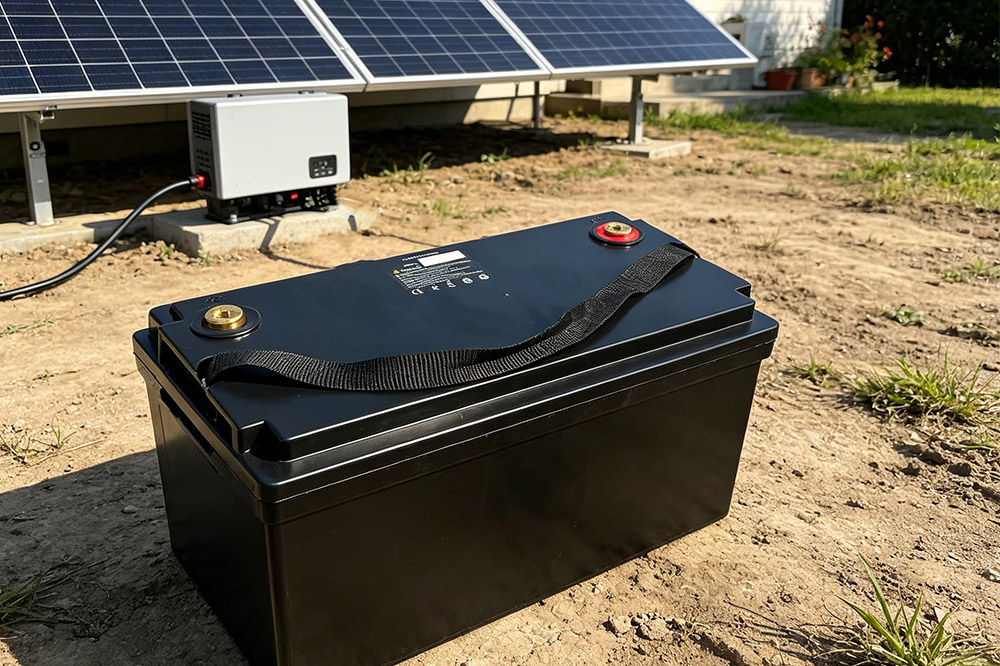
That’s why it’s worth looking at a complete 12V 100Ah LiFePO4 battery for solar applications
that’s designed around real usage, not just lab conditions.

3. The BMS Is Where Problems Usually Start
Most issues in the field don’t come from the cells first—they come from the BMS.
Typical problems include:
- Sudden shutdown under load
- Inconsistent balancing between cells
- Poor temperature protection
These aren’t things you’ll notice in the first week. They show up later, when systems are already deployed.
For bulk buyers, this matters a lot.
One unstable batch can turn into a chain of after-sales issues.
4. Consistency Is More Important Than “Best Performance”
This is something that only becomes obvious after handling multiple orders.
You don’t need one battery that performs great.
You need every battery in the shipment to behave the same.
Things to watch:
- Cell matching
- Voltage consistency
- Internal resistance variation
If those aren’t controlled well, you’ll start seeing:
- Uneven discharge
- Different aging speeds
- System imbalance
And those problems are much harder to fix after deployment.

5. Weight and Real Usable Capacity
Compared to older battery types, lithium already has clear advantages.
But within the same category, there are still differences.
Some batteries:
- Deliver close to full usable capacity
- Stay stable under continuous load
Others:
- Drop voltage faster
- Don’t perform well under higher current
This doesn’t always show up in product descriptions, but it shows up in real use.
6. OEM Capability Is Not Just “Nice to Have”
If you’re buying for resale or project integration, this part becomes important quickly.
You might need:
- Different terminal types
- Branding for your market
- Communication options for system integration
Working with a supplier that can actually adjust these things saves a lot of trouble later.
A standard off-the-shelf product works for testing.
But once you scale, flexibility starts to matter.
7. Price: What You Pay vs What It Costs You Later
It’s tempting to go with the lowest quote, especially on large orders.
But in practice, the cheaper option often shows its cost later:
- Higher failure rate
- More replacements
- More support time
When you factor those in, the “cheapest” option usually isn’t the most economical.

8. Things That Are Easy to Overlook
A few details that don’t always get enough attention:
- Packaging quality (important for shipping damage)
- Certification completeness (affects logistics)
- Lead time stability (important for planning)
These don’t show up in specs, but they affect your business directly.
Final Thoughts
The 12V 100Ah LiFePO4 battery is a solid choice for a wide range of solar applications. That part is clear.
What’s less obvious is how much variation there is between different suppliers offering “the same thing.”
If you’re buying for projects or resale, the focus should be on:
- Long-term consistency
- Stable performance under real conditions
- A supplier that can actually support your requirements
Getting those right usually matters more than chasing the highest spec number.
If you’re comparing options, it’s worth taking a closer look at a
12V 100Ah LiFePO4 battery designed for solar systems
Just to get a clearer idea of how a properly structured product should look beyond the datasheet.
按类别列出产品
-

12.8V 8Ah LiFePO4 Power Wall Battery
-

12V 100Ah LiFePO4 Solar Battery
-

18650 2200Mah 10S3P 36V 6.6Ah Electric Scooter Lithium Battery
-

18650 2600Mah 10S3P 36V 7.8ah Scooter Battery
-

18650 36V 5.2Ah Electric Bicyle Battery
-

1S2P 3.7V 1600mAh 14500 Lithium Battery
-

2000Mah 18650 Battery Cell 6Ah 36V Scooter Battery
-

21700 3.7V 4800mAh Rechargeable Lithium-Ion Battery
-

3.2V 280ah Lifepo4 Battery Cell
-

3.2V 320Ah LifePo4 Battery Cell
-

3.7V 21700 Rechargeable Lithium Battery Cells 5000mah
-

3.7V 5000mah 26650 Battery
-

32140 LiFePO4 Battery Cell 3.2V – 10000mAh / 15000mAh
-

32700 Lifepo4 3.2V 6000mah Lithium Battery
-

48V 15ah 720wh Ebike Battery
-

48V 200Ah LiFePO4 Battery Solar Power Wall
-

60V 21Ah 18650 16S7P E Bike Battery
-

Customized 48V-72V Triangle Ebike Lithium Battery Pack | 52V 30Ah
-

IP67 48V 100Ah Solid State LiFePO4 Battery
Leave a Reply