
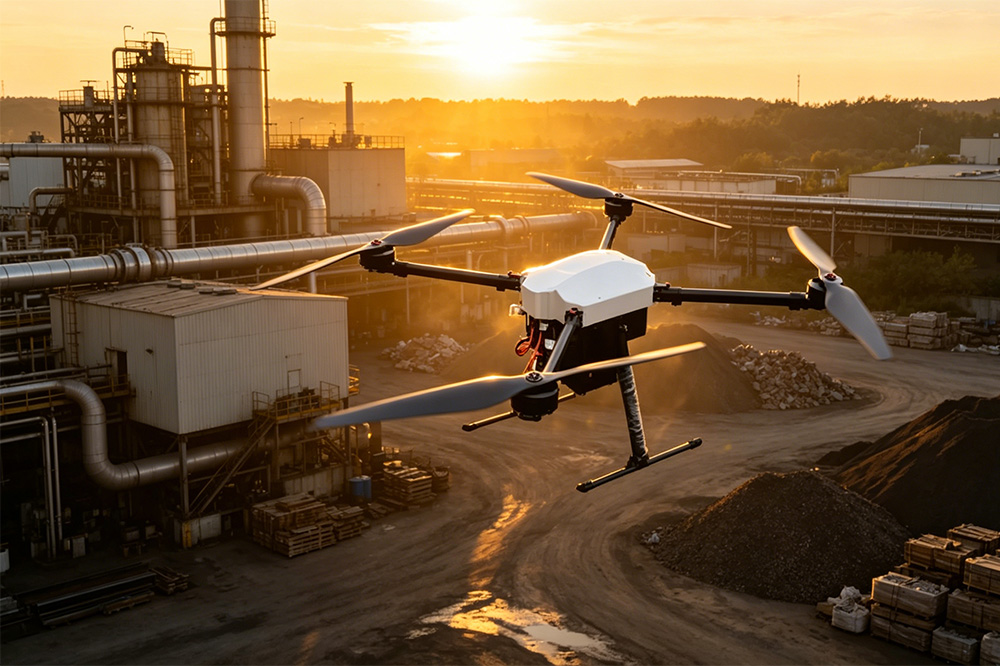
For many drone operators, longer flight time means more than convenience.
It affects how much ground can be covered in a single mission, how often batteries need to be replaced in the field, and how efficient the entire operation becomes.
That’s especially true in industries like:
- Mapping and surveying
- Powerline inspection
- Agriculture
- Pipeline monitoring
- Search and rescue
In these applications, endurance matters more than aggressive flight performance.
A drone that can stay airborne for 90 minutes instead of 35 minutes changes the economics of the mission completely.
That’s why long-endurance UAV design has become closely connected to battery technology.
Manufacturers developing long endurance UAV battery packs now focus heavily on energy density, weight reduction, and battery efficiency for professional drone platforms.UAV Battery
Why Flight Endurance Matters So Much in Industrial UAV Work
Consumer drone pilots often focus on speed or camera quality.
Industrial operators usually care about something else entirely:
How long the aircraft can stay in the air without interruption.
Every landing costs time.
Battery swaps slow down inspections, reduce survey efficiency, and increase operational complexity in remote areas.
For example:
- A mapping UAV covering farmland benefits from fewer takeoffs and landings
- Inspection drones flying powerline routes need stable long-distance performance
- Search-and-rescue teams cannot always stop mid-mission for battery replacement
Longer endurance reduces those problems.
That’s why battery selection has become one of the most important decisions in modern UAV system design.
Why Li-ion Batteries Dominate Long-Endurance UAVs
When endurance becomes the priority, Li-ion batteries usually outperform traditional LiPo packs.
The main reason is energy density.
Li-ion cells can store more energy relative to their weight, allowing drones to stay airborne longer without dramatically increasing battery mass.
That advantage becomes very noticeable in:
- Fixed-wing UAVs
- VTOL aircraft
- Long-range autonomous drones
- Inspection UAV systems
Unlike FPV drones, these aircraft spend most of their flight cruising steadily rather than accelerating aggressively.
That steady power demand works well with Li-ion battery characteristics.
A properly optimized Li-ion UAV can often achieve significantly longer flight times compared to similar LiPo configurations.

Fixed-Wing UAVs Benefit the Most
Fixed-wing drones are naturally efficient in the air.
Once cruising speed is reached, they require relatively little power to maintain flight. That makes them ideal candidates for high-energy-density battery systems.
Many long-range mapping UAVs now rely on Li-ion packs because the combination of aerodynamic efficiency and improved battery density creates much longer flight endurance.
Some industrial fixed-wing platforms can remain airborne for several hours depending on payload and environmental conditions.
That simply wouldn’t be practical with traditional high-discharge LiPo setups alone.
VTOL Drones Create Different Battery Challenges
VTOL UAVs are more complicated.
They need enough power for vertical takeoff and landing, but they also benefit from efficient cruising during forward flight.
This creates a balance problem.
The battery must provide:
- Strong output during takeoff
- Stable mid-flight efficiency
- Enough reserve power for landing safety
Because of this, many VTOL platforms now use carefully optimized long flight drone battery systems built around high-capacity Li-ion configurations.
Some manufacturers also combine smart battery management systems to monitor:
- Temperature
- Voltage balance
- Current draw
- Remaining flight reserve
That kind of monitoring becomes critical during long autonomous flights.
Bigger Batteries Don’t Always Mean Longer Flights
One mistake new UAV builders make is assuming larger batteries automatically improve endurance.
Battery weight matters.
A battery that is too heavy can reduce aerodynamic efficiency and increase motor load, especially on multirotor aircraft.
Long-endurance drone design is usually about balance rather than simply adding more capacity.
Engineers often focus on:
- Airframe efficiency
- Motor optimization
- Propeller matching
- Flight controller tuning
- Power management systems
The battery is only one part of the endurance equation.
Why LiPo Batteries Still Have a Role
Even though Li-ion batteries dominate endurance-focused missions, LiPo technology hasn’t disappeared from industrial UAVs.
Some aircraft still need:
- High burst current
- Heavy payload lifting capability
- Strong throttle response in wind
Agricultural spraying drones are a good example.
These aircraft carry heavy liquid payloads and often require powerful lift performance during low-altitude operations. In those cases, LiPo batteries may still make more sense despite shorter flight times.
The mission profile always determines the better battery choice.
Temperature Has a Bigger Impact Than Most Operators Expect
Long-endurance UAVs often operate outdoors for extended periods, sometimes in difficult environments.
Cold weather can reduce battery efficiency noticeably, especially during the early stages of flight.
High temperatures create different problems:
- Faster battery degradation
- Increased internal resistance
- Higher thermal stress
Professional UAV operators usually monitor battery temperature carefully before launch, particularly on longer missions where power stability matters.
This is one reason advanced industrial drone platforms increasingly rely on intelligent battery systems instead of basic consumer-grade packs.

The Future of Long-Endurance UAV Batteries
Battery development in the UAV industry is moving quickly.
Manufacturers are already exploring:
- Semi-solid-state batteries
- High-density lithium systems
- Hydrogen-assisted UAV power
- Hybrid energy platforms
The goal is simple:
Increase flight time without making aircraft heavier.
As inspection, logistics, and autonomous drone operations continue expanding, endurance will remain one of the biggest competitive advantages in UAV design.
Final Thoughts
There is no single “best” battery for every drone, but for endurance-focused UAV missions, Li-ion technology currently offers the strongest balance between weight and flight duration.
That’s why it has become the preferred solution for:
- Mapping UAVs
- VTOL inspection drones
- Long-range autonomous aircraft
- Survey and monitoring systems
LiPo batteries still dominate applications that require aggressive power delivery, but when the mission depends on staying airborne as long as possible, Li-ion batteries are difficult to beat.
In the end, endurance is not just about battery size. It’s about building an entire UAV system around efficiency.


Leave a Reply