
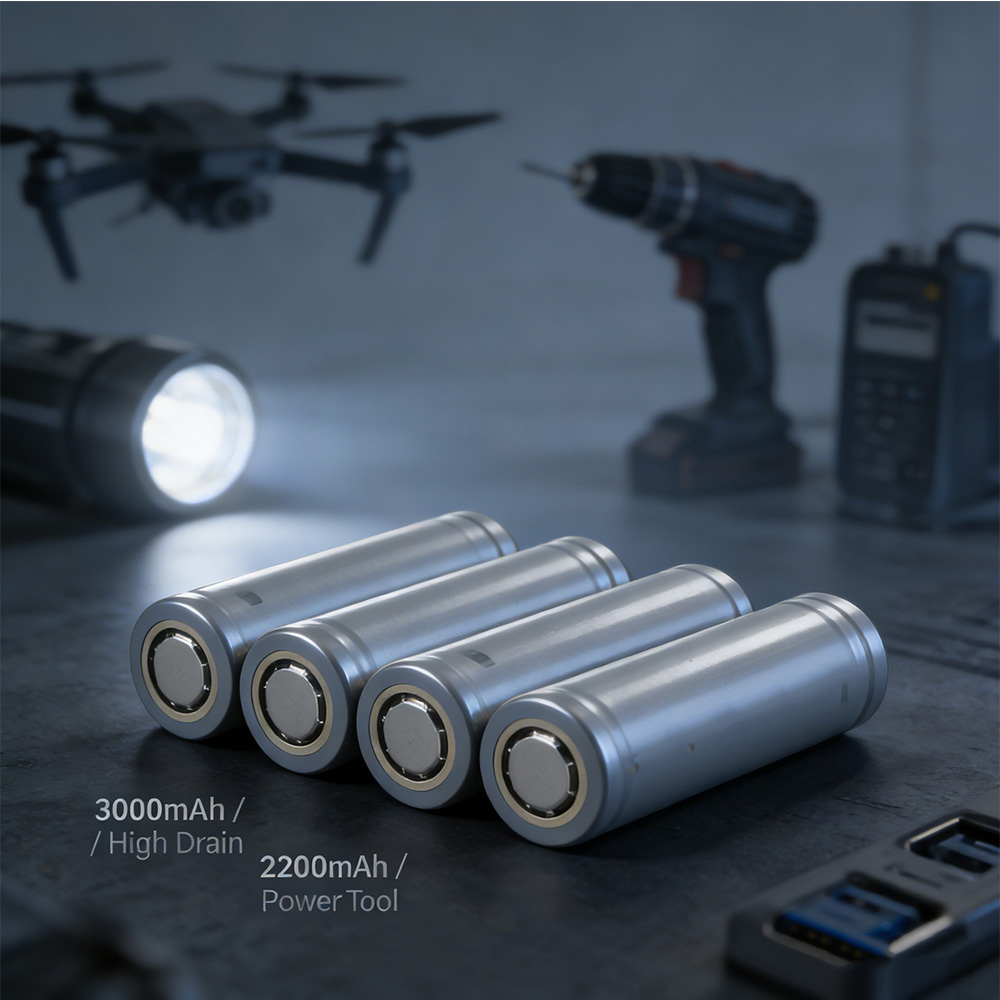
When you’re buying a bunch of 18650 rechargeable batteries, choosing the right discharge rate (C-rate) is key. It’s a big deal. It affects everything—the battery’s performance, how long it’ll last, and safety. Depending on what you’re using it for, you’ll need different C-rates. Drones, power tools, flashlights, power banks—each one needs something a little different. Let’s talk about that.
1. So, What’s C-rate Anyway?
Basically, C-rate is just how fast a battery discharges compared to its capacity. For example, a 1C means the battery discharges in one hour. A 2C, well, that’s in 30 minutes. It’s important. You want a battery that can do what you need, without burning out too quickly. So, choosing the right C-rate will keep things running smooth and avoid overheating or reducing lifespan.

2. What Affects Your C-rate Choice?
- Power Needs of the Device
If you’re using the battery for something like a drone, it needs a ton of power to take off, but if it’s a flashlight? Not so much. Flashlights don’t need that much juice. - Capacity vs. Discharge Rate
Bigger batteries usually mean lower C-rates. So if you need longer battery life, you’ll go for bigger capacity and lower discharge. But if you need short bursts of power, like for a power tool, you’ll need a higher C-rate.
3. Picking the Right C-rate for Your Application

a. Drones
- What Does a Drone Need?
Drones, especially racing ones, need quick bursts of power to get off the ground and fly fast. - What C-rate?
20C to 30C should do it. Drones need power quick, so you need that fast discharge. - Example Product:
18650 3000mAh 10A Battery, works great for drones that need to move fast and not lose power mid-air. - Keep in Mind:
The higher the C-rate, the quicker it’s going to drain the battery, so while it powers up fast, it might not last as long.
b. Power Tools
- What Do Power Tools Need?
Power tools, like drills or saws, need tons of power, especially when you’re starting them up or under heavy load. - What C-rate?
10C to 15C. Anything more might be overkill, and anything less could leave you stuck mid-job. - Example Product:
18650 2200mAh Battery, great for powering tools. It’s the right balance of power and capacity. - But, Well:
Larger batteries (over 3000mAh) will run longer, but they usually have lower C-rates (5C to 10C), so you’d need to weigh that against what your tool needs.
c. Flashlights
- What Does a Flashlight Need?
Flashlights are different. They need just enough power to shine for hours, not all at once. - What C-rate?
2C to 5C. It’s a good sweet spot. More than that, and the battery heats up, less and it’s not enough power. - Example Product:
18650 3000mAh 5A Battery, works fine for high-lumen flashlights. Gives you a steady flow of power without draining too fast. - Also:
Flashlights aren’t demanding like drones. They run lower C-rates better, meaning they last longer without overheating.
d. Power Banks
- What Does a Power Bank Need?
Power banks need to charge things, right? They need stable, long-lasting power, not bursts. - What C-rate?
1C to 3C works here. Power banks don’t need a amount of discharge speed. - Example Product:
18650 3000mAh Battery is a good choice. Works for power banks, provides enough juice without being overkill. - But, Yeah:
You don’t want to overdo it. Too high a C-rate, and you get a lot of heat, which is something you don’t want in a power bank.

4. How Do You Pick the Right Battery?
It’s not just about C-rate. You gotta consider capacity too. A bigger battery means longer use time, but if you need short bursts, you’ll need higher C-rates. So, for example, 18650 3000mAh is a solid pick for a lot of things. If you need more power, though, like for drones or power tools, 18650 3500mAh might be the better choice.
5. Battery Safety and Longevity
- Watch Out for Over-Discharge
Pushing a battery too hard, too often, especially with high C-rates, can mess it up. Match the discharge rate to what your device actually needs. - Heat is a Big Deal
The higher the C-rate, the more heat is generated. Make sure your device has a way to keep things cool.

6. In Conclusion
Choosing the right discharge rate for your 18650 battery is important. It’s about making sure your device gets the power it needs without draining the battery too fast or causing damage. Different applications, like drones or flashlights, need different approaches. So yeah, pick carefully to make sure everything runs smooth and safe.
7. Need Bulk Orders or Help?
If you need large quantities of 18650 batteries, or you’re not sure which C-rate works best for your needs, feel free to contact us. We can help you out with a tailored solution.
Recommend Products
-

12V 4400 mah Lithium ion 3S2P 18650 Battery Pack
-

18650 2000mAh 3.7 volt Lithium-ion Battery
-

18650 20V 3.0Ah Cordless Drill battery
-

18650 22.2V 7.8Ah 2600Mah 6S3P Rechargeable Battery Pack
-

18650 3.7V 10Ah Li-Ion Power Battery Pack
-

18650 3.7V 3300mah Rechargeable Lithium ion Battery
-

18650 7S7P 24V 14Ah Lithium ion Electric Scooter Battery Pack
-

18650 battery 3.7V 1500mAh Lithium-Ion Battery
-

18650 Electric Scooter 48V 13000mAh Lithium Battery
-

2600mAh 3S1P 11.1V 18650 Battery Packs
-

3.7V Li ion Rechargeable 3000mah 18650 Battery Cell
-

36V 5200mAh 10S2P 18650 Battery Pack
-

48v 4400mah 13S2P 18650 Rechargeable Battery Pack
-

7S2P 24V 18650 Lithium Battery Pack
-

Electric Scooter 36V 4400mAH 10S2P 18650 Battery Pack
-

ICR 18650 Battery 2200mah 3.7V
Leave a Reply