
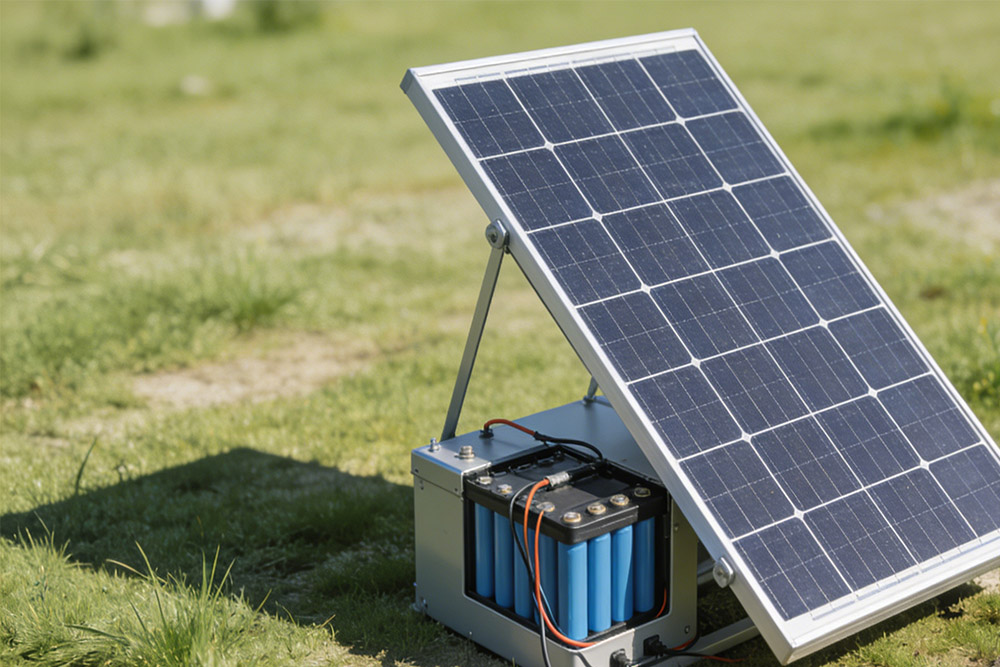
If you’re building or sourcing small solar systems, chances are you’ve looked at 18650 rechargeable 3.7V batteries.
They’re everywhere — easy to find, easy to pack, and relatively affordable.
But one question always comes up:
Is 3000mAh 18650 battery actually enough for solar use?
Short answer: it depends on what you’re trying to power.
Where 18650 Batteries Make Sense in Solar
Let’s be real — 18650 cells are not for large home storage systems.
They’re usually used in:
- solar street lights
- garden lights
- small off-grid setups
- portable solar kits
- DIY energy storage
In these cases, 3000mAh is actually pretty practical.

What 3000mAh Really Means in Solar Use
A single 3000mAh 3.7V cell gives you roughly:
- about 11Wh of energy (on paper)
- usable energy slightly lower in real conditions
So what can that power?
- LED lighting → no problem
- sensors / small electronics → stable
- low-power devices → works fine
But if you’re thinking about running larger loads, you’ll need multiple cells in a pack.
Why Many Solar Projects Stick with 3000mAh
After working with different setups, a lot of people end up going back to 3000mAh cells.
Not because they’re the highest spec — but because they’re predictable.
Here’s why:
1. Easier to Scale
Need more capacity? Just add more cells.
- 1 cell → small device
- 10+ cells → small system
- larger packs → flexible design
2. Cost Stays Under Control
In solar projects, especially bulk ones, cost adds up fast.
3000mAh cells usually offer:
- better pricing compared to higher capacity cells
- stable supply
- easier sourcing for large quantities
3. More Stable in Outdoor Conditions
Solar setups often deal with:
- heat
- long charge cycles
- daily charge/discharge
From experience, mid-range capacity cells like 3000mAh tend to be more stable over time compared to pushing maximum capacity.
A Practical Option for Solar Projects
If you’re sourcing batteries for solar applications, it usually makes sense to go with something standard and proven.
Here’s a typical example:18650 battery for solar system
What matters more than specs on paper:
- capacity is close to real output
- cells behave consistently in packs
- performance doesn’t drop quickly after cycles
- suitable for long-term outdoor use
For bulk solar projects, consistency matters more than chasing higher numbers.

Things That Matter More Than Capacity
A lot of buyers focus too much on mAh, but for solar, these matter just as much:
Cycle Life
Daily charging means the battery wears out faster.
A stable cell is more important than a bigger one.
Temperature Performance
Outdoor environments aren’t controlled.
Heat can affect battery life a lot.
Pack Design
Even the best cell won’t perform well if the pack design is poor.
When 3000mAh Is NOT Enough
To be fair, there are cases where it won’t work:
- large home energy storage
- high-power appliances
- long backup time requirements
In those cases, you’ll either:
- increase the number of cells
- or move to larger formats like 21700
Final Thoughts
For small to medium solar applications,
3000mAh 18650 rechargeable 3.7V battery is usually a safe and practical choice.
Not perfect, but reliable.
It’s easy to source, easy to scale, and performs well in real-world conditions —
which is exactly what most projects need.
Related Products
-

12V 4400 mah Lithium ion 3S2P 18650 Battery Pack
-

18650 2000mAh 3.7 volt Lithium-ion Battery
-

18650 20V 3.0Ah Cordless Drill battery
-

18650 22.2V 7.8Ah 2600Mah 6S3P Rechargeable Battery Pack
-

18650 3.7V 10Ah Li-Ion Power Battery Pack
-

18650 3.7V 3300mah Rechargeable Lithium ion Battery
-

18650 7S7P 24V 14Ah Lithium ion Electric Scooter Battery Pack
-

18650 battery 3.7V 1500mAh Lithium-Ion Battery
-

18650 Electric Scooter 48V 13000mAh Lithium Battery
-

2600mAh 3S1P 11.1V 18650 Battery Packs
-

3.7V Li ion Rechargeable 3000mah 18650 Battery Cell
-

36V 5200mAh 10S2P 18650 Battery Pack
-

48v 4400mah 13S2P 18650 Rechargeable Battery Pack
-

7S2P 24V 18650 Lithium Battery Pack
-

Electric Scooter 36V 4400mAH 10S2P 18650 Battery Pack
-

ICR 18650 Battery 2200mah 3.7V
Leave a Reply