
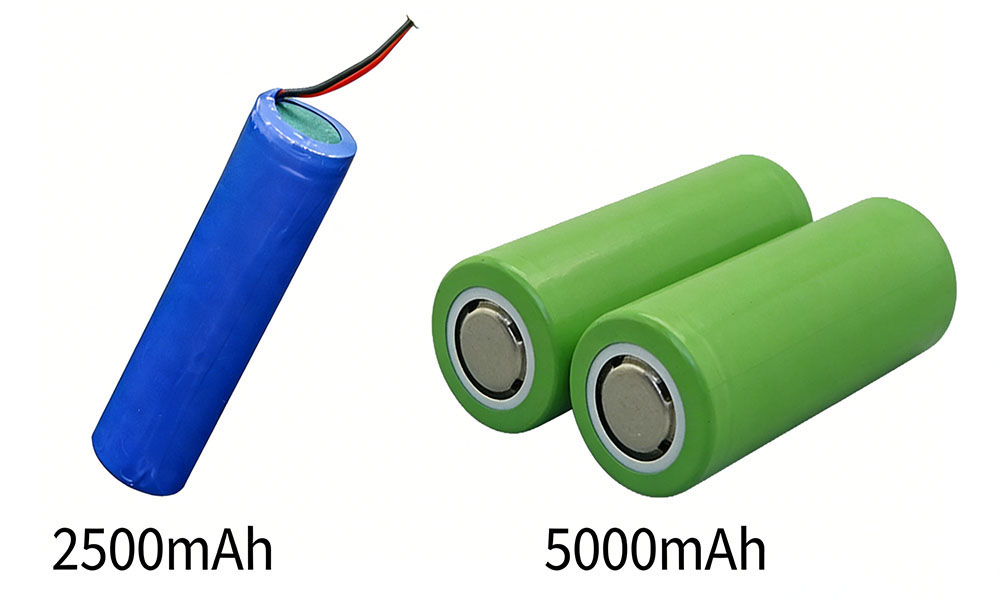
let’s cut to the chase: when you’re looking for 18650 batteries, it’s easy to think that the bigger the capacity, the better. More power, longer battery life, right? It seems like the obvious choice. But here’s the thing—bigger doesn’t always mean better, especially if you’re the one buying in bulk. Let me explain why.
1. Size and Weight – It Can Get Uncomfortable
The first thing people forget is that bigger batteries are heavier. You probably don’t want a battery that adds unnecessary bulk to whatever device it’s powering. Let’s say you’re selling power tools or flashlights—if you stuff in a huge capacity battery, suddenly your product is heavier than it needs to be. I’ve used a flashlight before with a high-capacity battery that was just way too heavy to handle comfortably. At some point, the extra weight doesn’t add any value—it just makes the thing harder to use. So, it’s important to match the battery to the product. A smaller capacity might actually give the customer a better experience.
2. Cost – Why Spend More Than You Have To?
Let’s talk money. Bigger batteries cost more, right? Sure, you get more power, but what if the device doesn’t really need it? Take something like a portable speaker. You can easily get away with a 3000mAh battery instead of a 5000mAh one. The 5000mAh will definitely last longer, but your customer might not care if their speaker runs for 6 hours versus 12—they’re just looking for something that works. As a buyer, you might end up paying more for that extra power, and over time, that’s money you could’ve saved. When you’re buying in bulk, those extra bucks per unit really add up.

3. Charging Time – The Longer It Takes, The Worse It Gets
Another thing no one talks about much is charging time. A bigger battery takes longer to charge. I don’t know about you, but I don’t like sitting around waiting for a battery to charge when I need my device now. If you’re selling products that people need to quickly charge, a huge capacity battery could be more of a headache than a help. Imagine a user trying to recharge a power bank or tool just before they need to head out—waiting 3 hours for a full charge when they could’ve done it in 1 hour with a smaller battery. You’re really just making your customer’s life harder. Sometimes, choosing a smaller capacity battery that charges quicker can be a smart move.
4. Overloading – More Power, More Problems
It’s tempting to think that more power is always good, but it’s not always the case. If the device wasn’t designed to handle that much power, you’re just putting unnecessary strain on the system. I’ve seen cases where people use batteries with more capacity than the device can actually manage, and the results aren’t great. The device heats up, drains the battery faster, and ultimately, the battery life isn’t as good as you’d expect. If you’re selling electronics, tools, or anything that needs a battery, choosing the right capacity for the system is crucial. More power doesn’t always mean better performance; it can just mean problems down the line.

5. Does Your Device Really Need That Much Power?
Not every device needs to run on a massive battery. For example, a small Bluetooth speaker doesn’t need a 5000mAh battery—it’ll never use all that juice. I’ve sold products like this, where the battery was just too big for the device, and it ended up being a waste. The device would only use half the power, leaving the other half sitting there unused. It’s like buying a car with a V12 engine when all you really need is a reliable four-cylinder. You’re paying for power you’re not even using. A smaller, more efficient battery that fits the device’s power requirements is the way to go.
6. Efficiency – More Power Can Mean Wasted Energy
Another thing to consider is efficiency. If your device doesn’t need all that extra power, a larger battery can end up being inefficient. I’ve noticed this with certain products that have way too much battery capacity. The device can’t drain the battery fully, and you’re left with wasted energy. A smaller battery that matches the power needs of the device can ensure that energy is used more effectively, meaning better performance and longer battery life over time.
Conclusion – Find the Right Fit, Not Just the Biggest Battery
Here’s the bottom line: bigger isn’t always better. When you’re buying batteries in bulk, especially for different kinds of devices, it’s crucial to think about the actual needs of the product. Sure, that 5000mAh battery sounds great, but if it’s not actually improving performance or adding value, what’s the point? You’re paying more for something your device doesn’t need, and in some cases, you’re just creating extra problems. The goal is to find a battery that fits the product’s requirements—not the biggest one on the shelf. It’s about efficiency, cost, and performance. Choose wisely, and you’ll get better results for your business and your customers.
Related Products
-

12V 4400 mah Lithium ion 3S2P 18650 Battery Pack
-

18650 2000mAh 3.7 volt Lithium-ion Battery
-

18650 20V 3.0Ah Cordless Drill battery
-

18650 22.2V 7.8Ah 2600Mah 6S3P Rechargeable Battery Pack
-

18650 3.7V 10Ah Li-Ion Power Battery Pack
-

18650 3.7V 3300mah Rechargeable Lithium ion Battery
-

18650 7S7P 24V 14Ah Lithium ion Electric Scooter Battery Pack
-

18650 battery 3.7V 1500mAh Lithium-Ion Battery
-

18650 Electric Scooter 48V 13000mAh Lithium Battery
-

2600mAh 3S1P 11.1V 18650 Battery Packs
-

3.7V Li ion Rechargeable 3000mah 18650 Battery Cell
-

36V 5200mAh 10S2P 18650 Battery Pack
-

48v 4400mah 13S2P 18650 Rechargeable Battery Pack
-

7S2P 24V 18650 Lithium Battery Pack
-

Electric Scooter 36V 4400mAH 10S2P 18650 Battery Pack
-

ICR 18650 Battery 2200mah 3.7V
Leave a Reply