
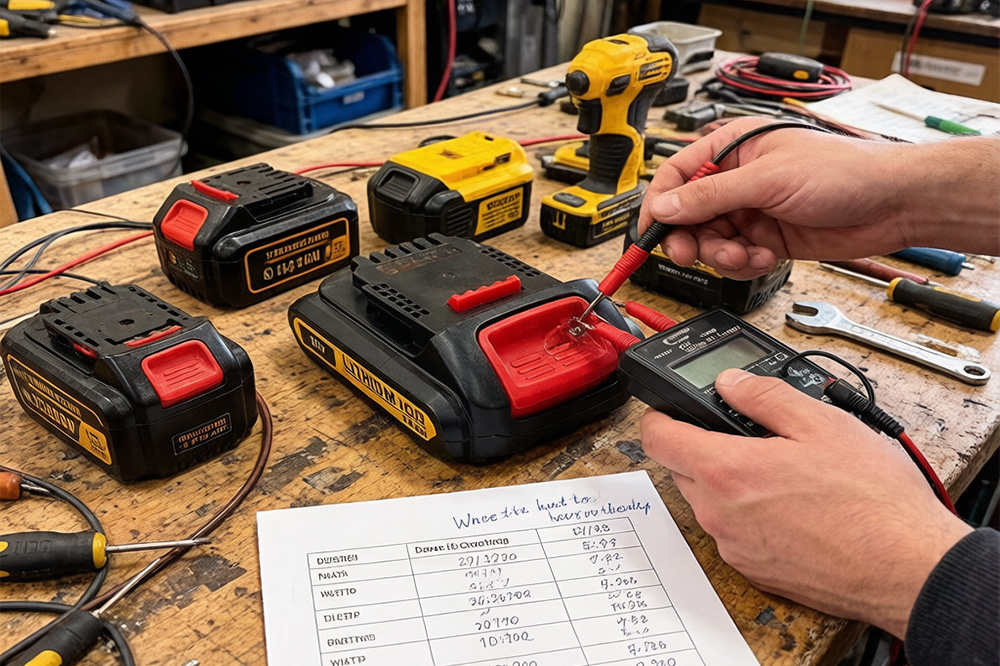
Compatibility sounds like a simple word.
At least it does in catalogs.
“Universal fit”, “works with most 20V tools”, “replacement for major brands” — you see these phrases everywhere.
But in real sourcing conversations, especially with repair shops and distributors, the story is usually less clean.
“It fits” is not always the same as “it works well”
A battery can physically fit into a tool and still feel wrong in use.
I’ve seen cases where:
- the connector matches perfectly
- the locking structure clicks in place
- everything looks fine on first test
But after a few cycles, the feedback changes:
- slightly shorter runtime
- more heat than expected
- inconsistent power delivery under load
Nothing dramatic. Just enough to make a technician pause.
And in bulk replacement business, those small differences tend to matter more than expected.
Replacement market is not about new tools
One thing that is easy to misunderstand is this:
The 20V replacement battery market is not driven by new tool sales.
It is mostly driven by:
- lost or damaged original batteries
- older tool systems still in use
- cost-saving replacements instead of full tool replacement
So buyers are not always looking for “the best performance battery”.
They are usually looking for:
something that keeps existing tools alive without changing the workflow
That’s a different expectation entirely.

Compatibility is a mix of physical + electrical behavior
Most people think compatibility is just shape and connector design.
But in reality, it has two layers:
1. Physical compatibility
- slide type vs clip type
- locking groove design
- terminal spacing
2. Electrical behavior compatibility
- discharge curve under load
- BMS response timing
- voltage drop behavior during heavy torque usage
The second part is where many “almost compatible” batteries fail quietly.
Not in testing — but in real job use.
Why “universal battery” claims often become complicated
Some suppliers label batteries as universal.
And sometimes they really try to design that way.
But in practice, universality is limited by:
- different tool OEM protection logic
- different current draw expectations
- slight variations in terminal design across platforms
A battery that works well on one tool series might feel slightly unstable on another.
That’s why experienced buyers often request samples across multiple tool types before committing to bulk orders.
Not because they doubt suppliers — but because they’ve seen edge cases before.
Replacement buyers care more about stability than peak performance
This is something that doesn’t always show up in product specs.
In replacement markets, the priority is usually:
- consistent fit across batches
- no sudden design changes
- predictable performance across old tools
- low return rate
One distributor once said something quite direct:
“I don’t need it to be better. I just don’t want complaints.”
That sentence actually explains most of the demand in this segment.

Example reference model
For reference in OEM or replacement programs: 20V 18650-based 3.0Ah cordless drill battery
This type of configuration is often chosen not because it is the most advanced,
but because it sits in a stable middle range for compatibility and cost balance.
Adapter solutions exist, but they are not always the final answer
Battery adapters are sometimes used to solve compatibility gaps.
On paper, they look like a simple fix:
- one platform → multiple tool compatibility
But in real use:
- mechanical stability becomes an issue over time
- contact resistance may increase
- users may treat them as temporary solutions rather than long-term setups
So adapters help, but they rarely replace proper compatibility design in OEM production.
Final thought
20V drill battery compatibility looks straightforward when written in product listings.
But in real replacement markets, it behaves more like a negotiation between:
- physical design limits
- electrical behavior differences
- and user expectations shaped by old tools
And maybe that’s why this segment is so stable —
because once a compatible solution works well enough, buyers tend to stick with it for a long time instead of constantly changing suppliers.
Leave a Reply