
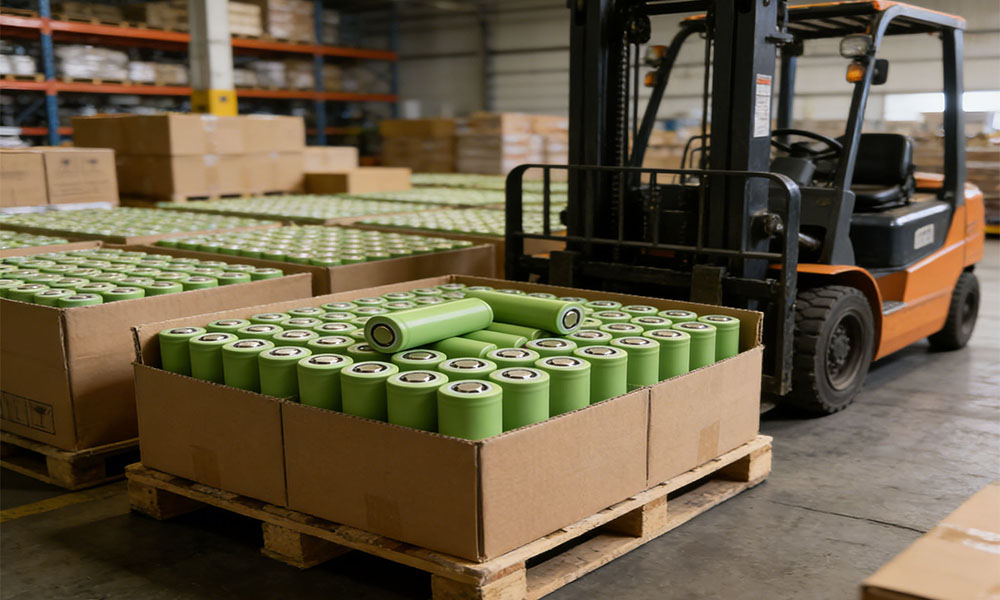
When it comes to wholesale lithium‑ion cells, especially the popular 3.7 V 3000 mAh 18650 format, every distributor and importer has similar core questions:
- Is this cell real capacity or a marketing number?
- Will these cells perform consistently in large quantities?
- What are the real risks once they’re installed in packs?
- Are the safety and testing profiles solid?
- And ultimately — will this choice make my customers happy or return unhappy batteries to me?
Below we unpack these questions in practical, business‑ready terms.

1. 3000 mAh: What Does That Number Really Mean?
A lot of suppliers will slap a “3000 mAh” label on an 18650 battery cell — but not all 3000 mAh 18650 cells behave the same.
Here’s what experienced buyers look for:
Nominal Capacity vs. Usable Capacity
- Nominal capacity (3000 mAh) is what the label says — good for quick comparisons.
- Usable capacity is what you actually get when you discharge at realistic currents (e.g., 0.5C or 1C).
For importers and distributors, this gap matters because it affects:
- Pack range estimates
- Warranty claims
- Customer satisfaction
A supplier who can share discharge curves at real currents has a much stronger credibility signal than one who just lists 3000 mAh.
2. Consistency Across the Batch — The Heart of Wholesale Quality
When you order hundreds, thousands, or tens of thousands of cells, what matters most isn’t one single good cell — it’s batch consistency.
Bulk buyers will typically verify:
- Capacity spread: Are cells within a tight range (e.g., ±50 mAh)?
- Internal resistance variance: Lower variance means better performance when cells are assembled in packs.
- Production traceability: Are batch codes and manufacturing records available?
Even if an 18650 cell is labeled 3000 mAh, wide variation within a batch can lead to:
- Some packs aging prematurely
- Higher failure rates
- Increased BMS balancing stress
For distributors, this means more warranty costs and unhappy customers — a risk they want to minimize.
3. Cycle Life Claims — What You Should Verify
A common claim for high‑capacity 18650 cells is “1000+ cycles”. But buyers need context:
Ask your supplier for:
✔ Test conditions (charge/discharge rates, temperature)
✔ End‑of‑life definition (80% remaining capacity? 70%?)
✔ Cycle life under practical loads
Without that context, cycle claims are meaningless marketing.
Good suppliers will provide:
- Real test data sheets
- Graphs showing capacity fade over time
Importers looking to supply OEM battery packs or consumer products (e‑tools, e‑bikes, e‑scooters, power banks) should insist on these details.
4. Safety Testing and Certifications That Matter
Lithium‑ion cells are not commodities when it comes to safety. For international shipments and responsible selling, importers focus on:
Core Certifications
- UN38.3 — Required for air transport compliance
- MSDS / SDS — For handling and regulatory documentation
Safety Data Importers Care About
- Thermal stability tests
- Short‑circuit and overcharge tests
- Internal cell construction quality
Importers often verify certificates against the actual cell model, not generic certificates issued for similar cells.
This protects them from:
- Customs rejection
- Liability risks
- Misleading documentation
5. Matching Cells to Pack Design and BMS Expectations
18650 cells like these are almost always used in battery packs — so procurement isn’t just buying loose cells.
Good importers will think ahead about:
Pack Configuration Needs
- 10S / 12S / 14S configurations
- Parallel group sizing (e.g., 3P, 4P, 5P)
- BMS limits and balance requirements
Cell Characteristics That Matter in a Pack
- Capacity tolerance
- Voltage plateau consistency
- Internal resistance distribution
BMS designers hate dealing with mismatched cells because it increases balancing load and reduces pack lifetime.
A reliable 18650 3000 mAh cell with tight tolerances makes pack building easier — and produces more predictable performance for your customers.

6. Supply Stability and Lead Times — What to Lock Down Before Ordering
Importers should ask upfront:
- What are minimum order quantities (MOQs)?
- Can the supplier hold stock?
- What are lead times for repeat orders?
- Are there risks of specification changes between lots?
Consistency in production specs is as important as the initial quality.
Distributors often structure contracts with:
- Lot consistency guarantees
- Notification if cell specs are changed
- Flexible delivery windows
These protect their forecasts and help them avoid stockouts that eat into margins.
7. End‑Market Expectations — What Your Customers Really Want
Whether your buyers are in:
- Power tools
- E‑mobility
- Consumer electronics
- Energy storage
They all want the same four things:
- Accurate capacity representation
- Reliable safety performance
- Predictable aging
- Consistent supply
Loose 18650 cells that promise “3000 mAh” but don’t behave consistently across lots add risk — and risk is the first thing experienced importers try to eliminate.

Final Thoughts: Choose Cells That Solve Problems, Not Create Them
For importers and distributors, a 3.7 V 18650 3000 mAh cell is not just an SKU — it’s a piece of a performance, safety, and supply chain puzzle.
Good wholesale decisions start with understanding:
- Testing transparency
- Batch consistency
- Supply reliability
- Compatibility with pack design
These are the things your customers really care about.
If you focus on those — and choose partners who can back their claims with real data — you turn a product into a dependable business asset.
Related Products
-

12V 4400 mah Lithium ion 3S2P 18650 Battery Pack
-

18650 2000mAh 3.7 volt Lithium-ion Battery
-

18650 20V 3.0Ah Cordless Drill battery
-

18650 22.2V 7.8Ah 2600Mah 6S3P Rechargeable Battery Pack
-

18650 2600mAh Rechargeable Lithium-Ion Battery 3.7V
-

18650 3.7V 10Ah Li-Ion Power Battery Pack
-

18650 3.7V 3300mah Rechargeable Lithium ion Battery
-

18650 7S7P 24V 14Ah Lithium ion Electric Scooter Battery Pack
-

18650 battery 3.7V 1500mAh Lithium-Ion Battery
Leave a Reply