
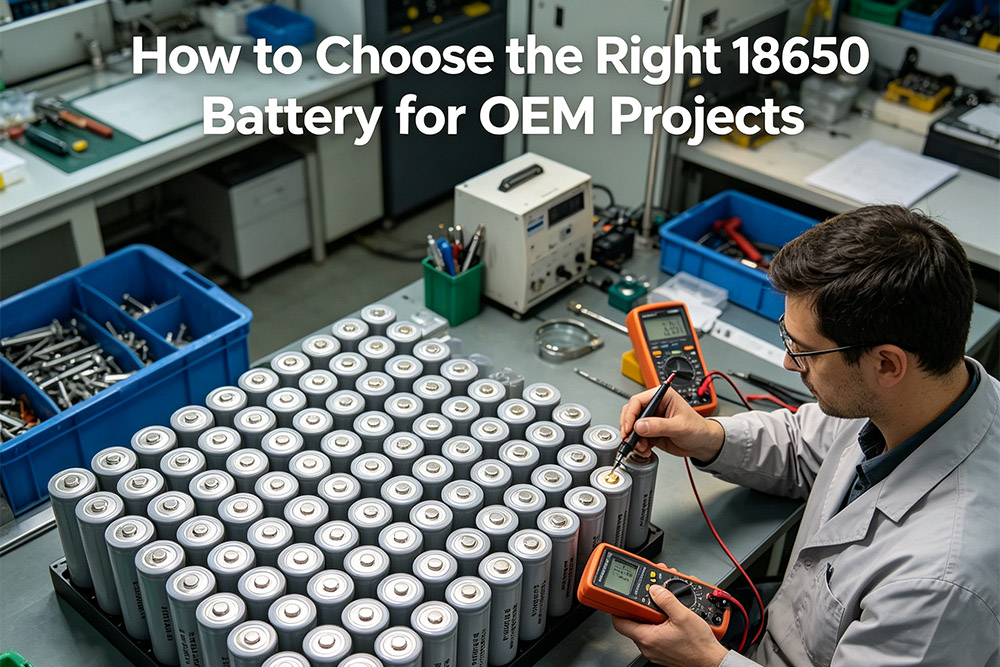
If you’re sourcing 18650 rechargeable 3.7V batteries for your product, the first thing to know is: not all 18650 cells are equal. Picking the wrong one can lead to poor performance, early battery failure, or worse — safety issues.
Here’s how experienced OEM buyers think about it.
1. Think About Your Product First
Many people jump straight to battery specs and forget the most important question: what is your product actually doing?
- If it’s a power tool, you need a battery that can handle high current.
- If it’s an IoT device, long standby and low self-discharge matter more.
- If it’s an e-bike, you want a balance: enough capacity for range, but safe under load.
- If it’s a storage system, long cycle life is critical.
Rule of thumb: your product’s needs should define the battery, not the other way around.
2. Capacity (mAh) Isn’t Everything
You’ll see cells labeled 2000mAh up to 3500mAh. Higher numbers sound better, but they don’t always deliver what you expect.
Things to check:
- Is the capacity real, or just marketing?
- How does it hold up after 300–500 charge cycles?
- Are test reports or datasheets provided by the supplier?
Buying cheap, high-capacity cells that degrade quickly is a trap many OEMs have fallen into.

3. Don’t Overlook Discharge Rate
Discharge rate is how fast a battery can safely deliver current. It’s easy to ignore, but it’s critical.
- Low-power devices → 1C–2C is fine
- High-load tools → 5C–10C needed
Using a low-discharge battery in a high-demand device can cause voltage drops, overheating, and even device failure. This is a common OEM headache.
4. Consistency Matters
When buying in bulk, what’s more important than the specs of a single cell is consistency across the batch.
Ask suppliers:
- Are the cells from the same production batch?
- How much does internal resistance vary?
- Do you offer cell matching for packs?
Even a few mismatched cells can reduce performance or damage a whole battery pack.
5. Make Sure the Battery Meets Standards
If you’re importing batteries, certifications aren’t optional. At minimum, check for:
- UN38.3 (transport safety)
- MSDS (material safety data sheet)
- Market-specific standards like UL or CE
Skipping this step can cause customs delays or shipment rejection — a risk no OEM wants.
6. Cycle Life Is More Than a Number
A cheaper battery may seem like a win, but what about after 300–500 cycles?
Example:
- Battery A: 300 cycles → cheap upfront, costly long-term
- Battery B: 800 cycles → higher cost, but lower replacement risk and warranty claims
For OEM projects, a longer-lasting battery saves money and protects your reputation.
7. Decide Between Single Cells and Packs
Sometimes OEMs think they just need individual 18650 cells. Often, what they really need is a ready-to-use battery pack with BMS (Battery Management System), wiring, and safety protections.
Consider:
- Do you need custom voltage or capacity?
- Will a BMS be required?
- Can you assemble packs in-house safely?
If not, it’s often easier and safer to order a complete battery pack.
Check available options here:
👉 18650 Battery Category

8. Supplier Checklist for Bulk Orders
Before you hit “order,” make sure your supplier can deliver consistently:
- Production capacity to meet demand
- Quality control process for every batch
- Sample testing before bulk order
- Stable lead times
- Export experience
A reliable supplier isn’t just selling a battery; they’re supporting your product’s success.
Conclusion
Choosing the right 18650 rechargeable 3.7V battery isn’t about picking the one with the highest number on a datasheet.
It’s about:
- Matching your product’s power needs
- Evaluating real performance and safety
- Working with a supplier who can consistently deliver
For OEM and wholesale buyers, the right battery means fewer failures, lower costs, and a stronger product in the market.
Related Products
-

12V 4400 mah Lithium ion 3S2P 18650 Battery Pack
-

18650 2000mAh 3.7 volt Lithium-ion Battery
-

18650 20V 3.0Ah Cordless Drill battery
-

18650 22.2V 7.8Ah 2600Mah 6S3P Rechargeable Battery Pack
-

18650 2600mAh Rechargeable Lithium-Ion Battery 3.7V
-

18650 3.7V 10Ah Li-Ion Power Battery Pack
-

18650 3.7V 3300mah Rechargeable Lithium ion Battery
-

18650 7S7P 24V 14Ah Lithium ion Electric Scooter Battery Pack
-

18650 battery 3.7V 1500mAh Lithium-Ion Battery
-

18650 Battery 3500 mah Rechargeable Battery Cells
-

18650 Electric Scooter 48V 13000mAh Lithium Battery
-

2600mAh 3S1P 11.1V 18650 Battery Packs
-

3.7V Li ion Rechargeable 3000mah 18650 Battery Cell
-

36V 5200mAh 10S2P 18650 Battery Pack
-

48v 4400mah 13S2P 18650 Rechargeable Battery Pack
-

7S2P 24V 18650 Lithium Battery Pack
-

Electric Scooter 36V 4400mAH 10S2P 18650 Battery Pack
-

ICR 18650 Battery 2200mah 3.7V
Leave a Reply