
A few years ago, a customer approached us with a problem that sounds familiar to many product developers.
Their engineering team had already finished most of the device design. The electronics worked, the housing was finalized, and prototypes were nearly ready for testing. Then they hit a wall.
None of the off-the-shelf battery packs would fit.
The batteries that offered enough runtime were too large. Smaller batteries fit inside the enclosure but couldn’t deliver the operating time the product required. Every solution seemed to involve compromising something important.
This situation is actually more common than people think.
Many products start with the assumption that a standard battery will be “good enough.” But once real-world requirements enter the picture—limited space, weight restrictions, high current demands, operating temperature ranges—that assumption quickly falls apart.
That’s usually the moment when companies begin looking at custom lithium-ion battery packs.

The Battery Is Often the Last Thing Considered
One interesting thing about product development is that batteries are frequently left until late in the process.
Teams spend months refining electronics, software, mechanical design, and user experience. Then someone asks a simple question:
“Where is the battery going?”
At that point, engineers sometimes discover the available space is much smaller than expected.
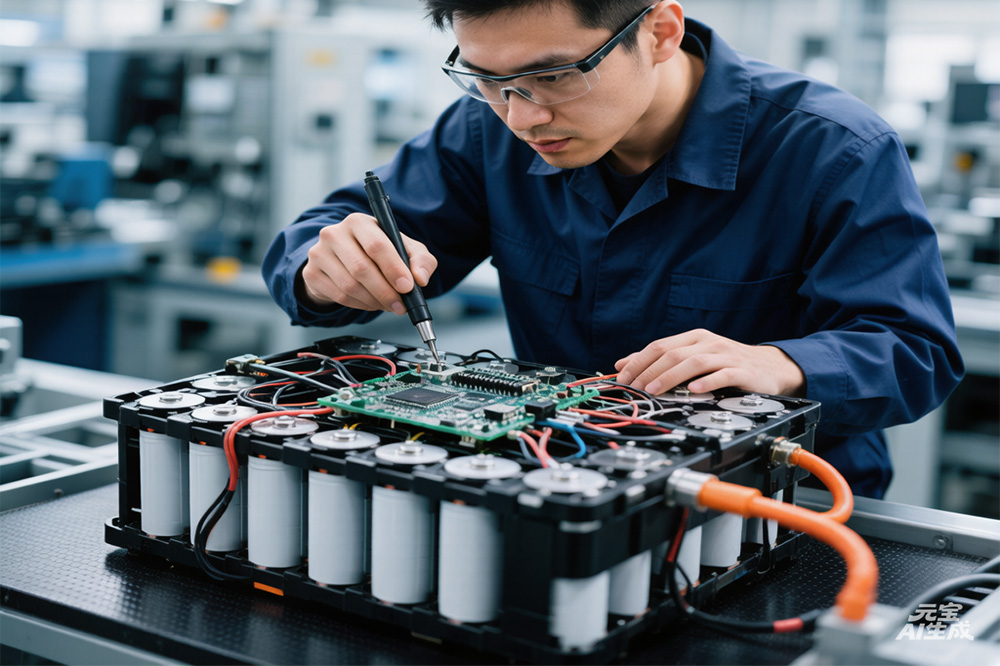
A battery pack isn’t just a collection of cells. It also needs room for protection circuitry, wiring, connectors, insulation materials, and sometimes communication modules. Suddenly, the space that looked generous on a CAD drawing becomes surprisingly tight.
This is one reason custom battery projects have become so common. Instead of forcing a product to adapt to a standard battery, manufacturers can build the battery around the product itself.
Bigger Isn’t Always Better
When discussing battery packs, many buyers focus immediately on capacity.
More amp-hours. More runtime. Bigger numbers.
On paper, that sounds logical.
In practice, however, battery design is usually a balancing act.
Adding more cells may increase runtime, but it also adds weight, cost, and size. For portable products, those trade-offs matter. A battery that lasts two extra hours may not be worth it if the device becomes noticeably heavier or bulkier.
Experienced battery engineers often spend more time finding the right balance than simply maximizing capacity.
The best battery isn’t necessarily the biggest one. It’s the one that helps the entire product perform as intended.

Every Industry Wants Something Different
A robotics company rarely asks for the same battery design as a medical equipment manufacturer.
Robotics developers often care about discharge rates and weight distribution. Medical device manufacturers usually prioritize reliability, certification requirements, and predictable operating time. Industrial equipment manufacturers may focus on durability and resistance to vibration.
Even within the same industry, requirements can vary dramatically.
Two products using identical voltages might require completely different battery designs because their duty cycles, operating environments, and charging habits are not the same.
That’s why experienced manufacturers spend so much time asking questions before proposing a solution.
The battery itself is only part of the equation. Understanding how the battery will actually be used is equally important.
What Information Should You Prepare Before Requesting Custom Battery?
Many first-time buyers assume they need a complete engineering specification before contacting a battery manufacturer.
Fortunately, that’s usually not the case.
The most helpful information often includes:
- Required voltage
- Target runtime
- Maximum dimensions
- Expected operating temperature
- Charging method
- Estimated annual demand
Even rough numbers can provide a good starting point.
As discussions progress, battery engineers can help refine the specifications and identify potential issues before they become expensive design problems.

Why Some Custom Battery Projects Fail
Not every battery project succeeds on the first attempt.
In many cases, problems appear because expectations are unrealistic.
Sometimes a customer wants twice the runtime without increasing size. Sometimes they expect extremely fast charging while maintaining maximum cycle life. Occasionally, cost targets conflict directly with performance requirements.
Battery technology has advanced significantly over the years, but physics still imposes limits.
The most successful projects usually begin with open discussions about priorities. Once everyone agrees on what matters most—runtime, size, weight, power output, or budget—the design process becomes much smoother.
The Growing Demand for Customized Energy Solutions
As products become more specialized, battery requirements become more specialized as well.
A decade ago, many devices could rely on standard battery packs. Today, manufacturers are developing products that are smaller, smarter, lighter, and more powerful than ever before.
That trend is making custom battery solutions less of a luxury and more of a necessity.
For companies developing new products, the question is often no longer whether a custom battery is possible.
It’s whether a standard battery can still meet the demands of the application.
-

12V 4400 mah Lithium ion 3S2P 18650 Battery Pack
-

18650 20V 3.0Ah Cordless Drill battery
-

18650 22.2V 7.8Ah 2600Mah 6S3P Rechargeable Battery Pack
-

18650 2200Mah 10S3P 36V 6.6Ah Electric Scooter Lithium Battery
-

18650 2600Mah 10S3P 36V 7.8ah Scooter Battery
-

18650 3.7V 10Ah Li-Ion Power Battery Pack
-

18650 36V 5.2Ah Electric Bicyle Battery
-

18650 7S7P 24V 14Ah Lithium ion Electric Scooter Battery Pack
-

18650 Electric Scooter 48V 13000mAh Lithium Battery
-

1S2P 3.7V 1600mAh 14500 Lithium Battery
-

2000Mah 18650 Battery Cell 6Ah 36V Scooter Battery
-

21700 3.7V 4800mAh Rechargeable Lithium-Ion Battery
-

2600mAh 3S1P 11.1V 18650 Battery Packs
-

3.7V 21700 Rechargeable Lithium Battery Cells 5000mah
-

3.7V 5000mah 26650 Battery
-

32140 LiFePO4 Battery Cell 3.2V – 10000mAh / 15000mAh
-

32700 Lifepo4 3.2V 6000mah Lithium Battery
-

36V 5200mAh 10S2P 18650 Battery Pack
-

48V 15ah 720wh Ebike Battery
-

48v 4400mah 13S2P 18650 Rechargeable Battery Pack
-

60V 21Ah 18650 16S7P E Bike Battery
-

7S2P 24V 18650 Lithium Battery Pack
-

Customized 48V-72V Triangle Ebike Lithium Battery Pack | 52V 30Ah
-

Electric Scooter 36V 4400mAH 10S2P 18650 Battery Pack
Leave a Reply