
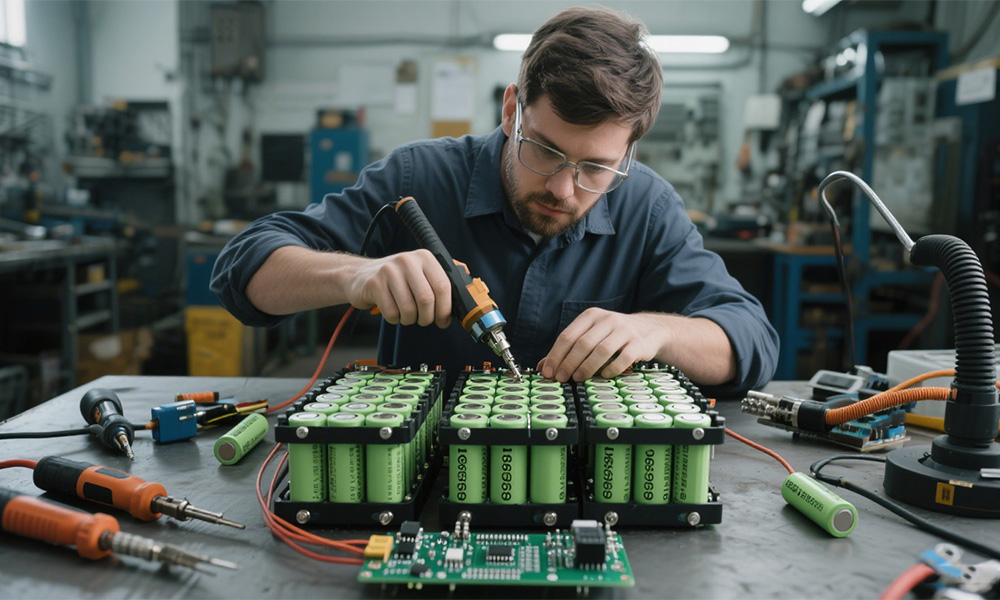
Why More Buyers Are Purchasing 18650 Batteries in Bulk
The 18650 battery has been around for years, and there’s a good reason it still dominates so many industries. Its size is standardized — 18mm wide and 65mm long — which makes it easy to integrate into everything from flashlights and cordless tools to solar storage systems and electric mobility products.
For personal use, buying a few cells online or from a local electronics shop is usually enough. But once you start building battery packs regularly, repairing equipment, or running production projects, retail purchasing quickly becomes expensive and inefficient.
That’s where bulk buying starts to make sense.
The first advantage is obvious: lower cost per cell. But experienced buyers usually care just as much about consistency. When all cells come from the same production batch, voltage and capacity differences stay smaller, which helps battery packs run more evenly over time.
Anyone who has repaired lithium packs before has probably seen what happens when mixed cells are used together — imbalance, overheating, shorter runtime, and eventually pack failure.
Another reason companies buy in bulk is supply stability. If you plan to expand production later or replace damaged packs months down the line, sourcing the same model again becomes much easier when you already have a reliable supplier relationship.
Not Every 18650 Battery Is Built for the Same Job
One thing new buyers often overlook is that 18650 cells are designed with very different priorities.
Some focus on capacity. Others are made for high current output. Picking the wrong type usually leads to disappointing performance, even if the battery itself is high quality.
High-Capacity Cells
These are commonly used where long runtime matters more than power output.
You’ll usually see them in:
- Energy storage systems
- Portable power stations
- Laptop battery packs
- Backup power equipment
Most high-capacity cells range between 2600mAh and 3500mAh. The trade-off is lower discharge capability, so they’re not ideal for tools or devices that pull heavy current instantly.
High-Drain Cells
This category is built for power.
High-drain 18650 cells are designed to handle continuous high current loads, often 20A or more. They’re commonly used in:
- Power tools
- Electric scooters
- RC models
- High-performance flashlights
Compared with capacity-focused cells, runtime is usually shorter, but they handle demanding workloads much better.
Balanced Cells
Some applications need a little of both.
Balanced-performance cells sit somewhere in the middle and are often used in:
- E-bikes
- UPS systems
- Self-balancing scooters
- General commercial battery packs
For many projects, this type ends up being the most practical option overall.
A lot of purchasing mistakes happen because buyers compare prices first instead of matching the battery to the application first.

The Most Common Ways Buyers Source 18650 Batteries
After deciding on the right cell type, the next challenge is figuring out where to buy from.
Battery Wholesalers
For many small and mid-sized buyers, wholesalers are the easiest starting point.
Most keep regular inventory and sell by tray or carton quantities. Pricing is usually much better than retail, especially once orders move past a few hundred cells.
Good wholesalers also tend to offer:
- Stable inventory
- Repeat order support
- Warranty handling
- Faster response times
For buyers who don’t want factory-level minimum orders, this route is often the most practical.
Buying Directly from Manufacturers
Larger businesses usually end up working directly with manufacturers sooner or later.
This becomes important when projects require:
- Custom battery packs
- Specific voltage combinations
- BMS integration
- OEM production
Factories can usually provide better batch consistency and technical documentation, especially for export projects. The downside is that minimum order quantities are often much higher.
Local or Regional Distributors
Some buyers prefer local distributors simply because logistics are easier.
The advantages are pretty straightforward:
- Faster delivery
- Easier communication
- Lower shipping complexity
Of course, prices are normally higher compared with direct factory purchasing, and product selection can be more limited.
Still, for smaller companies or repair shops, convenience sometimes matters more than squeezing out the absolute lowest price.
Learning from Other Buyers
One thing that helps more than most people expect is reading feedback from real users.
Battery forums, repair communities, and industry groups often reveal which suppliers are reliable and which ones to avoid.
And there’s one warning that comes up constantly:
Stay away from reclaimed or second-hand cells.
Cheap recycled batteries may look attractive at first, but inconsistent capacity, hidden wear, and safety risks usually end up costing far more later.

What Bulk Pricing Actually Looks Like
Prices change constantly depending on the market, cell type, and order size, but generally speaking:
- Orders above 1000 pcs often land around $2.5–3.5 per cell
- Medium orders usually sit between $3–5
- Small retail quantities can easily reach $5–8 or more
But experienced buyers rarely choose suppliers based on price alone.
The cheapest cells on paper sometimes become the most expensive once failures, replacements, or warranty issues start happening.

Things Smart Buyers Pay Attention To
Certifications Matter More Than People Think
If batteries are crossing borders, certifications are non-negotiable.
Most serious buyers look for:
- UN38.3
- CE
- RoHS
Without proper paperwork, shipments can get delayed or rejected entirely.
Shipping Lithium Batteries Isn’t Simple
Lithium battery transport comes with regulations.
Reliable suppliers usually provide:
- MSDS documentation
- Dangerous goods paperwork
- Certified shipping support
Without that, customs problems become very common.
Cell Consistency Is Critical for Battery Packs
This part gets underestimated constantly.
When building battery packs, cells need to stay close in:
- Voltage
- Capacity
- Internal resistance
If differences are too large, packs discharge unevenly and degrade much faster over time.
That’s why serious pack builders usually insist on same-batch cells.
Storage Conditions Also Affect Lifespan
Even good batteries age badly if stored incorrectly.
Basic storage rules are simple:
- Keep them cool and dry
- Avoid direct heat
- Don’t leave them fully charged for months
For long-term storage, around 40–60% charge is generally considered safest.
Buying Bulk 18650 Batteries: Focus on Long-Term Value
Purchasing bulk 18650 batteries isn’t only about getting the lowest unit price. For most importers, battery pack manufacturers, and repair businesses, long-term supply stability is often more valuable than saving a few cents on each cell.
A supplier that delivers consistent cell quality from one production batch to the next can help reduce assembly problems, simplify quality control, and lower the risk of warranty claims. That’s especially important when bulk 18650 batteries are used in battery packs, where even small differences in capacity or internal resistance can affect overall performance.
Before placing a large order, ask for production batch information, test reports, and sample cells whenever possible. Many experienced buyers also evaluate how a supplier handles technical questions, packaging requirements, and after-sales support. These details may not appear on a quotation, but they often make a noticeable difference once regular shipments begin.
If your project requires custom battery packs, it’s worth choosing a manufacturer that can support both cell supply and pack assembly. Working with a single supplier usually makes communication easier and helps keep product specifications consistent as production scales.
Final Thoughts
Buying 18650 batteries in bulk really comes down to reducing problems later.
A slightly cheaper price means very little if the cells arrive inconsistent, unsupported, or impossible to reorder six months later.
For hobby projects or small repair work, wholesalers and local distributors are usually enough. But for companies building products long term, stable manufacturer partnerships usually pay off much more over time.
In the end, the best purchasing decision usually isn’t the cheapest one — it’s the one that keeps your packs reliable, your supply stable, and your future maintenance simple.
Related Products
-

12V 4400 mah Lithium ion 3S2P 18650 Battery Pack
-

18650 2000mAh 3.7 volt Lithium-ion Battery
-

18650 20V 3.0Ah Cordless Drill battery
-

18650 22.2V 7.8Ah 2600Mah 6S3P Rechargeable Battery Pack
-

18650 2600mAh Rechargeable Lithium-Ion Battery 3.7V
-

18650 3.7V 10Ah Li-Ion Power Battery Pack
-

18650 3.7V 3300mah Rechargeable Lithium ion Battery
-

18650 7S7P 24V 14Ah Lithium ion Electric Scooter Battery Pack
-

18650 battery 3.7V 1500mAh Lithium-Ion Battery
-

18650 Battery 3500 mah Rechargeable Battery Cells
-

18650 Electric Scooter 48V 13000mAh Lithium Battery
-

2600mAh 3S1P 11.1V 18650 Battery Packs
-

3.7V Li ion Rechargeable 3000mah 18650 Battery Cell
-

36V 5200mAh 10S2P 18650 Battery Pack
-

48v 4400mah 13S2P 18650 Rechargeable Battery Pack
-

7S2P 24V 18650 Lithium Battery Pack
-

Electric Scooter 36V 4400mAH 10S2P 18650 Battery Pack
-

ICR 18650 Battery 2200mah 3.7V
Leave a Reply