
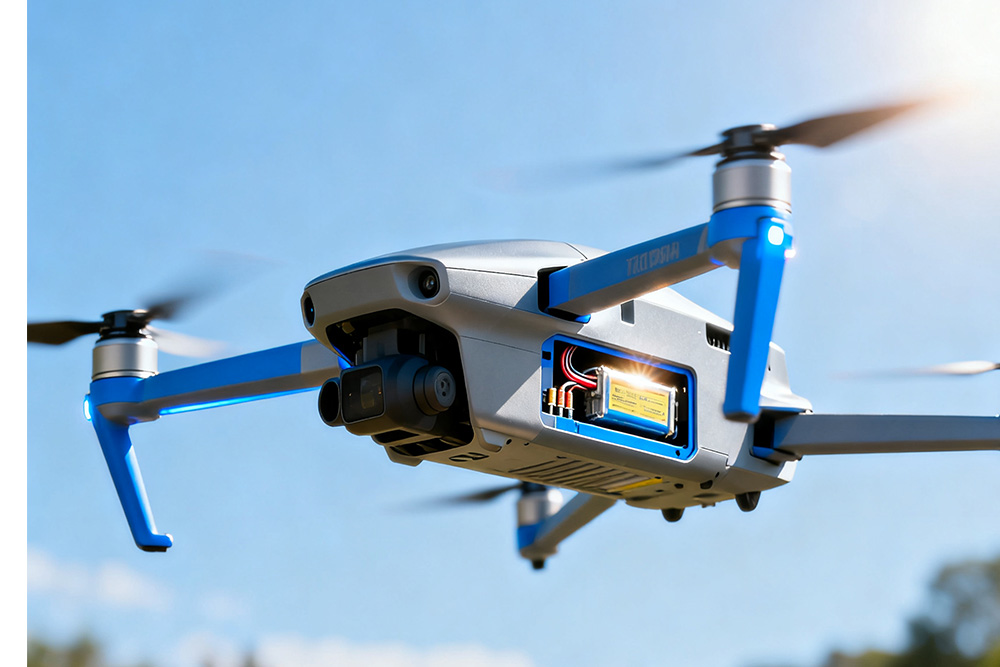
A Real Look at Why This Power Source Still Rules the Skies
If you’ve ever opened up a drone or browsed through DIY drone forums, you’ve probably noticed something: almost everyone is flying with LiPo batteries. It’s not a coincidence. Drone pilots didn’t pick them because they’re trendy—they picked them because they work.

After spending some time tinkering with drones myself, I realized that LiPo batteries aren’t perfect, but they strike the right balance between power, weight, and control. Let’s break down why they’ve become the standard, not just in racing drones, but even in aerial photography and small commercial units.
1. They Deliver Power the Moment You Need It
The first time I switched from a regular lithium-ion pack to a LiPo, the difference was immediate. The drone lifted faster, reacted quicker, and didn’t hesitate when I pushed the throttle. That’s because LiPo batteries can release a lot of current in an instant—something drones need for takeoff, quick climbs, or sudden maneuvers.
A typical lithium-ion cell just can’t handle that kind of power draw. It’s like comparing a slow, steady marathon runner to a sprinter who explodes off the line. For racing drones or anything that needs agility, LiPo is the obvious choice.
2. Lightweight and Shape-Friendly
Drone design is always a balancing act between weight and power. Too heavy, and your flight time drops. Too weak, and your drone feels sluggish. LiPo batteries are lightweight and can be built in all kinds of shapes—flat, rectangular, stacked—making them perfect for tight drone frames.
I’ve seen FPV pilots literally cut their frame design around a specific LiPo pack. Every gram matters in the air, and a LiPo battery usually gives you that little edge that keeps the drone light but responsive.
3. Built for Stress and Quick Recovery
A lot of drones don’t fly in smooth, predictable patterns. They climb, dive, hover, flip, and then shoot forward again. LiPo batteries handle that kind of erratic load better than most other options.
Think of a camera drone that suddenly tilts up to capture a mountain view. The motors need a burst of energy, and the LiPo pack provides it instantly without voltage sag. That stability is what keeps the footage smooth and the drone under control.
4. Yes, They Wear Out Faster — But That’s the Trade
Let’s be honest: LiPo batteries don’t last forever. After a few hundred charge cycles, they start to puff or lose capacity. You have to treat them with care—never overcharge, never puncture, and definitely don’t leave them in a hot car.
But most drone pilots are okay with that trade. The logic is simple: it’s better to have a battery that performs perfectly for 100 flights than one that lasts 300 but flies like a brick. As long as you store them at the right voltage and use a proper charger, LiPo packs can stay healthy for quite a while.

5. When Li-ion Makes Sense (and When It Doesn’t)
There are exceptions. If you’re building a long-endurance drone—something that just cruises in the sky for mapping or surveying—Li-ion might make more sense. It holds more energy for its weight and can keep your drone flying longer, but only if you don’t push it too hard.
For most everyday drones though, especially those used for filming or sport flying, LiPo simply feels better in the air. It reacts faster, handles power surges, and gives you that confident control you can feel through the sticks.
Final Thoughts
At the end of the day, drones use LiPo batteries because they match the way drones behave. They’re not about endurance or longevity—they’re about performance, responsiveness, and balance.
Yes, they demand a bit more respect when charging and storing. Yes, they wear out faster. But when you hit the throttle and your drone responds instantly, you’ll understand why most pilots keep coming back to LiPo.
Flying is all about control and feeling—and that’s something numbers alone can’t explain.
Leave a Reply