
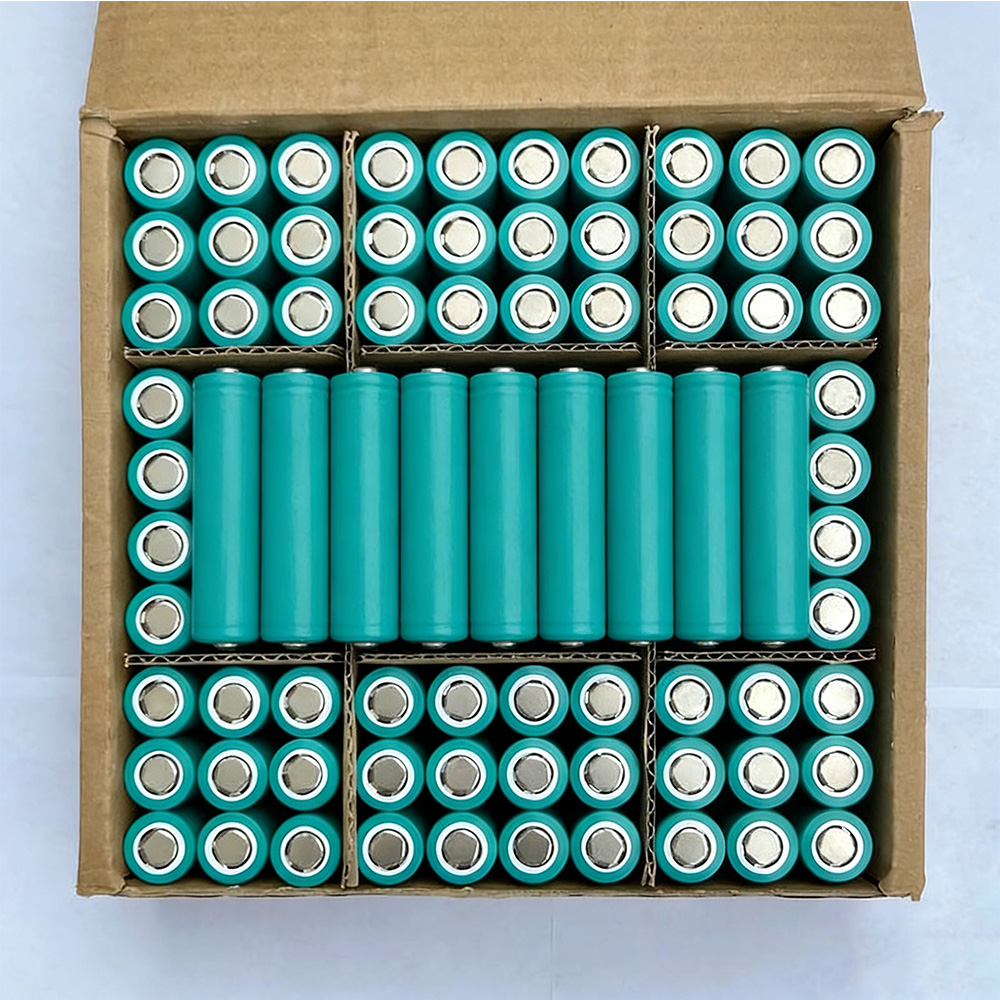
3.7V 18650 battery is one of those products everyone in the battery business runs into sooner or later. Flashlights, LED lighting, power tools, portable devices, backup power packs—you name it. For wholesalers, this cell format is familiar, stable in demand, and, honestly, unavoidable.
For bulk buyers who care about consistency and price, ordering 18650 cells bulk usually makes the most sense. Buying in larger quantities not only helps cut down the cost per cell, it also makes it easier to plan production and keep enough stock on hand. That’s why many experienced buyers focus more on overall cell quality and supplier reliability when they order 18650 cells in bulk.
But here’s the thing.
At the wholesale level, knowing what a 3.7V 18650 battery is doesn’t really help much. What matters is how different cells behave in real orders, real shipments, and real customer applications.
This article isn’t meant to teach basics. It’s more about what bulk buyers actually care about when sourcing these batteries—and where things usually go wrong.

What a 3.7V 18650 Battery Actually Means
“18650” simply refers to the physical size: roughly 18 mm in diameter and 65 mm in length.
The 3.7V is the nominal voltage. Fully charged, the cell sits closer to 4.2V, which is standard for most lithium-ion chemistry.
That part is straightforward.
But once you start buying in volume, voltage numbers on a datasheet stop telling the full story. Load behavior, voltage drop, heat buildup—those details matter much more than the label.
If you want a clean technical baseline to align everyone on the same page, this
3.7V 18650 lithium-ion rechargeable battery overview
does a good job explaining the fundamentals and is often useful when discussing specs with suppliers.
Capacity Levels and What They Mean for Wholesale Buyers
In bulk orders, the most common capacities you’ll see are:
- 1500–2500 mAh: lower-cost cells, usually for light-duty applications
- 2600–3300 mAh: the mainstream range, balancing price and performance
- 3500 mAh and above: high-capacity cells, higher cost, tighter quality requirements
From a wholesale perspective, capacity is as much about market positioning as it is about performance.
Lower-capacity cells move fast in price-sensitive markets.
Mid-range capacities tend to be the safest sellers.
High-capacity cells look attractive on paper but demand stricter quality control and clearer application matching.
That’s why many buyers don’t rely on one SKU anymore. They usually review a structured
18650 lithium battery product range
and stock different options for different downstream uses.
What Bulk Buyers Actually Worry About
Price matters, obviously. But experienced wholesalers worry more about consistency.
One batch performs fine.
The next batch looks identical but ages faster, runs hotter, or drops voltage earlier under load.
That’s usually tied to internal quality variation—manufacturing process, aging stock, or inconsistent cell grading. These problems don’t show up immediately. They show up after products are already in the field.
For distributors and OEM buyers, that’s where returns, disputes, and long-term trust issues start.

Performance Requirements Go Beyond Capacity
Many downstream customers don’t ask for “18650 batteries.”
They ask for solutions.
- Power tools care about discharge current
- Lighting products care about runtime stability
- Battery packs care about cycle life and consistency
A cell that works perfectly in one application may quietly fail in another. Not catastrophically—just gradually.
That’s why wholesale sourcing increasingly focuses on matching the cell to the application. Comparing different options inside a
professional 18650 lithium battery selection
often reveals differences that spec sheets alone don’t show.
Shipping and Compliance Are Part of the Cost
Lithium-ion batteries are regulated goods. Everyone knows that, but the impact often gets underestimated.
Air freight costs fluctuate.
Packaging rules are strict.
Documentation mistakes cause delays.
For bulk 3.7V 18650 battery orders, logistics planning becomes part of the purchasing decision. These trade-offs are invisible to end users—but wholesalers feel them immediately.
How Quality Is Usually Checked in Practice
Most bulk buyers don’t run full laboratory tests. And that’s normal.
What they usually do instead:
- Sample capacity testing
- Basic discharge checks
- Visual inspection
- Documentation review
It’s not about catching every defect. It’s about spotting patterns early.

Final Thoughts From the Wholesale Side
The 3.7V 18650 battery market is mature, but it’s not simple.
Margins aren’t made by chasing the cheapest cell. They’re made by understanding how capacity, consistency, logistics, and application fit together—and by choosing products that won’t come back as problems later.
If you’re evaluating bulk options right now, starting from a well-organized
18650 lithium battery wholesale category
is often the fastest way to see what’s realistically available for sourcing.
That clarity saves time. And usually, money.
Related Articles
- What is the Best 18650 Rechargeable Battery?
- Bulk 18650 Batteries: Get a Good Price and Customized Service Here
- What Uses 18650 Battery Packs?
- How Many 18650 Batteries Do I Need for 100Ah?
- 18650 Battery Which Side is Positive,A Quick and Practical Guide
- 18650 Button Top Battery: Everything You Should Know
- 18650-2S1P 7.2V 2000mAh Lithium-Ion Battery: Big Power in a Small Package
- 21700 vs 18650 Batteries: Which Is Better and Can You Replace 18650 with 21700?
- How to Make Your Own 18650 Battery Pack: A Complete DIY Guide
- What is 18650 Flat Top Rechargeable Battery?
- Best 18650 Battery,What Wholesale Buyers Should Know
- Explore the best top 18650 battery manufacturers in the world
- 12 Volt 18650 Battery Pack Wholesale Guide: What Buyers Should Know
- Everything You Need to Know About 18650 E-bike Battery Packs: Tips, Design & Maintenance
- The Real Guide to 20s 3.7V 18650 Battery Packs
- Understanding 18650 Battery 10S2P: Construction, Performance, and Applications
- Customizing 18650 E-Bike Battery Packs: Key Points on Capacity and BMS Selection
- 4S1P 18650 Battery Pack Basics: In-Depth Analysis and Practical Applications
- Differences Between 18650 and 21700 Batteries
- ICR18650 2200 mAh Li-ion Battery Review: A Deep Dive into the Real Story
- how to make a 12v 18650 battery pack
- 18650 Battery Pack 12V 100Ah: Build Your Efficient Energy Storage Tool
- How Many Amp is 18650 Battery,Understanding 18650 Battery Current Parameters
- How to Build Your Own 18650 Battery Pack
- 18650 EV Battery Pack: The Unsung Hero of Electric Vehicles
Related Products
-

12V 4400 mah Lithium ion 3S2P 18650 Battery Pack
-

18650 2000mAh 3.7 volt Lithium-ion Battery
-

18650 20V 3.0Ah Cordless Drill battery
-

18650 22.2V 7.8Ah 2600Mah 6S3P Rechargeable Battery Pack
-

18650 2600mAh Rechargeable Lithium-Ion Battery 3.7V
-

18650 3.7V 10Ah Li-Ion Power Battery Pack
-

18650 3.7V 3300mah Rechargeable Lithium ion Battery
-

18650 7S7P 24V 14Ah Lithium ion Electric Scooter Battery Pack
-

18650 battery 3.7V 1500mAh Lithium-Ion Battery
-

18650 Battery 3500 mah Rechargeable Battery Cells
-

18650 Electric Scooter 48V 13000mAh Lithium Battery
-

2600mAh 3S1P 11.1V 18650 Battery Packs
-

3.7V Li ion Rechargeable 3000mah 18650 Battery Cell
-

36V 5200mAh 10S2P 18650 Battery Pack
-

48v 4400mah 13S2P 18650 Rechargeable Battery Pack
-

7S2P 24V 18650 Lithium Battery Pack
-

Electric Scooter 36V 4400mAH 10S2P 18650 Battery Pack
-

ICR 18650 Battery 2200mah 3.7V
Leave a Reply