
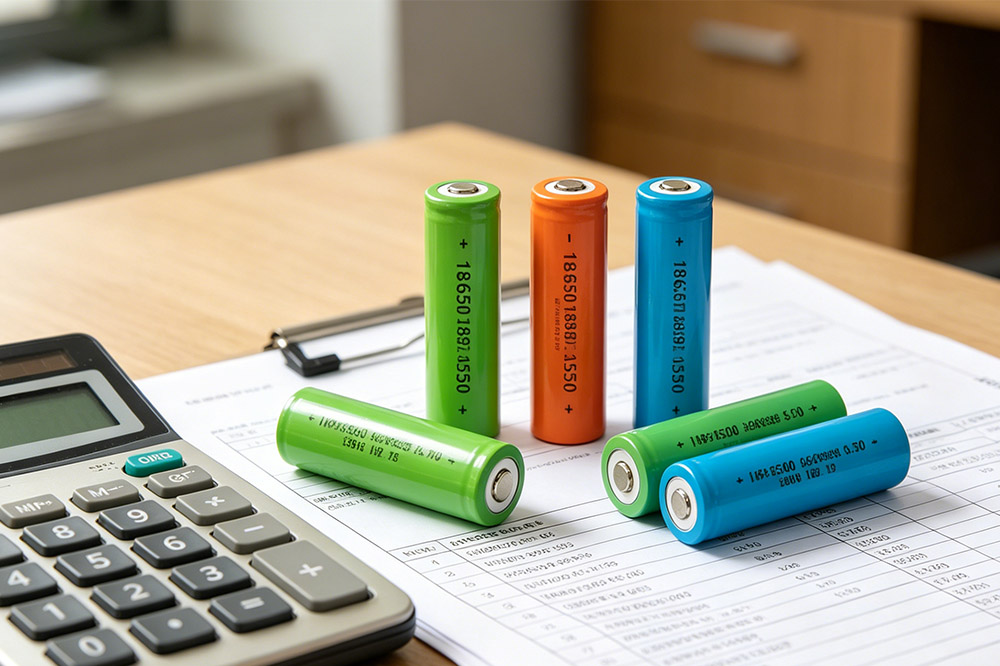
One of the first questions buyers ask is simple:
“What’s your price for 18650 batteries?”
But anyone who has sourced them before knows — there is no single answer.
Prices can vary a lot, even for cells that look almost identical on paper. And if you only compare numbers without understanding what’s behind them, it’s easy to make the wrong call.
Let’s break this down in a practical way.
Why Prices Vary More Than You Expect
At first glance, most 18650 batteries share the same basics:
- 3.7V
- Similar size
- Similar capacity range
But pricing differences usually come from things you don’t see immediately.
Two suppliers can quote very different prices for what looks like the same product — and both might be “correct” in their own way.
The real question is:
what exactly are you paying for?
Capacity Still Matters — But It’s Not the Whole Story
Higher capacity cells generally cost more. That part is straightforward.
Typical ranges:
- 2000–2200mAh → lower cost
- 2500–2800mAh → mid-range
- 3000–3500mAh → higher cost
But here’s where it gets tricky.
Some suppliers offer “3000mAh” cells at unusually low prices. In many cases, the real usable capacity doesn’t match the label.
So instead of just looking at the number, ask:
- Is the capacity tested and verified?
- How does it perform after repeated cycles?
Because a cheap “3000mAh” battery that behaves like 2400mAh isn’t actually cheap.

Cell Grade Makes a Big Difference
Not all cells are made to the same standard.
You’ll often hear terms like:
- A-grade cells
- B-grade or lower-grade cells
The difference isn’t just technical — it directly affects price and performance.
Higher-grade cells usually mean:
- Better consistency
- Longer cycle life
- Lower failure rate
Lower-grade cells may look fine at first, but performance can vary more from unit to unit.
This is one of the main reasons why prices can differ significantly.
Discharge Performance Also Affects Cost
If your application needs higher current output, the price will go up.
For example:
- Standard discharge → lower cost
- High discharge (for tools, equipment) → higher cost
That’s because high-drain cells require different materials and manufacturing standards.
Trying to save money here often leads to problems later — especially in products that draw a lot of power.
Cycle Life Is an Invisible Cost Factor
This is something many buyers overlook in early sourcing stages.
Two batteries might be priced differently because:
- One lasts ~300 cycles
- Another lasts ~800 cycles
If your product is expected to last longer, the cheaper battery can end up costing more in replacements, support, and reputation.
So even if cycle life isn’t visible in the quote, it’s already built into the price.
Certifications and Compliance Add Real Cost
If batteries are intended for export, certifications matter — and they’re not free.
Common ones include:
- UN38.3
- MSDS
- UL / CE
Suppliers who properly test and certify their products will naturally have higher costs compared to those who don’t.
If a price seems unusually low, it’s worth checking whether certifications are actually included.
Order Quantity and Packaging Also Play a Role
Bulk pricing isn’t just about the battery itself.
It’s also affected by:
- Order volume (larger orders usually reduce unit price)
- Packaging requirements
- Shipping method (air vs sea)
- Labeling and documentation
Sometimes a quote looks competitive until these factors are added.

So… What’s a “Normal” Price?
There’s no fixed number, but in general:
- Lower-end cells → cheaper, but more variability
- Mid-range → balanced performance and cost
- Higher-end → more stable, longer life, higher price
Most experienced buyers don’t aim for the lowest price.
They look for a price level where quality stays consistent.
How to Avoid Overpaying (or Underbuying)
A simple way to think about it:
- If the price is too high → check if you’re over-specifying
- If the price is too low → check what’s missing
In practice, it helps to:
- Compare samples, not just quotes
- Ask clear questions about grade and testing
- Understand your actual performance needs
That usually leads to a better decision than focusing on price alone.
If You’re Comparing Suppliers
It’s often easier to compare when you can see multiple options in one place.
For reference, you can review different configurations here:https://www.anpsglobal.com/product-category/18650-lithium-battery/
This helps you get a general sense of how specifications relate to pricing.
Final Thought
When it comes to 18650 battery pricing, there’s always a trade-off somewhere.
Lower price usually means something has been reduced —
quality, consistency, lifespan, or support.
The goal isn’t to find the cheapest option.
It’s to find the one that won’t cause problems later.
Because in the end,
the real cost shows up after the batteries are in use.
Related Prodcuts
-

12V 4400 mah Lithium ion 3S2P 18650 Battery Pack
-

18650 2000mAh 3.7 volt Lithium-ion Battery
-

18650 20V 3.0Ah Cordless Drill battery
-

18650 22.2V 7.8Ah 2600Mah 6S3P Rechargeable Battery Pack
-

18650 2600mAh Rechargeable Lithium-Ion Battery 3.7V
-

18650 3.7V 10Ah Li-Ion Power Battery Pack
-

18650 3.7V 3300mah Rechargeable Lithium ion Battery
-

18650 7S7P 24V 14Ah Lithium ion Electric Scooter Battery Pack
-

18650 battery 3.7V 1500mAh Lithium-Ion Battery
-

18650 Battery 3500 mah Rechargeable Battery Cells
-

18650 Electric Scooter 48V 13000mAh Lithium Battery
-

2600mAh 3S1P 11.1V 18650 Battery Packs
-

3.7V Li ion Rechargeable 3000mah 18650 Battery Cell
-

36V 5200mAh 10S2P 18650 Battery Pack
-

48v 4400mah 13S2P 18650 Rechargeable Battery Pack
-

7S2P 24V 18650 Lithium Battery Pack
-

Electric Scooter 36V 4400mAH 10S2P 18650 Battery Pack
-

ICR 18650 Battery 2200mah 3.7V
Leave a Reply