
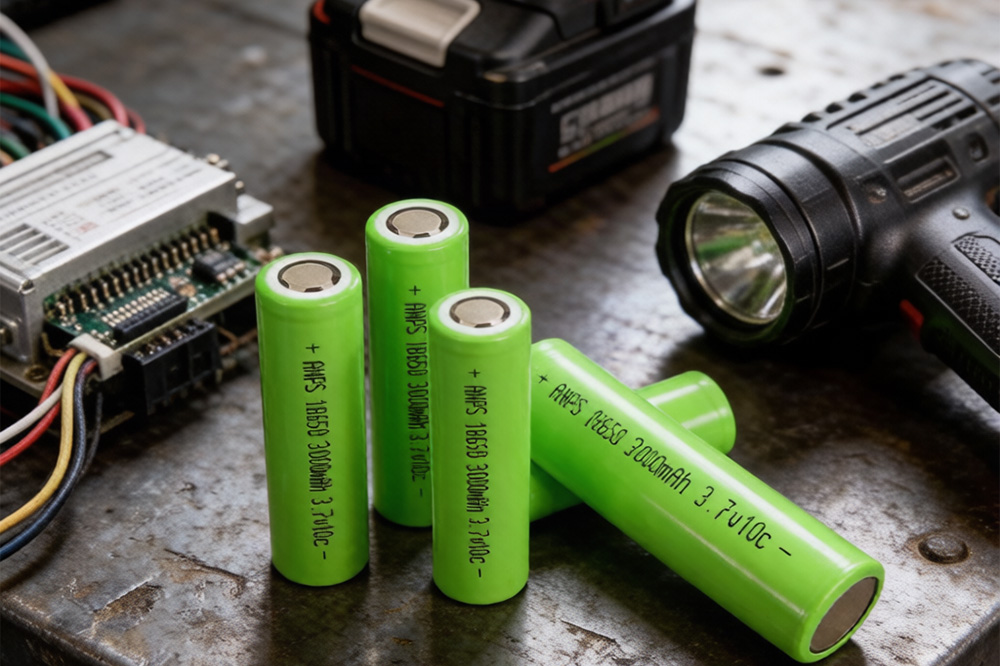
If you’ve spent any time around power tools, high-lumen flashlights, electric bikes, or DIY battery packs, you’ve probably heard people talk about “high discharge 18650 battery.”
At first glance, all 18650 cells may look almost identical. But once current demand increases, the difference between a standard cell and a high discharge cell becomes very obvious.
Some batteries are designed to deliver long runtime. Others are built to push high current safely and consistently. Trying to get both maximum capacity and maximum discharge from the same cell is where things become complicated.
That’s why understanding discharge rate matters before choosing an 18650 battery for your project.
If you’re looking for reliable 18650 lithium battery solutions for industrial or commercial applications, knowing how high-drain cells work can help you avoid overheating, voltage sag, or shortened battery life.
What Is High Discharge 18650 Battery?
A high discharge 18650 battery is a lithium-ion cell designed to provide higher current output than standard 18650 cells.
In simple terms, it can release energy much faster without overheating or becoming unstable.
A normal consumer-grade 18650 cell may only support moderate current loads. A high-drain version is engineered for applications where equipment suddenly demands a lot of power, such as:
- Power tools
- Vape devices
- RC vehicles
- High-performance flashlights
- Electric bikes
- Solar storage systems
- Portable power stations
The term “high discharge” usually refers to the continuous discharge current rating, often measured in amps.
For example:
- Standard cells may handle around 5A–10A
- High discharge cells may support 20A, 30A, or even higher
The higher the current rating, the better the battery performs under heavy electrical load.

High Capacity vs High Discharge: The Trade-Off
One thing battery enthusiasts constantly discuss is the balance between capacity and discharge rate.
Higher capacity means longer runtime.
Higher discharge means stronger power delivery.
Unfortunately, lithium-ion chemistry has limits. Increasing one often reduces the other.
For example:
- A 3500mAh cell may offer excellent runtime but lower current output
- A 2500mAh high-drain cell may deliver far more power under load
That’s why experienced builders choose batteries based on application instead of simply buying the highest mAh number available.
For high-drain devices, discharge capability matters more than advertised capacity.
Why Discharge Current Matters
A battery that cannot provide enough current will struggle under heavy load.
This can lead to:
- Voltage drop
- Excess heat
- Reduced performance
- Faster aging
- Potential safety issues
For example, a flashlight running at turbo mode may require a sudden burst of current. If the battery cannot handle it, brightness drops quickly.
The same applies to electric tools or battery packs during acceleration or startup loads.
High discharge 18650 batteries are built with lower internal resistance, allowing them to deliver power more efficiently.
Continuous Discharge vs Pulse Discharge
Many buyers get confused by battery specifications because manufacturers sometimes advertise pulse ratings instead of continuous ratings.
Here’s the difference:
Continuous Discharge Rating (CDR)
This is the amount of current the battery can safely deliver continuously without overheating.
It’s the most important specification when comparing high-drain cells.
Pulse Discharge Rating
This refers to short bursts of current for a few seconds.
Pulse ratings are often much higher, but they are not suitable for continuous operation.
When choosing a high discharge 18650 battery, continuous rating is the number that actually matters.

Common Applications for High Drain 18650 Batteries
Power Tools
Cordless drills, grinders, and impact drivers require rapid energy delivery.
High-drain cells help maintain consistent torque under load.
Flashlights
Modern LED flashlights can draw massive current in turbo mode.
A weak battery causes dimming and reduced runtime.
Electric Bikes
E-bike battery packs experience high current during acceleration and hill climbing.
High discharge cells improve responsiveness and efficiency.
DIY Battery Packs
Builders creating custom battery systems often choose high-drain cells for better performance and lower voltage sag.
Solar Energy Storage
Some off-grid systems use 18650 cells for compact storage banks where stable current delivery is important.

Protected vs Unprotected High Drain Cells
Another important distinction is whether the battery includes a protection circuit.
Protected Cells
These include electronic protection against:
- Overcharge
- Over-discharge
- Short circuit
- Overcurrent
They are generally safer for casual users.
Unprotected Cells
These rely entirely on external battery management systems or user knowledge.
Most serious high-discharge applications use unprotected cells because protection circuits can limit current flow.
However, they require proper handling and battery management.
How to Choose the Right High Discharge 18650 Battery
1. Match the Battery to the Device
Don’t choose based on capacity alone.
A battery for a flashlight has different requirements than a battery for a power drill.
2. Check the Continuous Current Rating
Always verify the continuous discharge specification instead of marketing claims.
3. Avoid Exaggerated Ratings
Some low-quality sellers advertise unrealistic capacities or amp ratings.
If a cell claims extremely high capacity and extremely high discharge simultaneously, be cautious.
4. Consider Heat Management
High current creates heat.
Proper airflow, pack design, and thermal management all matter in high-drain applications.
5. Use Proper Charging Equipment
Using poor chargers shortens battery life and increases safety risks.
Quality charging systems help maintain cell balance and long-term performance.
How to Extend the Life of a High Discharge 18650 Battery
Even high-quality cells degrade over time, especially under heavy load.
A few habits can significantly improve lifespan:
- Avoid full discharge whenever possible
- Keep batteries away from excessive heat
- Store partially charged for long-term storage
- Use balanced charging systems
- Avoid cheap fast chargers
- Do not exceed recommended current limits
Heat is one of the biggest enemies of lithium-ion batteries. Running cells continuously at maximum current shortens their cycle life dramatically.
Signs of a Low-Quality High Drain 18650 Battery
Not all batteries on the market are genuine high-discharge cells.
Watch for warning signs like:
- Unrealistic capacity claims
- No verified discharge specifications
- Extremely low pricing
- Missing safety information
- Poor wrapper quality
- Inconsistent performance between cells
Reliable suppliers usually provide detailed specifications and testing data.
Conclusion
A high discharge 18650 battery is designed for situations where strong current delivery matters more than maximum runtime.
Whether you’re building a battery pack, upgrading a flashlight, or powering industrial equipment, understanding discharge capability helps you choose safer and more efficient cells.
The best battery is not necessarily the one with the highest capacity. It’s the one that matches the real electrical demands of your application.
As more industries adopt portable energy systems, demand for dependable 18650 lithium battery solutions continues to grow across power tools, mobility devices, energy storage, and smart electronics.
Related Products
-

12V 4400 mah Lithium ion 3S2P 18650 Battery Pack
-

18650 2000mAh 3.7 volt Lithium-ion Battery
-

18650 20V 3.0Ah Cordless Drill battery
-

18650 22.2V 7.8Ah 2600Mah 6S3P Rechargeable Battery Pack
-

18650 2600mAh Rechargeable Lithium-Ion Battery 3.7V
-

18650 3.7V 10Ah Li-Ion Power Battery Pack
-

18650 3.7V 3300mah Rechargeable Lithium ion Battery
-

18650 7S7P 24V 14Ah Lithium ion Electric Scooter Battery Pack
-

18650 battery 3.7V 1500mAh Lithium-Ion Battery
-

18650 Battery 3500 mah Rechargeable Battery Cells
-

18650 Electric Scooter 48V 13000mAh Lithium Battery
-

2600mAh 3S1P 11.1V 18650 Battery Packs
-

3.7V Li ion Rechargeable 3000mah 18650 Battery Cell
-

36V 5200mAh 10S2P 18650 Battery Pack
-

48v 4400mah 13S2P 18650 Rechargeable Battery Pack
-

7S2P 24V 18650 Lithium Battery Pack
-

Electric Scooter 36V 4400mAH 10S2P 18650 Battery Pack
-

ICR 18650 Battery 2200mah 3.7V
Leave a Reply