
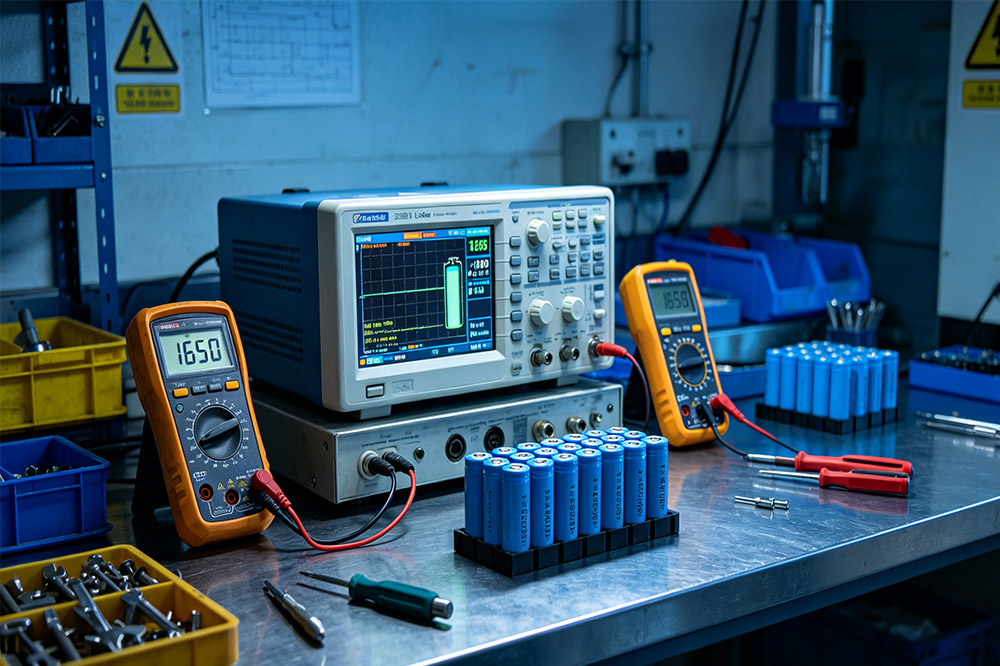
If you’ve ever received a batch of 18650 batteries that didn’t perform as expected, you know the problem:
On paper, everything looked fine.
In reality, it wasn’t.
That’s why experienced buyers rarely rely on datasheets alone.
They test.
The good news is—you don’t need a full lab setup to do basic checks before placing a bulk order.
What You Actually Need to Test
You don’t need complicated equipment.
For most buyers, a simple setup is enough:
- A battery capacity tester (or analyzer)
- A multimeter
- Internal resistance meter (or tester with IR function)
With these three, you can already spot most quality issues.
Step 1: Check Voltage Consistency
Start simple.
Measure the voltage of multiple cells from the same batch.
What you’re looking for is not the exact number — but how close they are to each other.
If the voltage spread is large, it usually means:
- Cells are from mixed batches
- Storage conditions were inconsistent
- Quality control is not strict
A good batch should be relatively uniform.

Step 2: Test Real Capacity
This is where many surprises show up.
Run a standard charge–discharge test and check the actual mAh.
Things to watch:
- Is it close to the rated 2200mAh or 2600mAh?
- How big is the variation between cells?
If some cells drop significantly below spec, that’s a warning sign.
Step 3: Measure Internal Resistance
This step tells you a lot about real performance.
Check multiple cells and compare the values.
You don’t need perfect numbers — you need consistency.
If resistance varies a lot:
- The pack will be harder to balance
- Heat and performance issues are more likely
Step 4: Do a Simple Load Test
Even without advanced equipment, you can simulate real use.
Connect the battery to a load and observe:
- Voltage drop under load
- Temperature change
- Stability over time
Weak cells usually show up quickly here.
Step 5: Run a Few Charge Cycles
You don’t need to test hundreds of cycles.
Even 20–50 cycles can reveal a lot.
Watch for:
- Capacity drop speed
- Performance consistency
- Any abnormal behavior
Some low-quality cells look fine at the beginning, then degrade quickly.

What Good Results Look Like
After testing, a reliable batch usually shows:
- Similar voltage across cells
- Capacity close to the rated value
- Tight internal resistance range
- Stable performance over initial cycles
Nothing extreme — just consistent.
That’s what you’re aiming for.
A Practical Tip from Buyers
Many experienced buyers don’t place large orders right away.
They:
- Order samples from multiple suppliers
- Run basic tests like the ones above
- Compare results side by side
The difference is usually obvious once you test.
Final Thought
Testing 18650 batteries before bulk purchase doesn’t need to be complicated.
But skipping it can be expensive.
A few simple checks upfront can save you from:
- Inconsistent battery packs
- Production delays
- Customer complaints
For bulk projects, it’s always worth the extra step.
Related Products
-

12V 4400 mah Lithium ion 3S2P 18650 Battery Pack
-

18650 2000mAh 3.7 volt Lithium-ion Battery
-

18650 20V 3.0Ah Cordless Drill battery
-

18650 22.2V 7.8Ah 2600Mah 6S3P Rechargeable Battery Pack
-

18650 2600mAh Rechargeable Lithium-Ion Battery 3.7V
-

18650 3.7V 10Ah Li-Ion Power Battery Pack
-

18650 3.7V 3300mah Rechargeable Lithium ion Battery
-

18650 7S7P 24V 14Ah Lithium ion Electric Scooter Battery Pack
-

18650 battery 3.7V 1500mAh Lithium-Ion Battery
-

18650 Battery 3500 mah Rechargeable Battery Cells
-

18650 Electric Scooter 48V 13000mAh Lithium Battery
-

2600mAh 3S1P 11.1V 18650 Battery Packs
-

3.7V Li ion Rechargeable 3000mah 18650 Battery Cell
-

36V 5200mAh 10S2P 18650 Battery Pack
-

48v 4400mah 13S2P 18650 Rechargeable Battery Pack
-

7S2P 24V 18650 Lithium Battery Pack
-

Electric Scooter 36V 4400mAH 10S2P 18650 Battery Pack
-

ICR 18650 Battery 2200mah 3.7V
Leave a Reply