
when people first search for “lithium battery original”, they often think they are looking for something very specific — like factory-sealed, untouched, fully guaranteed cells.
But in real sourcing work, this term is not that clean or strict.
Different suppliers may use “original” in slightly different ways.
Sometimes it just means brand-new production.
Sometimes it means no recycled cells inside.
And in some cases, it’s more like a marketing word than a technical definition.
So the confusion is actually quite common.
The problem is usually not visible from the outside
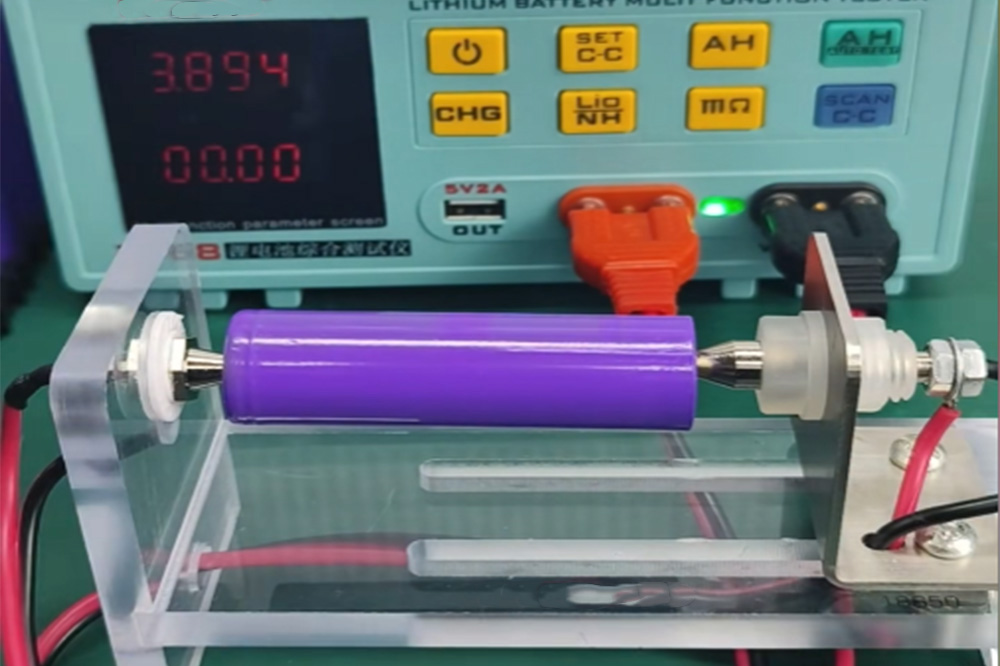
I’ve seen cases where two batches of 18650 cells look almost identical.
Same size, similar wrapping, similar labeled capacity.
But once you run a discharge test, things start to split.
One batch holds voltage quite steadily.
The other one drops earlier than expected in the middle stage.
At that point, you realize appearance doesn’t tell much.
This is why experienced buyers don’t rely too much on the printed capacity anymore. They tend to look at things like:
- consistency between cells in the same batch
- internal resistance variation
- discharge curve stability under load
- whether test data is actually available or just “spec sheet only”
These details are not always easy to see in early communication.

18650 still shows up everywhere, even today
It’s a bit interesting that even with newer formats coming out, 18650 lithium cells are still widely used.
Not because it is the most advanced format, but because it is predictable.
You see it in many applications:
- industrial handheld devices
- portable instruments
- backup power systems
- energy storage modules
- power tools
- security systems
- small electric mobility setups
It’s not perfect, of course. Size is limited, energy density is not the newest level.
But for many engineers, stability matters more than novelty.
Sometimes “boring and stable” is exactly what they want.
The word “original” is not the real decision point
In actual procurement work, problems rarely come from the label itself.
More often, issues appear later:
- slight differences between batches
- cells with same rating but different aging speed
- inconsistent internal resistance in large orders
- performance gaps only visible after deployment
These things don’t show up in a simple quotation sheet.
And to be fair, not every supplier will openly provide full test reports unless you ask for them clearly.
How some buyers actually check quality
From what I’ve seen, experienced buyers usually do something like this:
- start with small trial orders instead of jumping to volume
- randomly test discharge performance on arrival
- compare multiple cells within the same batch
- check whether labeling and batch codes actually make sense
- observe if next batch stays consistent with the first one
It sounds a bit repetitive, but in real projects, this avoids a lot of trouble later.
Especially when the battery goes directly into end products, replacing it is not a simple task.

Supplier consistency often matters more than the cell itself
One pattern appears quite often in OEM projects.
When problems happen, it’s not always because the cell is “bad”.
Sometimes it’s because:
- production control is not stable
- different orders come from slightly different sourcing channels
- testing standards are not consistent
- batch-to-batch variation is not controlled tightly
On the other hand, some suppliers are not always the cheapest, but they are consistent. That consistency becomes more important when scaling production.
Because in bulk projects, you are not really buying one batch — you are buying continuity.
A real-world type of case
There was a project from device manufacturer trying to reduce cost by switching to a lower-priced battery source.
At first, everything looked fine.
Samples passed basic tests, and early deliveries worked normally.
But after several months, field feedback started showing uneven runtime across devices. Some units degraded faster than others.
After investigation, the issue wasn’t obvious cell failure — it was more like slight inconsistency between batches that became visible only at scale.
Eventually they moved back to a more stable supply chain, even with higher unit cost.

So what people actually mean by “original lithium battery”
After working with different sourcing cases, it feels like the word “original” is not really the goal.
What buyers actually want is closer to this:
- stable and traceable production
- no mixed or unclear cell sourcing
- realistic performance, not exaggerated specs
- repeatable quality across shipments
- supplier who can support long-term supply
It’s less about labeling, more about predictability.
Especially for OEM and industrial applications, unpredictability is the real risk.
-

12V 4400 mah Lithium ion 3S2P 18650 Battery Pack
-

18650 2000mAh 3.7 volt Lithium-ion Battery
-

18650 20V 3.0Ah Cordless Drill battery
-

18650 22.2V 7.8Ah 2600Mah 6S3P Rechargeable Battery Pack
-

18650 2600mAh Rechargeable Lithium-Ion Battery 3.7V
-

18650 3.7V 10Ah Li-Ion Power Battery Pack
-

18650 3.7V 3300mah Rechargeable Lithium ion Battery
-

18650 7S7P 24V 14Ah Lithium ion Electric Scooter Battery Pack
-

18650 battery 3.7V 1500mAh Lithium-Ion Battery
-

18650 Battery 3500 mah Rechargeable Battery Cells
-

18650 Electric Scooter 48V 13000mAh Lithium Battery
-

2600mAh 3S1P 11.1V 18650 Battery Packs
-

3.7V Li ion Rechargeable 3000mah 18650 Battery Cell
-

36V 5200mAh 10S2P 18650 Battery Pack
-

48v 4400mah 13S2P 18650 Rechargeable Battery Pack
-

7S2P 24V 18650 Lithium Battery Pack
-

Electric Scooter 36V 4400mAH 10S2P 18650 Battery Pack
-

ICR 18650 Battery 2200mah 3.7V
Leave a Reply