
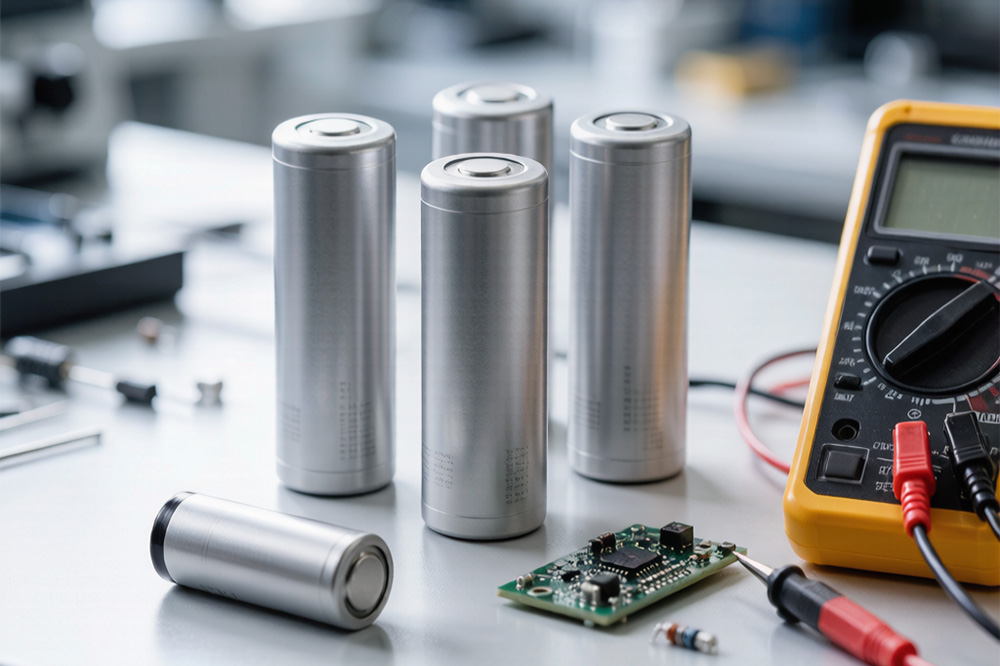
I’ve lost count of how many times someone has asked, “What’s the best 18650 battery?”
Usually, they’re expecting a single model number. The reality is a little messier.
A battery that works brilliantly in a high-powered flashlight may perform poorly inside a medical device. One that’s built for long runtime could disappoint if your equipment needs sudden bursts of current. After reading industry guides, technical documents, user discussions, and testing reports, one pattern keeps showing up: there isn’t one universally best 18650 battery—only the best one for a specific job.
For companies sourcing cells in volume, that distinction matters even more.
Ignore Marketing Numbers for a Minute
One mistake appears again and again in online marketplaces.
A listing promises 5000mAh or even 9900mAh in an 18650 format. It sounds attractive until you compare it with what experienced battery engineers and long-time users regularly observe: today’s genuine commercial 18650 cells generally trade off capacity against discharge capability, and exaggerated ratings are often a warning sign rather than a benefit. Community discussions also frequently caution buyers against unrealistic specifications and unknown rewrapped products.
When evaluating suppliers, I usually pay more attention to consistency than headline capacity.
Capacity vs. Power: You Rarely Get Both
Think of the 18650 format as balancing three competing priorities:
| Priority | Typical Characteristic | Common Applications |
|---|---|---|
| Longer runtime | Higher mAh, moderate discharge | LED lighting, portable electronics, sensors |
| High output | Higher continuous current, moderate capacity | Power tools, drones, industrial equipment |
| Balanced use | Mid-range capacity and current | Consumer products, robotics, OEM devices |
Some purchasing managers focus only on mAh because it looks better in marketing materials. Engineers often ask a different question: How much current can this cell safely deliver over time?
That difference changes everything.

The Three Specs I Check Before Anything Else
1. Continuous discharge rating
This tells you how much current a battery can safely provide without overheating or shortening its useful life.
For industrial devices with motors or strong LED drivers, this figure is often more important than capacity.
2. Actual usable capacity
Nominal capacity isn’t always identical to what users experience in the field. Testing conditions, discharge rate, and temperature all affect measured performance. Even reputable cells may measure slightly below their labeled value while remaining within specification. Community testing regularly reflects this reality.
3. Cycle life
If equipment is recharged daily, a battery surviving hundreds of stable cycles may save far more money than chasing another 100mAh on paper.
Flat Top or Button Top?
This question comes up more often than expected.
- Flat-top cells are commonly selected for custom battery packs and OEM assemblies.
- Button-top versions fit products designed around spring contacts.
- Protected cells include additional circuitry but are physically longer.
- Unprotected cells rely on protection built into the device or battery management system.
I’ve seen perfectly good batteries returned simply because buyers overlooked dimensional differences during procurement.
Buying for Flashlights Is Different From Buying for Industrial Equipment
A flashlight enthusiast may prioritize sustained brightness over several hours.
An AGV manufacturer might instead require repeatable discharge behavior across thousands of production units.
A warehouse scanner has another requirement entirely: dependable daily charging with moderate loads and minimal maintenance.
That’s why experienced sourcing teams often prepare a qualification checklist instead of asking for “the best battery.”
Typical checkpoints include:
- Internal resistance consistency
- Batch traceability
- UN38.3 transportation compliance
- MSDS availability
- Cycle testing reports
- Incoming quality inspection records
- Voltage matching between production lots

One Small Case That Explains a Lot
A purchasing team contacted us after replacing an existing supplier because field devices kept shutting down during peak operation.
Initially, everyone blamed software.
After testing, the issue turned out to be cell selection. The original batteries emphasized advertised capacity but weren’t optimized for repeated current spikes. Switching to cells with more suitable discharge characteristics stabilized operation without redesigning the electronics.
The takeaway wasn’t that the first battery was “bad.” It simply wasn’t matched to the application.
Common Mistakes Wholesale Buyers Make
I’ve seen these happen more than once:
- Choosing solely by advertised mAh.
- Ignoring continuous discharge requirements.
- Mixing cells from different production batches.
- Purchasing from unverified marketplace sellers.
- Assuming every 18650 fits every enclosure.
- Forgetting transportation certifications for international shipping.
Individually, none of these seems dramatic. Combined, they create warranty claims that cost much more than the batteries themselves.
How to Evaluate an OEM or Bulk Supplier
When comparing quotations, ask questions beyond price.
A reliable supplier should be able to explain:
- Manufacturing consistency controls
- Cell grading procedures
- Quality inspection process
- Available certifications
- Traceability system
- Custom pack integration options
- Lead time for large-volume orders
- Packaging methods for international logistics
If those answers are vague, I usually become cautious, even when the quotation looks attractive.
Final Thoughts
The phrase “top rated 18650 battery” sounds simple, but experienced buyers rarely chase rankings.
They match electrical characteristics to the product, verify documentation, request samples, and validate performance through testing before committing to volume orders.
For distributors, flashlight brands, energy storage projects, robotics companies, and OEM manufacturers, the best purchasing decision is often the one that reduces failure rates six months after deployment—not necessarily the one with the biggest number printed on the label.
-

12V 4400 mah Lithium ion 3S2P 18650 Battery Pack
-

18650 2000mAh 3.7 volt Lithium-ion Battery
-

18650 20V 3.0Ah Cordless Drill battery
-

18650 22.2V 7.8Ah 2600Mah 6S3P Rechargeable Battery Pack
-

18650 2600mAh Rechargeable Lithium-Ion Battery 3.7V
-

18650 3.7V 10Ah Li-Ion Power Battery Pack
-

18650 3.7V 3300mah Rechargeable Lithium ion Battery
-

18650 7S7P 24V 14Ah Lithium ion Electric Scooter Battery Pack
-

18650 battery 3.7V 1500mAh Lithium-Ion Battery
-

18650 Battery 3500 mah Rechargeable Battery Cells
-

18650 Electric Scooter 48V 13000mAh Lithium Battery
-

2600mAh 3S1P 11.1V 18650 Battery Packs
-

3.7V Li ion Rechargeable 3000mah 18650 Battery Cell
-

36V 5200mAh 10S2P 18650 Battery Pack
-

48v 4400mah 13S2P 18650 Rechargeable Battery Pack
-

7S2P 24V 18650 Lithium Battery Pack
-

Electric Scooter 36V 4400mAH 10S2P 18650 Battery Pack
-

ICR 18650 Battery 2200mah 3.7V
Leave a Reply