
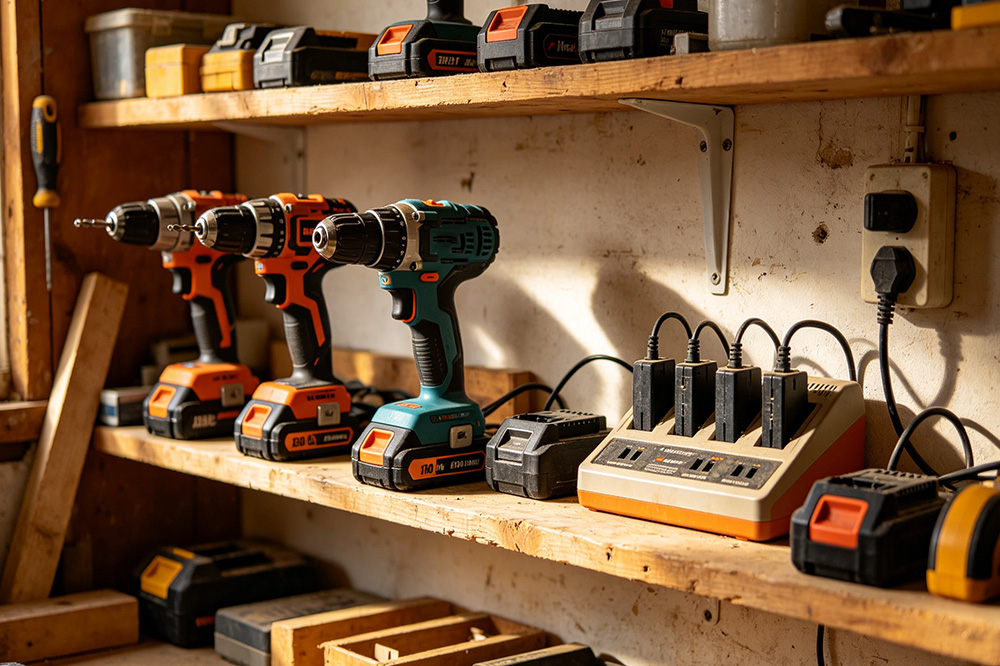
Most people don’t think much about battery storage until a cordless drill suddenly refuses to charge.
In many cases, the battery itself isn’t defective. It was simply stored the wrong way.
Leaving batteries in a hot truck, keeping them fully drained for months, or tossing them into a damp toolbox can slowly shorten their lifespan. Over time, runtime drops, charging becomes unreliable, and eventually the pack stops working altogether.
For workshops, contractors, and suppliers working with larger energy systems, choosing dependable power battery pack solutions is only part of the equation. Daily storage habits matter just as much.
Don’t Store Batteries Fully Charged or Completely Empty
One mistake people often make is putting batteries away at either 100% or 0%.
Lithium-ion batteries are more stable when stored partially charged. Around 40% to 60% is usually considered the safest range for long-term storage.
A battery sitting fully charged for months stays under constant internal stress. On the other hand, a completely dead battery can fall into deep discharge, which sometimes makes it impossible to recharge later.
If you know you won’t use your tools for a while:
- Charge the battery halfway
- Store it indoors
- Check it every few months
This is especially important for seasonal tools or backup batteries that spend long periods on the shelf.

Heat Is One of the Biggest Battery Killers
Temperature has a bigger impact on battery life than many people realize.
A battery left inside a vehicle during summer can degrade surprisingly fast. High heat speeds up chemical aging inside lithium cells, even if the battery isn’t being used.
Cold temperatures are less damaging long term, but freezing conditions can still reduce performance and create charging problems.
The best storage environment is simple:
- Dry
- Stable room temperature
- Away from direct sunlight
A climate-controlled garage or indoor workshop is usually much better than an outdoor shed or truck toolbox.
Take Batteries Off the Tool
A lot of users leave batteries attached to drills, saws, or impact drivers between jobs. It seems harmless, but over time it can slowly drain the pack.
Some cordless tools continue drawing tiny amounts of standby power even when not in use. Months later, the battery may already be deeply discharged.
Removing batteries before storage also helps with:
- Air circulation
- Moisture prevention
- Safer organization
- Reducing accidental activation
For shops with multiple batteries, wall-mounted racks or labeled storage bins make management much easier.

Keep Metal Away From Battery Contacts
Loose screws, nails, sockets, and metal tools can create accidental short circuits if they touch exposed battery terminals.
That can lead to overheating or permanent damage.
Instead of throwing batteries loosely into a tool bag:
- Use protective terminal covers
- Store batteries in separate compartments
- Keep contacts clean and dry
Even a small amount of metal dust around terminals can create problems over time in workshop environments.
Moisture Causes More Problems Than People Expect
Humidity is another common issue, especially in garages and basements.
Over time, moisture can corrode terminals and damage battery electronics. The problem usually starts slowly — charging becomes inconsistent, or the charger struggles to recognize the pack.
A dry storage cabinet works much better than leaving batteries exposed on open shelves near garage doors or windows.
Some workshops even place silica gel packs inside battery drawers to help control moisture buildup.
Don’t Leave Batteries on the Charger All the Time
Modern chargers are smarter than older ones, but constantly leaving batteries docked still isn’t ideal.
Once charging is finished, the battery continues sitting in a slightly warm environment. Over weeks and months, that extra heat adds wear to the cells.
A better habit is simple:
- Charge the battery
- Remove it after charging
- Store it separately
It takes only a few seconds but can noticeably improve long-term battery health.

Check Stored Batteries Occasionally
Even unused lithium batteries slowly lose charge over time.
If a battery sits untouched for a year, there’s a good chance it will end up over-discharged.
For long-term storage:
- Inspect batteries every couple of months
- Recharge slightly if levels get too low
- Look for swelling or corrosion
If a battery feels unusually hot during charging or starts changing shape, it’s safer to replace it rather than continue using it.

Good Storage Habits Save Money
Power tool batteries aren’t cheap, especially for professionals running multiple cordless platforms.
The good news is that battery lifespan often comes down to basic habits rather than complicated maintenance.
Keeping batteries cool, dry, partially charged, and clean can add years of usable life. For contractors, workshops, and industrial users, that can mean fewer replacements, less downtime, and more reliable tool performance over time.
Related Products
-

12V 4400 mah Lithium ion 3S2P 18650 Battery Pack
-

18650 20V 3.0Ah Cordless Drill battery
-

18650 22.2V 7.8Ah 2600Mah 6S3P Rechargeable Battery Pack
-

18650 2200Mah 10S3P 36V 6.6Ah Electric Scooter Lithium Battery
-

18650 2600Mah 10S3P 36V 7.8ah Scooter Battery
-

18650 3.7V 10Ah Li-Ion Power Battery Pack
-

18650 36V 5.2Ah Electric Bicyle Battery
-

18650 7S7P 24V 14Ah Lithium ion Electric Scooter Battery Pack
-

18650 Electric Scooter 48V 13000mAh Lithium Battery
-

1S2P 3.7V 1600mAh 14500 Lithium Battery
-

2000Mah 18650 Battery Cell 6Ah 36V Scooter Battery
-

21700 3.7V 4800mAh Rechargeable Lithium-Ion Battery
-

2600mAh 3S1P 11.1V 18650 Battery Packs
-

3.7V 21700 Rechargeable Lithium Battery Cells 5000mah
-

3.7V 5000mah 26650 Battery
-

32140 LiFePO4 Battery Cell 3.2V – 10000mAh / 15000mAh
-

32700 Lifepo4 3.2V 6000mah Lithium Battery
-

36V 5200mAh 10S2P 18650 Battery Pack
-

48V 15ah 720wh Ebike Battery
-

48v 4400mah 13S2P 18650 Rechargeable Battery Pack
-

60V 21Ah 18650 16S7P E Bike Battery
-

7S2P 24V 18650 Lithium Battery Pack
-

Customized 48V-72V Triangle Ebike Lithium Battery Pack | 52V 30Ah
-

Electric Scooter 36V 4400mAH 10S2P 18650 Battery Pack
Leave a Reply