
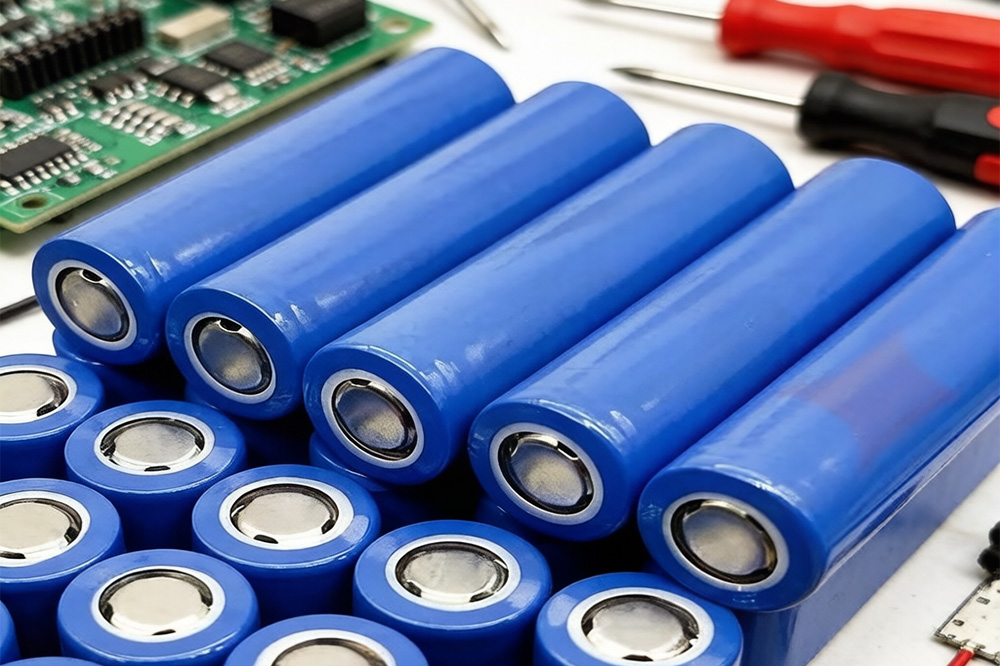
A surprising number of battery-related problems come down to a difference of only a few millimeters.
Someone buys a new 18650 battery, checks the voltage, verifies the capacity, installs it into a device—and nothing happens.
The battery isn’t defective.
The charger isn’t broken.
The issue is simply that the battery has a flat top instead of a button top.
It sounds trivial, but anyone who has worked with flashlights, battery packs, portable electronics, or custom power systems has probably run into this situation at least once.
Why Flat Top Batteries Exist in the First Place
If you place a flat top 18650 battery beside a button top version, the difference is immediately obvious.
A flat top cell has a nearly flush positive terminal. A button top cell includes a small raised contact on the positive end.
That’s it.
Yet that tiny design change affects how the battery connects with the device.
Flat top cells were originally intended for applications where batteries are assembled into packs or installed in equipment designed specifically around the cell dimensions.
Because there is no added button terminal, the overall length remains slightly shorter.
That may not seem important until you’re building a battery pack containing dozens or even hundreds of cells.
In those situations, every millimeter matters.

Why Battery Pack Manufacturers Prefer Flat Top Cells
If you’ve ever looked inside an e-bike battery, power station, medical device, or energy storage system, there’s a good chance the cells inside were flat top versions.
The reason is fairly simple.
Battery packs usually rely on spot welding and nickel strips to connect cells together. The flat positive terminal provides a clean surface for assembly and creates a more consistent connection during manufacturing.
Engineers also like the predictable dimensions.
When thousands of cells are being assembled into packs, even small variations in length can complicate production.
Flat top cells help eliminate that variable.
For this reason alone, they have become the standard choice across much of the battery pack industry.

The Problem Most New Buyers Discover
Many people first encounter flat top batteries when replacing cells in a flashlight or electronic device.
The battery specifications appear correct.
Same size.
Same voltage.
Similar capacity.
Yet after installation, the device refuses to power on.
In many cases, the device was designed around a button top battery. The extra height of the raised terminal helps bridge the gap between battery contacts.
A flat top cell may be slightly too short to complete the circuit.
This is why experienced users rarely buy replacement batteries based solely on capacity or voltage. They verify terminal style first.
A battery that physically fits isn’t always a battery that will make electrical contact.
Are Flat Top Batteries Better?
Not necessarily.
This is one of the most common misconceptions found in online discussions.
The terminal style itself doesn’t determine battery quality.
A flat top battery isn’t automatically safer, more powerful, or longer lasting than a button top version.
The actual performance depends on the cell chemistry, internal design, manufacturing quality, and intended application.
What often creates confusion is that many high-performance cells happen to be sold in flat top form.
As a result, some users associate flat tops with better performance.
In reality, the terminal design and the underlying cell performance are two separate things.

Why High-Drain Applications Often Use Flat Top Cells
Another pattern you’ll notice is that many high-discharge lithium-ion cells are produced as flat top models.
There are practical reasons for this.
Applications such as:
- High-output flashlights
- Power tools
- Robotics
- Electric mobility devices
- Battery packs
often require direct and efficient electrical connections.
Flat top cells integrate well into these systems and simplify pack construction.
When large currents are involved, manufacturers generally prefer the most straightforward connection method possible.
Capacity Isn’t the Only Specification That Matters
Online battery discussions frequently focus on capacity numbers.
A higher mAh rating attracts attention because it’s easy to understand.
Longer runtime sounds better.
However, experienced users usually look at several specifications together.
These include:
- Continuous discharge rating
- Internal resistance
- Cycle life
- Operating temperature
- Cell consistency
A battery with slightly lower capacity may actually perform better in demanding applications if it can maintain voltage more effectively under load.
That’s one reason professionals rarely choose cells based on capacity alone.
Before Ordering Flat Top 18650 Batteries
A quick compatibility check can prevent a lot of frustration.
Before placing an order, verify:
- Whether your device requires flat top or button top cells
- Maximum battery length supported
- Required discharge current
- Protected or unprotected cell compatibility
- Charging requirements
These details are easy to overlook, especially when multiple batteries share the same 18650 designation.
Yet they’re often the difference between a battery that works perfectly and one that doesn’t work at all.
Conclusion
The difference between a flat top and button top 18650 battery may look insignificant at first glance, but in real-world applications it can determine whether a device functions properly, whether a battery pack can be assembled efficiently, and whether electrical connections remain reliable over time.
For battery pack manufacturers, flat top cells are often the preferred option because of their consistent dimensions and assembly advantages.
For consumers, the most important lesson is even simpler: always check terminal style before ordering a replacement battery.
A few millimeters can make a bigger difference than most people expect.
-

12V 4400 mah Lithium ion 3S2P 18650 Battery Pack
-

18650 2000mAh 3.7 volt Lithium-ion Battery
-

18650 20V 3.0Ah Cordless Drill battery
-

18650 22.2V 7.8Ah 2600Mah 6S3P Rechargeable Battery Pack
-

18650 2600mAh Rechargeable Lithium-Ion Battery 3.7V
-

18650 3.7V 10Ah Li-Ion Power Battery Pack
-

18650 3.7V 3300mah Rechargeable Lithium ion Battery
-

18650 7S7P 24V 14Ah Lithium ion Electric Scooter Battery Pack
-

18650 battery 3.7V 1500mAh Lithium-Ion Battery
-

18650 Battery 3500 mah Rechargeable Battery Cells
-

18650 Electric Scooter 48V 13000mAh Lithium Battery
-

2600mAh 3S1P 11.1V 18650 Battery Packs
-

3.7V Li ion Rechargeable 3000mah 18650 Battery Cell
-

36V 5200mAh 10S2P 18650 Battery Pack
-

48v 4400mah 13S2P 18650 Rechargeable Battery Pack
-

7S2P 24V 18650 Lithium Battery Pack
-

Electric Scooter 36V 4400mAH 10S2P 18650 Battery Pack
-

ICR 18650 Battery 2200mah 3.7V
Leave a Reply