
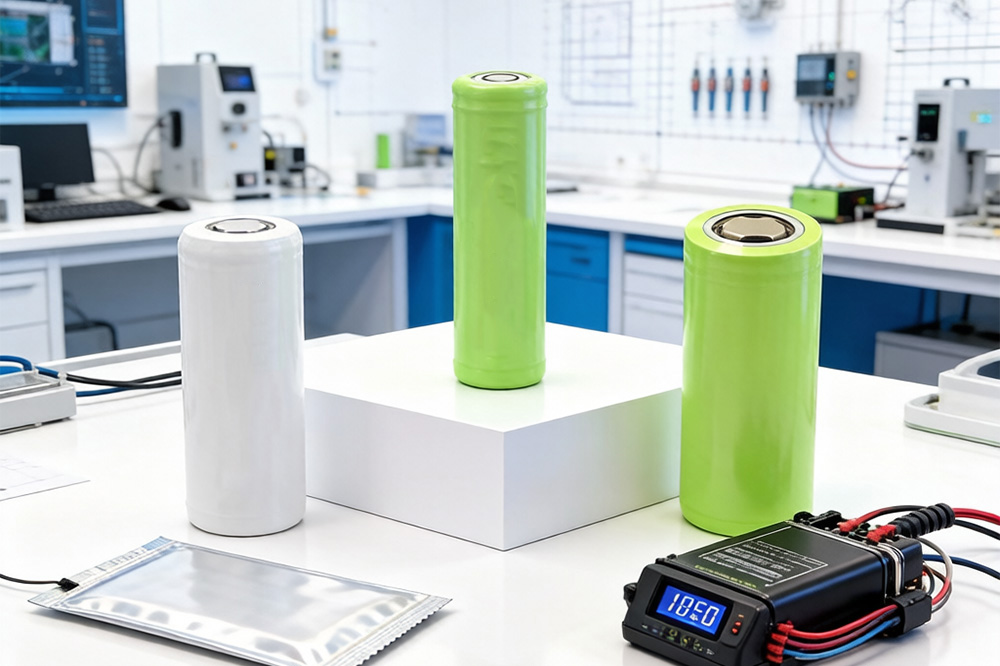
If you’ve ever taken apart an old laptop battery, opened a flashlight, or looked inside a cordless tool pack, chances are you’ve seen an 18650 battery.
For a long time, this cell size has been everywhere. It offers a good balance between capacity, size, cost, and availability. That’s one reason manufacturers used it in everything from portable electronics to industrial equipment.
But battery technology keeps moving forward.
Today, more people are asking the same question:
What batteries can replace an 18650?
The answer isn’t as straightforward as swapping one battery for another. It depends on why you’re replacing it in the first place. Are you trying to get longer runtime? Build a smaller device? Increase power output? Or simply find a newer alternative?
Let’s look at the options people are actually using.
Why Replace 18650 Battery at All?
The interesting thing is that most people aren’t replacing 18650 batteries because they’re bad.
They’re replacing them because their requirements have changed.
A flashlight user may want longer runtime. An engineer may need more energy without adding extra cells. A product designer may have limited internal space and need a completely different battery shape.
That’s why there isn’t a single “best” replacement.
Different applications lead to different choices.
The 21700 Battery Has Become the Most Common Upgrade
If you spend time in battery forums or electronics communities, one alternative comes up more than any other: the 21700 battery.
At first glance, it doesn’t look dramatically different from an 18650. It’s only slightly wider and a little longer.
Yet that extra space inside the cell can make a noticeable difference.
Many 21700 batteries offer significantly higher capacities than traditional 18650 cells. In practical terms, that often means longer operating time between charges.
For someone building a battery pack, another benefit is that fewer cells may be required to achieve the same energy storage target.
That’s one reason many newer battery-powered products have gradually moved toward the 21700 format.
For projects requiring higher capacity, a modern 5000mAh 21700 rechargeable lithium battery can often provide more runtime while maintaining the familiar 3.7V operating voltage.
Sometimes Bigger Really Is Better: 26650 Batteries
Another alternative worth mentioning is the 26650 battery.
These cells are noticeably wider than an 18650.
That larger size allows for more active material inside the battery, which usually translates into greater capacity and stronger discharge performance.
People commonly choose 26650 batteries for applications where size isn’t the primary concern. High-output flashlights, industrial equipment, and energy-intensive systems are examples where the larger format can make sense.
The tradeoff is obvious.
If your device was designed specifically around an 18650 battery compartment, a 26650 typically won’t fit without modifications.
What About 20700 Batteries?
A few years ago, the 20700 battery gained attention as a middle ground between 18650 and 21700 formats.
It offers more capacity than a typical 18650 while remaining slightly smaller than a 21700.
Although the 21700 has become more popular overall, 20700 cells are still used in certain specialized applications where designers want a balance between size and performance.
For most consumers, though, the 21700 tends to be easier to find and more widely supported today.

Not Every Replacement Has to Be Cylindrical
This is where many people get surprised.
When discussing 18650 alternatives, most conversations focus on cylindrical cells. But many modern products have quietly moved in another direction altogether.
Instead of using round batteries, manufacturers often choose lithium polymer or pouch cells.
Take a smartphone as an example.
There isn’t enough room inside for several cylindrical batteries, but a thin rectangular pouch cell can make much better use of available space.
That’s one reason lithium polymer batteries have become common in:
- Wearable devices
- Smart home products
- GPS trackers
- Medical devices
- Consumer electronics
When internal space matters more than standard battery size, a pouch cell may actually be the better choice.
Can AA Batteries Replace an 18650?
This question comes up constantly online.
The short answer is usually no.
The confusion makes sense because AA batteries are everywhere. They’re inexpensive, easy to find, and familiar to almost everyone.
The problem is voltage.
A standard 18650 lithium-ion battery typically operates around 3.6V or 3.7V.
A typical AA battery provides only 1.2V or 1.5V depending on the chemistry.
Even if you physically adapt a device to fit AA batteries, the electrical performance often won’t match what the equipment expects.
In some DIY projects, multiple AA batteries can be combined to reach a similar voltage. However, capacity, discharge rate, and runtime can vary significantly.
That’s why AA batteries are rarely considered a direct replacement.
Can You Replace One 18650 With Another Brand?
A lot of discussions online focus on this topic, especially when users need to replace cells inside existing battery packs.
In many cases, replacing one 18650 with another 18650 is perfectly reasonable.
But matching voltage alone isn’t enough.
Before swapping cells, it’s important to compare:
- Cell dimensions
- Capacity
- Continuous discharge rating
- Protection circuit requirements
- Battery chemistry
Two batteries may look almost identical from the outside while behaving very differently under load.
That’s particularly important for battery packs where multiple cells operate together.
Choosing the Right Alternative Depends on Your Goal
People often start by asking:
“What battery replaces an 18650?”
A more useful question might be:
“What problem am I trying to solve?”
If longer runtime is the goal, larger cells such as 21700 or 26650 batteries often make sense.
If space is limited, pouch cells or lithium polymer batteries may offer a better solution.
If you’re building industrial equipment that requires high discharge performance, specialized lithium-ion cells designed for heavy loads may be worth considering.
And if your existing device was designed specifically around the 18650 format, staying with a high-quality 18650 battery is often the simplest path.You can explore a full range of 18650 lithium battery

Final Thoughts
The 18650 battery remains one of the most versatile rechargeable lithium-ion cells ever produced. That’s why it’s still used in countless products around the world.
At the same time, newer formats have given designers more choices than ever before.
For many modern applications, the 21700 has become the natural next step because it delivers more capacity without changing the basic operating characteristics people are already familiar with.
Other situations may call for a 26650 battery, a lithium polymer pack, or even a custom pouch-cell solution.
There isn’t one replacement that works for every project.
Once you understand what your device actually needs—whether that’s more runtime, higher power output, less weight, or a different shape—the best alternative usually becomes much easier to identify.
FAQs About 18650 Battery Replacements
Can a 21700 battery replace 18650?
In many cases, yes. Both battery types have similar operating voltages, but a 21700 is physically larger. Always check whether your device has enough space before making the switch.
What is the most common alternative to an 18650 battery?
The 21700 battery is currently one of the most popular alternatives. It offers higher capacity and longer runtime while maintaining similar lithium-ion performance characteristics.
Can AA batteries replace an 18650?
Not directly. AA batteries operate at a much lower voltage than a typical 18650 lithium-ion cell, so they usually cannot serve as a direct replacement.
Which battery offers more capacity than an 18650?
Larger formats such as 21700 and 26650 batteries often provide higher capacities, making them a good choice for applications that require longer operating times.
Should I replace 18650 with the same type?
If your device was designed specifically for 18650 cells, using a compatible 18650 battery is usually the simplest and safest option. For new designs, other formats may be worth considering depending on your requirements.
-

11.1V 3S 850mAh li-ion Polymer Pouch Cell Battery Pack
-

12V 4400 mah Lithium ion 3S2P 18650 Battery Pack
-

134365 4500mAh 3.7V Rechargeable Lithium Polymer Battery
-

18650 2000mAh 3.7 volt Lithium-ion Battery
-

18650 20V 3.0Ah Cordless Drill battery
-

18650 22.2V 7.8Ah 2600Mah 6S3P Rechargeable Battery Pack
-

18650 2200Mah 10S3P 36V 6.6Ah Electric Scooter Lithium Battery
-

18650 2600Mah 10S3P 36V 7.8ah Scooter Battery
-

18650 2600mAh Rechargeable Lithium-Ion Battery 3.7V
-

18650 3.7V 10Ah Li-Ion Power Battery Pack
-

18650 3.7V 3300mah Rechargeable Lithium ion Battery
-

18650 36V 5.2Ah Electric Bicyle Battery
-

18650 7S7P 24V 14Ah Lithium ion Electric Scooter Battery Pack
-

18650 battery 3.7V 1500mAh Lithium-Ion Battery
-

18650 Battery 3500 mah Rechargeable Battery Cells
-

18650 Electric Scooter 48V 13000mAh Lithium Battery
-

1S2P 3.7V 1600mAh 14500 Lithium Battery
-

2000Mah 18650 Battery Cell 6Ah 36V Scooter Battery
-

21700 3.7V 4800mAh Rechargeable Lithium-Ion Battery
-

2600mAh 3S1P 11.1V 18650 Battery Packs
-

3.7V 1200mAh Li-Polymer Pouch Cell Battery
-

3.7V 15Ah 148198 Pouch Lithium Ion Battery
-

3.7V 1S2P 3000mah lithium Polymer Battery
-

3.7V 2000mAh Pouch Cell Battery
-

3.7V 21700 Rechargeable Lithium Battery Cells 5000mah
-

3.7V 5000mah 26650 Battery
-

3.7V 502248 500mAh Lithium Ion Polymer Battery
-

3.7V 700mAh Li-Polymer Pouch Cell Battery
-

3.7V 800mAh Rechargeable Pouch Li-Polymer Battery
-

3.7V Li ion Rechargeable 3000mah 18650 Battery Cell
-

32140 LiFePO4 Battery Cell 3.2V – 10000mAh / 15000mAh
-

32700 Lifepo4 3.2V 6000mah Lithium Battery
-

36V 5200mAh 10S2P 18650 Battery Pack
-

48V 15ah 720wh Ebike Battery
-

48v 4400mah 13S2P 18650 Rechargeable Battery Pack
-

60V 21Ah 18650 16S7P E Bike Battery
-

7S2P 24V 18650 Lithium Battery Pack
-

Customized 48V-72V Triangle Ebike Lithium Battery Pack | 52V 30Ah
-

Electric Scooter 36V 4400mAH 10S2P 18650 Battery Pack
-

ICR 18650 Battery 2200mah 3.7V
Leave a Reply