
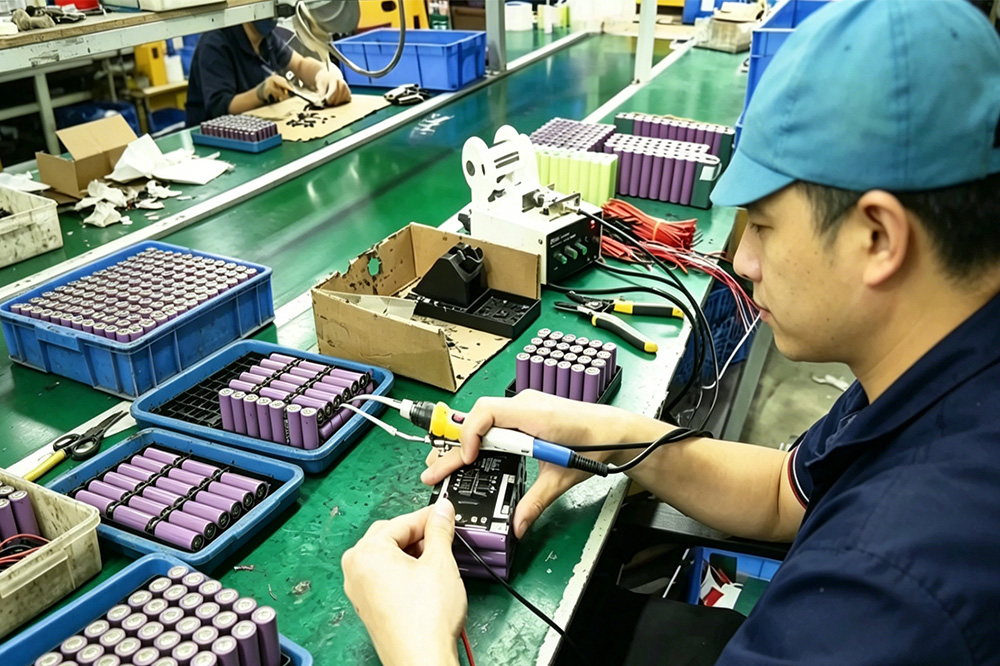
People usually search “purchase lithium batteries” like it’s a simple buying step.
But in practice, most first-time buyers I’ve seen don’t really start with batteries — they start with a product problem.
Something like:
- “My e-bike pack failed after 6 months”
- “Solar storage capacity drops too fast”
- “Tool battery overheats under load”
- or just “we need cheaper 18650 cells, urgent”
And then they end up trying to source lithium batteries from China.
That’s usually where things start to get messy.
What buyers actually mean when they say “purchase lithium batteries”
It sounds like one request, but it splits into a few different directions once you talk to real buyers.
Some only want cells (like 18650 2000–3000mAh range).
Some already think in battery packs (12V / 24V / 48V systems).
Others are somewhere in between, still trying to figure out what they actually need.
Honestly, this gap is where most confusion happens.
A buyer might say:
“I need 18650 batteries”
but after a few questions it turns into:
“Actually I need a 10S3P pack for an outdoor device”
That shift changes everything — price, testing, shipping, even supplier type.
18650 cells: where most bulk purchases begin
If we narrow it down, 18650 is still the entry point for most bulk lithium battery buyers.
But even here, it’s not straightforward.
There are a few things suppliers rarely say directly:
- “3000mAh” is not always real usable capacity in every batch
- internal resistance varies more than buyers expect
- some cells look identical but behave very differently under load
And this is not theory — it shows up later in the field:
a solar system that looks fine on paper, but drops voltage too quickly
or an e-bike that works fine in week one, then starts losing range
So when someone says “I want to purchase 18650 lithium batteries in bulk”, the real question becomes:
what kind of consistency are you actually expecting?

Cell vs Pack — most people only understand this halfway
There’s a pattern I keep seeing:
Buyers start with cells
then quickly realize they actually needed a pack solution
Because cells alone don’t solve anything practical.
A usable battery system usually needs:
- correct series/parallel design (3S, 4S, 10S, etc.)
- proper BMS selection
- welding quality control
- insulation and casing structure
And this part is often underestimated.
One buyer once told me :
“We thought buying cells was 80% of the job… turns out it’s more like 40%”
That sounds exaggerated, but it’s not far off in OEM projects.
What usually goes wrong when purchasing lithium batteries
This is not a “warning list”, more like patterns seen in real orders:
- Mixing different batches in one pack (very common)
- Choosing based only on price per cell
- Ignoring discharge requirements (especially for tools)
- No real aging test before shipment
- Assuming all suppliers grade cells the same way
And sometimes the issue is simpler:
communication gap between buyer expectation and factory interpretation
That alone causes more trouble than technical issues.
Pricing is not as linear as it looks
People often ask:
“What is the price per 18650 cell?”
But factories don’t really calculate it that way internally.
Price changes depending on:
- cell grade consistency requirement
- capacity band selection (tight or loose sorting)
- nickel strip thickness in packs
- BMS configuration
- certification needs (UN38.3, MSDS, etc.)
- order volume stability
So two buyers asking for “3000mAh 18650” may get completely different pricing.
Not because someone is overcharging — but because the production requirement is different.
Shipping and reality checks
Lithium batteries are not just another export product.
Even experienced buyers sometimes underestimate:
- UN38.3 documentation timing
- air shipping restrictions
- packaging requirements
- delays caused by inspection or labeling issues
It’s not dramatic most of the time, but it does affect planning.
And honestly, this is where “fast sourcing” often slows down.
A small observation from supplier-side conversations
Something I noticed over time:
Serious buyers don’t ask “what’s your lowest price” first.
They usually ask things like:
- can you keep same batch stability for repeat orders?
- what test data can you share before shipment?
- how do you control internal resistance difference?
These questions sound simple, but they usually signal long-term intent.
OEM battery pack purchasing
After cells, most buyers eventually shift into pack orders.
Typical requirements look like:
- 12V lithium battery packs for equipment
- 24V systems for mobility devices
- 36V / 48V packs for e-bikes
- custom industrial energy storage packs
At this stage, it’s less about “battery specs” and more about:
system behavior under real load
which is harder to standardize on paper.
Before placing bulk order (what actually matters)
Not everything needs to be complicated, but a few checks help avoid most problems:
- sample testing under real device load
- discharge curve review (not just capacity label)
- checking batch consistency
- confirming pack structure before mass production
- asking for aging test results (even basic ones)
Some buyers skip this step to save time, but usually it comes back later in debugging phase.
Conclusion
If someone is planning to purchase lithium batteries in bulk, especially 18650 or OEM packs, the biggest shift is not technical — it’s expectation alignment.
Once that is clear, everything else becomes easier to negotiate.
And maybe more importantly, fewer surprises show up after shipment.
-

12V 4400 mah Lithium ion 3S2P 18650 Battery Pack
-

18650 2000mAh 3.7 volt Lithium-ion Battery
-

18650 20V 3.0Ah Cordless Drill battery
-

18650 22.2V 7.8Ah 2600Mah 6S3P Rechargeable Battery Pack
-

18650 2600mAh Rechargeable Lithium-Ion Battery 3.7V
-

18650 3.7V 10Ah Li-Ion Power Battery Pack
-

18650 3.7V 3300mah Rechargeable Lithium ion Battery
-

18650 7S7P 24V 14Ah Lithium ion Electric Scooter Battery Pack
-

18650 battery 3.7V 1500mAh Lithium-Ion Battery
-

18650 Battery 3500 mah Rechargeable Battery Cells
-

18650 Electric Scooter 48V 13000mAh Lithium Battery
-

2600mAh 3S1P 11.1V 18650 Battery Packs
-

3.7V Li ion Rechargeable 3000mah 18650 Battery Cell
-

36V 5200mAh 10S2P 18650 Battery Pack
-

48v 4400mah 13S2P 18650 Rechargeable Battery Pack
-

7S2P 24V 18650 Lithium Battery Pack
-

Electric Scooter 36V 4400mAH 10S2P 18650 Battery Pack
-

ICR 18650 Battery 2200mah 3.7V
Leave a Reply