
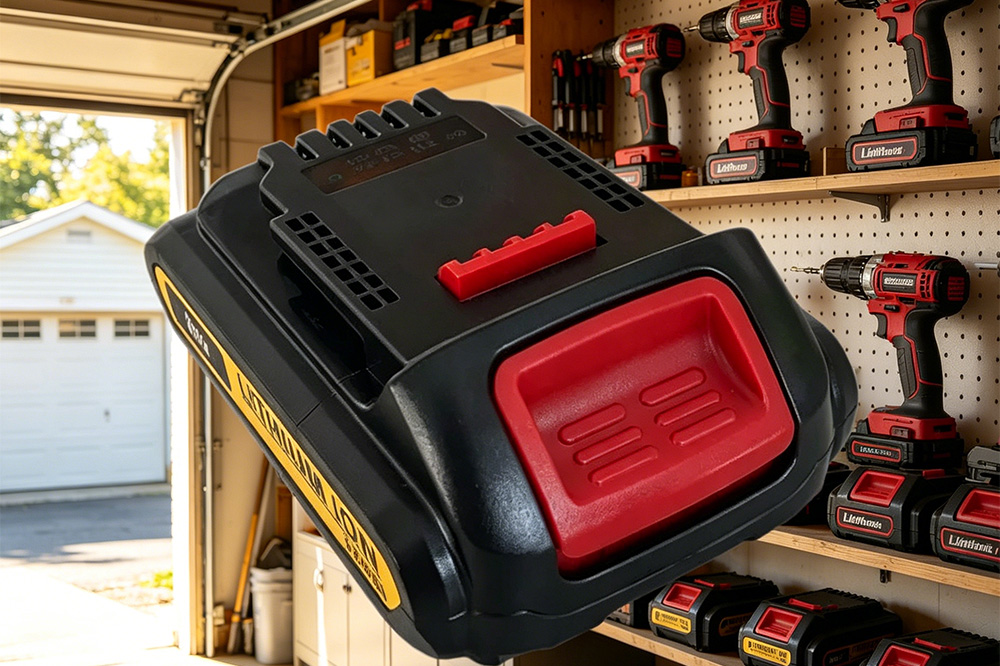
A garage seems like the obvious place to keep cordless tools and spare batteries. Everything stays in one place, chargers are easy to reach, and it keeps the workbench organized.
But whether a garage is actually a good storage spot depends on one thing most people ignore: temperature.
In mild climates, a garage may be perfectly fine for battery storage. In places with extreme summer heat or freezing winters, it can slowly ruin lithium-ion batteries long before their expected lifespan.
For contractors and workshop users running multiple cordless systems, using reliable 20V cordless drill battery packs is important, but storage conditions matter just as much as battery quality.
The Biggest Problem Is Heat, Not Cold
A lot of people worry about winter temperatures damaging batteries. In reality, summer heat usually does more harm.
Inside a closed garage, temperatures can climb well above outdoor conditions. During hot afternoons, it’s not unusual for garages to reach over 100°F (38°C), especially in metal buildings or spaces without insulation.
Lithium-ion batteries hate prolonged heat exposure.
High temperatures speed up chemical aging inside battery cells. Even if the battery isn’t being used, heat slowly reduces capacity and shortens overall lifespan.
That’s why batteries left in trucks, trailers, or garages through summer often start losing runtime much sooner than expected.
If your garage regularly gets extremely hot, it’s better to move batteries indoors during warmer months.
Cold Garages Usually Cause Temporary Problems
Cold weather affects batteries differently.
A battery stored in freezing temperatures may temporarily lose performance, but that doesn’t always mean permanent damage has occurred.
Many tool users notice:
- Shorter runtime in winter
- Slower charging
- Reduced power output
Once the battery warms back to room temperature, performance often returns.
The bigger issue happens when people try charging batteries that are still freezing cold. Charging lithium-ion cells below recommended temperatures can stress internal components and reduce long-term reliability.
If batteries come from a cold garage:
- Let them warm up indoors first
- Avoid charging immediately
- Keep condensation away from terminals
For most homeowners, occasional winter storage in a garage is less harmful than constant summer heat.

Humidity Matters More Than People Think
Garages are not always dry environments.
Moisture buildup from rain, snow, or humidity can slowly corrode battery terminals and charging contacts. Over time, charging becomes inconsistent and connection problems start showing up.
This is especially common in:
- Coastal regions
- Non-insulated garages
- Basements connected to garages
- Workshops with poor ventilation
A battery shelf mounted away from the garage floor is usually safer than storing batteries in toolboxes or plastic bins near damp concrete.
Some workshop owners also use sealed cabinets or small moisture absorbers during humid seasons.
Don’t Leave Batteries on Chargers Full-Time
Garages often become permanent charging stations. A drill goes onto the charger after work and stays there until the next project.
That habit sounds convenient, but it’s not ideal for long-term battery health.
Modern chargers are better than older models, but batteries still generate heat while sitting docked for extended periods. Over time, constant charging and warm conditions accelerate wear.
A better approach is simple:
- Charge the battery fully
- Remove it from the charger afterward
- Store it somewhere cool and dry
If the garage gets hot during the day, leaving batteries charging overnight in that environment can add unnecessary stress.

Should Batteries Stay Attached to the Tool?
For short periods, it usually doesn’t matter.
For long-term storage, removing the battery is the safer option.
Some cordless tools continue drawing a tiny amount of standby power even when switched off. Weeks or months later, the battery may end up deeply discharged.
Keeping batteries separate also helps prevent:
- Accidental activation
- Dirt buildup around contacts
- Moisture trapped inside tools
A simple wall rack or battery holder keeps everything easier to organize.
What’s the Best Place to Store Them?
The ideal battery storage area is:
- Dry
- Clean
- Away from direct sunlight
- Around normal indoor temperature
For many homeowners, that means:
- Indoor workshop cabinets
- Utility rooms
- Climate-controlled garages
- Basement storage shelves
If the garage stays relatively stable year-round, there’s usually no major issue storing batteries there. Problems mostly appear in garages exposed to extreme seasonal temperatures.

Signs Your Garage Is Damaging Batteries
Sometimes the warning signs show up slowly.
Watch for batteries that:
- Lose charge faster than before
- Feel unusually hot while charging
- Have reduced runtime
- Fail to charge consistently
- Show corrosion around terminals
If several batteries start failing around the same time, storage conditions are often part of the problem.
Final Thoughts
So, can you store power tool batteries in the garage?
Usually yes — but not every garage is the same.
A clean, dry, temperature-stable garage is generally fine for lithium-ion batteries. A garage that becomes freezing cold in winter and unbearably hot in summer is a different story.
Most battery damage comes from long-term exposure to heat, moisture, and neglect rather than normal everyday use.
Keeping batteries dry, partially charged, and out of extreme temperatures will do far more for battery lifespan than most people realize.
Related Products
-

12V 4400 mah Lithium ion 3S2P 18650 Battery Pack
-

18650 20V 3.0Ah Cordless Drill battery
-

18650 22.2V 7.8Ah 2600Mah 6S3P Rechargeable Battery Pack
-

18650 2200Mah 10S3P 36V 6.6Ah Electric Scooter Lithium Battery
-

18650 2600Mah 10S3P 36V 7.8ah Scooter Battery
-

18650 3.7V 10Ah Li-Ion Power Battery Pack
-

18650 36V 5.2Ah Electric Bicyle Battery
-

18650 7S7P 24V 14Ah Lithium ion Electric Scooter Battery Pack
-

18650 Electric Scooter 48V 13000mAh Lithium Battery
-

1S2P 3.7V 1600mAh 14500 Lithium Battery
-

2000Mah 18650 Battery Cell 6Ah 36V Scooter Battery
-

21700 3.7V 4800mAh Rechargeable Lithium-Ion Battery
-

2600mAh 3S1P 11.1V 18650 Battery Packs
-

3.7V 21700 Rechargeable Lithium Battery Cells 5000mah
-

3.7V 5000mah 26650 Battery
-

32140 LiFePO4 Battery Cell 3.2V – 10000mAh / 15000mAh
-

32700 Lifepo4 3.2V 6000mah Lithium Battery
-

36V 5200mAh 10S2P 18650 Battery Pack
-

48V 15ah 720wh Ebike Battery
-

48v 4400mah 13S2P 18650 Rechargeable Battery Pack
-

60V 21Ah 18650 16S7P E Bike Battery
-

7S2P 24V 18650 Lithium Battery Pack
-

Customized 48V-72V Triangle Ebike Lithium Battery Pack | 52V 30Ah
-

Electric Scooter 36V 4400mAH 10S2P 18650 Battery Pack
Leave a Reply