
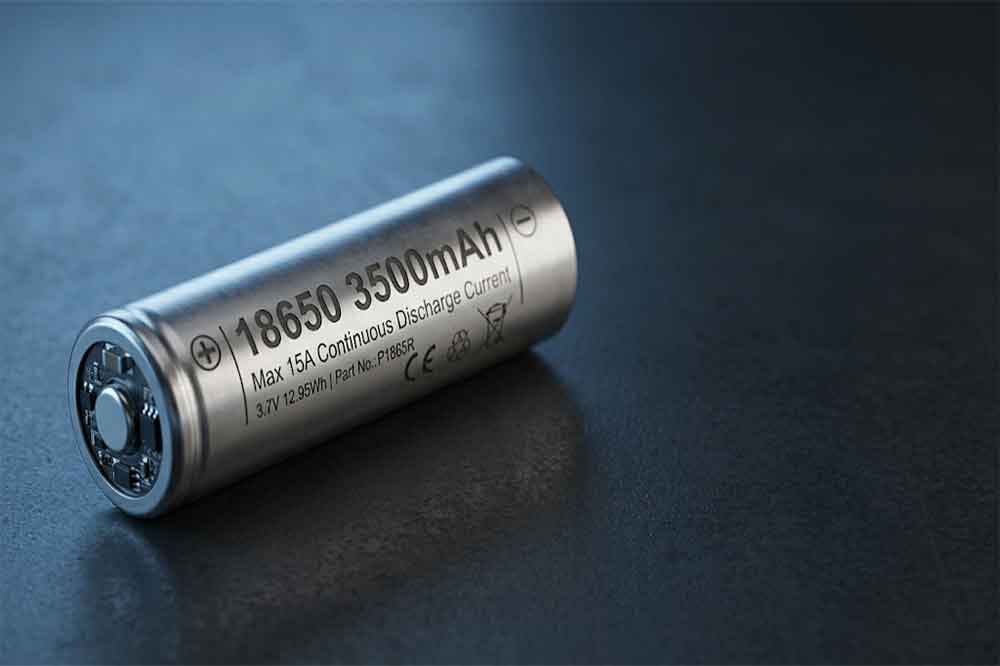
A protected 18650 battery may look similar to an ordinary 18650 cell, but its discharge performance depends on more than the lithium-ion cell itself. The cell has its own current limits, while the protection circuit adds another set of operating conditions. If either limit is exceeded, the battery may shut down even when its capacity appears sufficient for the application.
For engineers, product designers, and battery buyers, understanding protected 18650 discharge current is important when selecting cells for portable equipment, lighting products, monitoring devices, and custom battery packs.
When selecting a battery for a new device, it is important to compare discharge current, voltage, capacity, and protection requirements. Explore our range of 18650 lithium battery products to review battery options for different equipment and OEM projects.
What Is Protected 18650 Battery Discharge Current?
Discharge current is the electrical current supplied by a battery to a connected load. It is measured in amperes (A). A higher current means the battery is delivering more electrical power at a given voltage.
For a protected 18650 battery, the available discharge current depends on three main factors:
- The discharge capability of the lithium-ion cell.
- The current rating and cutoff settings of the protection circuit.
- The electrical resistance and thermal conditions of the complete battery assembly.
The weakest component usually determines the practical limit. A high-current cell does not automatically become a high-current protected battery if its protection board, wiring, or connections cannot handle the same load.
It is also important to distinguish discharge current from capacity. Capacity is normally expressed in milliamp-hours (mAh) or amp-hours (Ah), while current is measured in amperes. A 3,000mAh battery does not automatically support a 3A or 5A discharge current. Its datasheet must specify the permitted operating current.
Continuous Discharge Current
Continuous discharge current is the current a battery can supply under specified operating conditions without exceeding its electrical or thermal limits.
For example, a battery manufacturer might approve a particular cell for a continuous discharge current of 5A. That figure cannot be applied to every 18650 cell, even when the cells have similar dimensions or capacity.
The protection circuit must also support the intended current. If the cell can supply 5A but the protection board trips at a lower current, the complete protected battery may not operate reliably at 5A.
Temperature, airflow, battery holder resistance, and the design of the surrounding equipment can further affect practical performance.
Peak Discharge Current
Some devices briefly draw more current when starting a motor, switching on a transmitter, or charging internal capacitors. This temporary demand is often called peak current or surge current.
Peak current is not interchangeable with continuous current. A battery that supports a specified continuous load may tolerate a higher short-duration load, but only if the cell and protection circuit are designed for it.
When evaluating peak current, check the permitted magnitude, pulse duration, repetition rate, and recovery time. A brief surge and a repeated high-current pulse can create very different electrical and thermal conditions.
The nominal voltage of a lithium-ion cell also affects how a device draws power. Read our guide to protected 18650 battery voltage differences to understand why 3.6V and 3.7V ratings do not necessarily indicate different battery performance.
How the Protection Circuit Limits Discharge Current
A protected 18650 battery typically combines a lithium-ion cell with a protection circuit module (PCM) or battery protection circuit. Depending on the design, the circuit monitors conditions such as cell voltage and current.
Its purpose is to help prevent unsafe operating conditions, not to increase the cell’s inherent discharge capability.
Overcurrent Protection
Overcurrent protection disconnects the load when the current exceeds a defined threshold under the circuit’s specified detection conditions.
The threshold depends on the protection components, circuit design, and manufacturer specifications. Some boards are intended for relatively low-current devices, while others are designed for higher-current applications.
Do not select a battery solely because its cell datasheet lists a suitable current. Ask for the protected assembly’s discharge rating and overcurrent protection specifications.
Short-Circuit Protection
A short circuit can cause a rapid and potentially dangerous increase in current. A protection circuit may disconnect the output when it detects a short-circuit condition.
However, protection is not a substitute for correct wiring, suitable insulation, proper connectors, or an appropriately designed enclosure. A fault can develop faster than some components can safely respond, and repeated faults may damage the assembly.
Never deliberately short-circuit a lithium-ion battery to test its protection function.

Protected vs. Unprotected 18650 Discharge Current
An unprotected 18650 cell does not have the same built-in protection board found in a protected battery. Its allowable discharge current is primarily determined by the cell’s design and manufacturer specifications, together with the operating conditions.
A protected battery adds a layer of electrical protection, but that layer may introduce an additional current limit.
This means neither type is automatically better for every application.
For a low-power consumer device, a protected cell may be a practical option when its dimensions and current rating match the design. For a compact, high-drain device, a protected cell may be unsuitable if the protection circuit or added resistance limits the required output.
Engineers should compare the complete electrical specifications rather than assuming that protection always means higher performance or that an unprotected cell always delivers more usable current.
Also check the physical dimensions. Protected 18650 batteries are often longer than standard unprotected cells because of the additional circuit and construction. Some equipment cannot accommodate the difference.
How to Calculate the Current Required by Your Device
A useful first estimate comes from the relationship between power, voltage, and current:
Current (A) = Power (W) ÷ Voltage (V)
Suppose a device consumes 10W and operates at a nominal battery voltage of 3.6V.
The estimated current is:
10W ÷ 3.6V ≈ 2.78A
This is a starting estimate, not a complete battery specification. The actual current can change as battery voltage falls, and some devices draw additional current during startup.
For a regulated device that maintains constant output power, input current generally rises as battery voltage decreases. Conversion losses also increase the required battery-side current.
Therefore, battery selection should consider the lowest expected operating voltage, maximum power demand, startup surge, and the device’s current profile.
If the device manufacturer specifies a maximum input current, use that value as part of the design assessment rather than relying on nominal power alone.
Why Protected 18650 Battery May Shut Down Under Load
A protected battery that switches off during operation does not necessarily have a defective cell. Several factors can trigger protection or cause the output voltage to drop.
The load exceeds the current limit. A motor, radio transmitter, or power converter may draw more current than the protection circuit permits.
The cell voltage falls too low. As the battery discharges, voltage may reach the circuit’s low-voltage cutoff threshold.
Voltage sag becomes excessive. Internal resistance causes voltage to drop when current increases. An aged cell, poor contact, or high-resistance connection can make this problem more noticeable.
Temperature becomes too high. The cell and protection components may heat up under heavy loads. The permitted operating range depends on the specific battery design.
The connection is unsuitable. Undersized wires, weak contacts, or a poorly designed battery holder can add resistance and cause voltage loss or localized heating.
If shutdown occurs repeatedly, do not bypass the protection circuit. Check the load profile, battery specification, connection quality, temperature, and cutoff conditions. Replace the battery with an appropriately rated model if necessary.
How to Choose Protected 18650 Battery for Your Application
Start with the device’s real electrical requirements instead of choosing a battery by capacity alone.
For portable lighting, sensors, monitoring devices, and other low-power products, the key questions may be runtime, standby consumption, dimensions, and protection requirements.
For motors, wireless transmission equipment, and devices with substantial startup loads, the maximum continuous current and peak-current behavior become more important.
When comparing suppliers, request the following information:
- Cell model and nominal capacity.
- Maximum continuous discharge current.
- Permitted pulse current, including pulse duration where applicable.
- Protection circuit’s overcurrent and short-circuit specifications.
- Operating and charging temperature ranges.
- Battery dimensions, including the protection circuit.
- Relevant safety documentation and product test information.
Do not assume that two batteries with the same capacity have the same discharge capability. Different cell chemistries, electrode designs, internal resistance, and protection boards can produce substantially different results.
For OEM projects, the battery supplier should evaluate the actual device load and operating environment before confirming a suitable design.
Protected 18650 Discharge Current in Battery Packs
A single protected 18650 cell and a multi-cell battery pack are not interchangeable design choices.
In a series configuration, cell voltages add, but the same current passes through every cell in the series string. The string’s practical current capability remains constrained by its weakest cell, interconnections, and protection architecture.

In a parallel configuration, current may be shared among cells, but the division is not always equal. Differences in cell resistance, temperature, state of charge, and connection resistance affect current distribution.
A multi-cell pack also requires protection appropriate to its series and parallel arrangement. Individual protected cells should not simply be combined into a series pack without checking compatibility, cutoff behavior, and the overall protection design.
For a custom lithium-ion battery pack, the design team should assess the cells, protection circuit or battery management system (BMS), wiring, connectors, charging system, enclosure, and thermal conditions together.
A well-matched assembly is more dependable than one selected only by capacity or a headline current rating.
Conclusion
Protected 18650 discharge current is determined by both the cell and its protection circuit, together with the electrical and thermal conditions of the complete assembly. Continuous current, peak current, capacity, and protection cutoff are different specifications and should not be treated as equivalent.
Before choosing a protected 18650 battery, confirm the device’s maximum current demand, startup behavior, minimum operating voltage, temperature conditions, and physical requirements. For OEM and wholesale projects, ask the supplier to confirm the discharge rating of the complete protected battery rather than relying only on the bare cell specification.
FAQ
What is the maximum discharge current of a protected 18650 battery?
There is no universal maximum. It depends on the cell model, protection circuit rating, temperature, and operating conditions. Always check the specifications of the complete protected battery.
Does a protection circuit reduce discharge current?
It can limit available current if its overcurrent threshold is lower than the cell’s capability. Circuit resistance can also cause voltage drop and heat during operation.
Can a protected 18650 battery power a high-current device?
Yes, provided the cell and protection circuit are both rated for the device’s continuous and peak current requirements. The physical dimensions must also fit the equipment.
Why does my protected 18650 battery shut off when the device starts?
The startup current may exceed the protection circuit’s threshold, or voltage sag may trigger a cutoff. Check the load’s startup profile and the battery’s specified current limits.
Is battery capacity the same as discharge current?
No. Capacity, measured in mAh or Ah, indicates stored charge, while discharge current, measured in amperes, indicates how quickly electrical current is delivered.
Related Products
-

12V 4400 mah Lithium ion 3S2P 18650 Battery Pack
-

18650 2000mAh 3.7 volt Lithium-ion Battery
-

18650 20V 3.0Ah Cordless Drill battery
-

18650 22.2V 7.8Ah 2600Mah 6S3P Rechargeable Battery Pack
-

18650 2600mAh Rechargeable Lithium-Ion Battery 3.7V
-

18650 3.7V 10Ah Li-Ion Power Battery Pack
-

18650 3.7V 3300mah Rechargeable Lithium ion Battery
-

18650 7S7P 24V 14Ah Lithium ion Electric Scooter Battery Pack
-

18650 battery 3.7V 1500mAh Lithium-Ion Battery
-

18650 Battery 3500 mah Rechargeable Battery Cells
-

18650 Electric Scooter 48V 13000mAh Lithium Battery
-

2600mAh 3S1P 11.1V 18650 Battery Packs
-

3.7V Li ion Rechargeable 3000mah 18650 Battery Cell
-

36V 5200mAh 10S2P 18650 Battery Pack
-

48v 4400mah 13S2P 18650 Rechargeable Battery Pack
-

7S2P 24V 18650 Lithium Battery Pack
-

Electric Scooter 36V 4400mAH 10S2P 18650 Battery Pack
-

ICR 18650 Battery 2200mah 3.7V
Leave a Reply