
If you’ve ever opened a power tool battery, e-bike battery, energy storage pack, or even some industrial lithium battery systems, you may have noticed something interesting.
Most of the cells inside are flat top cells.
Not button top.
At first glance, the difference looks almost insignificant. One has a slightly raised positive terminal, while the other looks completely flat. Yet battery manufacturers overwhelmingly choose flat top cells when building battery packs.
The reason isn’t just cost. It comes down to how battery packs are actually designed and assembled.
The Difference Is Small—But It Changes Everything
A flat top cell has a positive terminal that sits nearly flush with the top surface of the battery.
A button top cell adds a small metal protrusion to the positive terminal.
For someone using a flashlight or a portable device, that extra bump helps ensure reliable contact with springs and battery holders.
Inside a battery pack, however, things work differently.
The cells aren’t relying on spring pressure to make electrical contact. They’re permanently connected using nickel strips, busbars, or laser welding methods.
Once you understand that, the preference for flat top cells starts making a lot more sense.
Battery Packs Need Welding, Not Spring Contacts
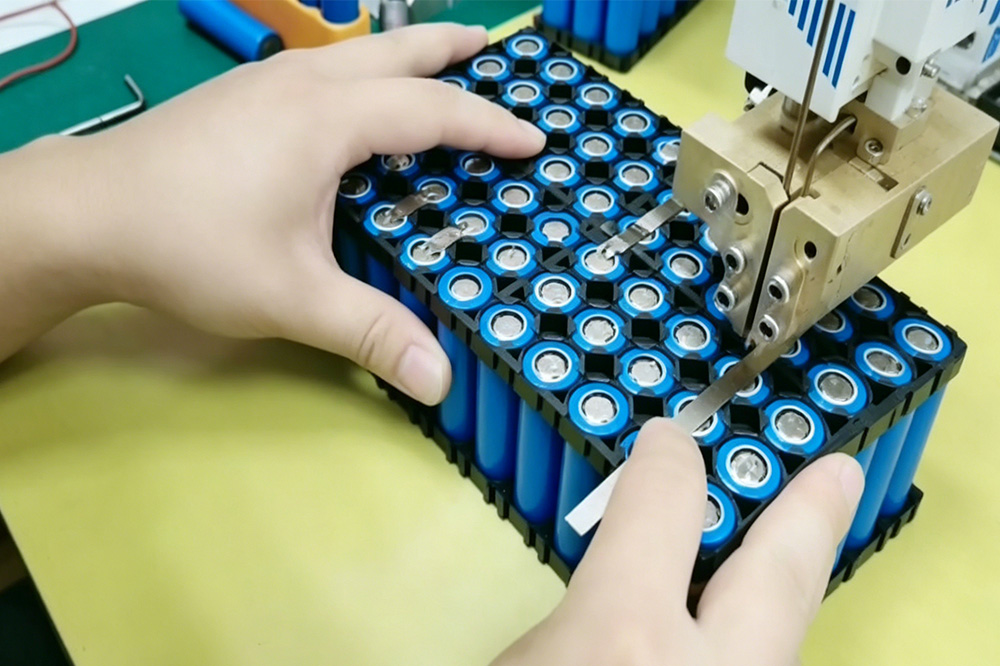
Walk through any battery assembly line and you’ll see rows of cylindrical cells connected together through spot welding.
Manufacturers want a flat, consistent surface for attaching nickel strips.
A flat top cell provides exactly that.
The welding electrodes can make contact more easily, the weld points remain consistent, and automated production becomes faster.
A button top cell introduces an extra component and an uneven surface, which can complicate large-scale assembly.
When you’re producing hundreds or thousands of battery packs every day, even small manufacturing inefficiencies become expensive.
That’s one reason flat top cells dominate the battery pack industry.
Saving Space Adds Up Fast
One thing many people overlook is height.
A button top battery is usually a little taller than its flat top equivalent.
The difference may only be around a millimeter or two, but inside a battery pack containing dozens or even hundreds of cells, those millimeters start stacking up.
Engineers designing:
- E-bike batteries
- Electric scooters
- Solar storage systems
- Portable power stations
- Medical equipment
- Industrial backup systems
often need every bit of available space.
Using flat top cells allows more compact pack designs without sacrificing capacity.
Sometimes that extra room can be used for cooling channels, protective insulation, or a more robust battery management system.
Fewer Components Usually Means Better Reliability
A button top isn’t part of the original cell structure.
It’s typically added afterward.
That means another mechanical connection exists between the battery cell and the device using it.
For individual consumer products, this usually isn’t a major issue.
But in battery packs designed for years of service, manufacturers tend to prefer fewer components and fewer potential failure points.
Flat top cells provide a simpler electrical path and reduce the number of added parts during assembly.
It’s not always a dramatic difference, but battery engineers are usually looking for every opportunity to improve long-term reliability.

Current Delivery Matters Too
Many of the high-drain lithium cells used in battery packs are produced as flat top versions.
That’s partly because these cells are intended for pack assembly from the start.
Applications such as:
- Power tools
- Electric vehicles
- Robotics
- Energy storage systems
- Industrial equipment
often require high discharge rates.
Flat top cells are commonly selected because they integrate directly into welded battery systems designed to handle significant current loads.
The cell itself determines most of the performance, but flat top construction aligns better with the way high-power battery packs are built.
A Real-World Example
Imagine building a 48V e-bike battery.
You might need dozens of cells arranged tightly together.
Every cell gets connected through nickel strips and a battery management system.
In that situation, nobody needs spring-loaded battery contacts.
Nobody needs removable cells.
The goal is a compact, durable pack that can survive vibration, temperature changes, and years of charging cycles.
A flat top cell simply fits that job better.
That’s why you’ll rarely see button top cells inside professionally manufactured e-bike batteries.
Why Button Top Cells Still Exist
That doesn’t mean button top batteries are bad.
They serve a different purpose.
Many consumer devices were designed around traditional battery dimensions and spring contacts.
In those cases, the raised terminal helps ensure reliable electrical contact.
Button top cells are commonly found in:
- Flashlights
- Portable electronics
- Consumer battery holders
- Some emergency equipment
- Certain charging docks
The choice isn’t really about which type is superior.
It’s about matching the battery to the application.
What Battery Pack Manufacturers Usually Buy
For OEM battery pack production, the industry standard is overwhelmingly flat top cells.
The reasons are fairly straightforward:
- Easier spot welding
- Better compatibility with automated assembly
- More compact pack dimensions
- Reduced component count
- Better suitability for custom pack configurations
- Common availability in industrial supply chains
That’s why most battery factories, battery integrators, and energy storage manufacturers source flat top cells rather than button top versions.
Looking for 18650 Cells for Battery Pack Manufacturing?
If you’re developing a custom battery pack, sourcing cells for an energy storage project, or purchasing batteries in bulk for OEM production, it’s worth reviewing the available 18650 cell options before finalizing your design.
Different applications require different discharge rates, capacities, cycle life expectations, and pack configurations.
Explore available 18650 lithium battery solutions here:18650 lithium battery
Whether you’re building e-bike batteries, power tool packs, backup power systems, or industrial lithium battery solutions, choosing the right cell format at the beginning can save significant redesign costs later.
FAQ
Are flat top batteries better than button top batteries?
Not necessarily. Flat top batteries are generally preferred for battery packs and industrial assemblies, while button top batteries are often better suited for devices that use spring-loaded contacts.
Can I replace a flat top battery with a button top battery?
Sometimes, but not always. Device dimensions, contact design, and battery compartment tolerances should be checked before substitution.
Why do e-bike batteries use flat top cells?
Flat top cells are easier to weld into battery packs, occupy less space, and fit automated manufacturing processes used in e-bike battery production.
Are all 18650 batteries flat top?
No. Both flat top and button top versions exist. The choice depends on the intended application.
Do flat top cells have higher capacity?
Capacity depends on the cell design and chemistry, not whether the battery is flat top or button top. However, many high-capacity cells intended for pack assembly are manufactured as flat top versions.
Related Reading
Still comparing terminal styles?
You may also find this guide useful:
Flat Top vs Button Top Batteries: What Actually Matters for Battery Pack Design?
It covers compatibility, device requirements, battery holders, and common mistakes people make when selecting 18650 cells for OEM projects and replacement applications.
-

12V 4400 mah Lithium ion 3S2P 18650 Battery Pack
-

18650 2000mAh 3.7 volt Lithium-ion Battery
-

18650 20V 3.0Ah Cordless Drill battery
-

18650 22.2V 7.8Ah 2600Mah 6S3P Rechargeable Battery Pack
-

18650 2600mAh Rechargeable Lithium-Ion Battery 3.7V
-

18650 3.7V 10Ah Li-Ion Power Battery Pack
-

18650 3.7V 3300mah Rechargeable Lithium ion Battery
-

18650 7S7P 24V 14Ah Lithium ion Electric Scooter Battery Pack
-

18650 battery 3.7V 1500mAh Lithium-Ion Battery
-

18650 Battery 3500 mah Rechargeable Battery Cells
-

18650 Electric Scooter 48V 13000mAh Lithium Battery
-

2600mAh 3S1P 11.1V 18650 Battery Packs
-

3.7V Li ion Rechargeable 3000mah 18650 Battery Cell
-

36V 5200mAh 10S2P 18650 Battery Pack
-

48v 4400mah 13S2P 18650 Rechargeable Battery Pack
-

7S2P 24V 18650 Lithium Battery Pack
-

Electric Scooter 36V 4400mAH 10S2P 18650 Battery Pack
-

ICR 18650 Battery 2200mah 3.7V
Leave a Reply