
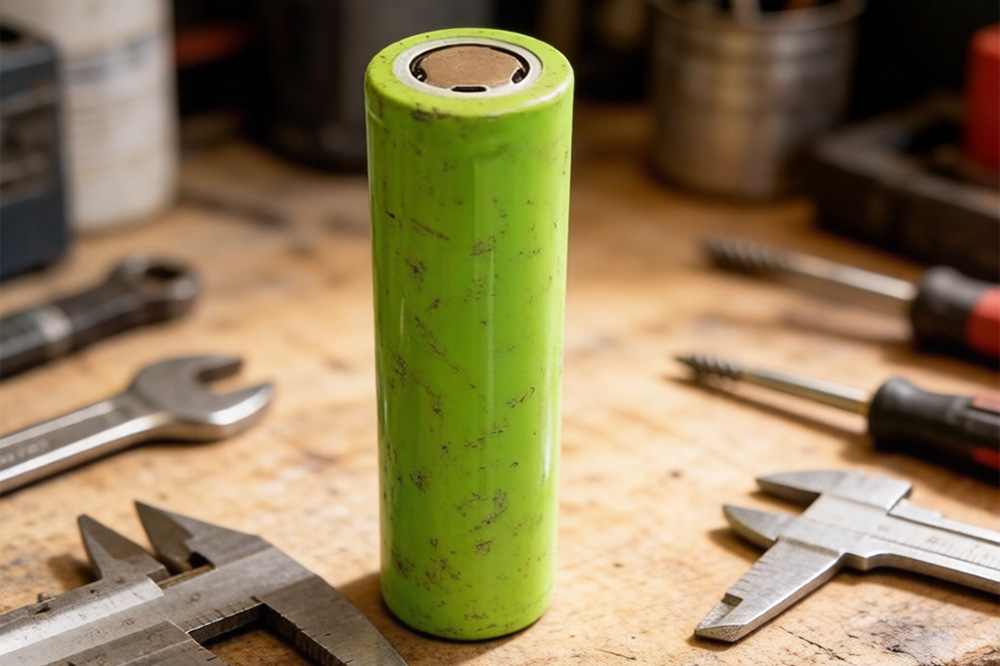
If you search for this question, most answers will give you a clean number.
Something like “3 hours” or “5 hours depending on load.”
But once you actually start using 18650 batteries in real devices, that number becomes less reliable pretty quickly.
A 3000mAh cell doesn’t behave like a fixed timer. It behaves more like a fuel tank that empties at very different speeds depending on how you drive it.
A rough range — but don’t treat it as exact
In light-load devices, the battery can feel surprisingly long-lasting.
Things like small LED lamps or low-power electronics may run somewhere around 4–6 hours, sometimes more if the current stays low and stable.
But once the load increases slightly, the difference becomes obvious.
At moderate discharge levels, maybe around 1A–2A, runtime often drops to roughly 1.5–3 hours.
And in high-drain situations — flashlights on high mode, small motors, or anything pulling several amps — it can fall to under an hour, sometimes even less.
It’s not that the battery is inconsistent. It’s more that the usage conditions are.
Why the math doesn’t always match reality
In theory, people often calculate runtime like this:
capacity ÷ current = usage time
It looks clean on paper, but in practice, it rarely lines up perfectly.
One reason is voltage behavior.
Under higher load, the voltage doesn’t stay flat. It drops faster, and most devices stop working earlier than expected because they hit their cutoff voltage.
So even if some capacity is still left inside the cell, you don’t actually get to use it.
This is something that often surprises first-time users.

Load matters more than people expect
A 3000mAh label doesn’t tell you how the battery behaves under stress.
Two batteries with the same capacity can feel completely different depending on internal resistance and discharge capability.
Under low current, almost any decent 18650 looks fine.
But when the current goes up, differences start to show:
- voltage sag becomes noticeable
- heat increases
- usable capacity feels smaller
This is also why some users say a battery “feels strong” in one device but weak in another.
It’s not imagination — it’s load behavior.
A real usage example that makes it clearer
In one simple flashlight setup, the same 3000mAh cell behaves very differently depending on mode.
On low mode, it can run for hours without much change in brightness.
But switching to high mode changes everything. The battery doesn’t die instantly, but the brightness slowly fades earlier than expected — usually within 40 to 60 minutes in many practical cases.
What stands out is not sudden failure, but gradual decline.
That slow drop is actually more representative of lithium-ion behavior than most spec sheets suggest.

Battery aging is where things quietly change
Another part people often overlook is that performance doesn’t stay stable over time.
After repeated cycles, the battery starts to feel different:
- runtime gets shorter
- voltage drops faster under load
- charging becomes more frequent
Most 18650 cells are typically rated for a few hundred cycles under normal conditions, but real-world usage varies a lot.
Some users barely notice aging for years, while others see changes much sooner, especially in high-drain applications.
It doesn’t fail suddenly. It just becomes less useful gradually.
So what does “end of life” actually mean?
Interestingly, most batteries are not replaced because they stop working completely.
They are replaced because they stop being convenient.
When runtime drops to around 70–80% of original performance, most users already feel the difference in daily use.
At that point, it’s less about technical failure and more about usability.

From a buyer’s perspective, capacity is not the only thing
If you are sourcing 18650 batteries for bulk use, focusing only on “3000mAh” can be misleading.
In real applications, consistency matters more:
- stable discharge curve
- low internal resistance variation
- predictable cycle performance
- safe thermal behavior under load
These factors often decide whether a battery works well in a real product, especially in lighting, power tools, or energy storage systems.
For bulk supply and product categories, you can check here:18650 lithium battery
Note
3000mAh 18650 doesn’t really have a fixed “lasts X hours” answer.
It depends on how hard you push it, how the device is designed, and how fresh the cell is.
In real use, it behaves less like a fixed energy unit, and more like something that changes its pace depending on the situation.
-

12V 4400 mah Lithium ion 3S2P 18650 Battery Pack
-

18650 2000mAh 3.7 volt Lithium-ion Battery
-

18650 20V 3.0Ah Cordless Drill battery
-

18650 22.2V 7.8Ah 2600Mah 6S3P Rechargeable Battery Pack
-

18650 2600mAh Rechargeable Lithium-Ion Battery 3.7V
-

18650 3.7V 10Ah Li-Ion Power Battery Pack
-

18650 3.7V 3300mah Rechargeable Lithium ion Battery
-

18650 7S7P 24V 14Ah Lithium ion Electric Scooter Battery Pack
-

18650 battery 3.7V 1500mAh Lithium-Ion Battery
-

18650 Battery 3500 mah Rechargeable Battery Cells
-

18650 Electric Scooter 48V 13000mAh Lithium Battery
-

2600mAh 3S1P 11.1V 18650 Battery Packs
-

3.7V Li ion Rechargeable 3000mah 18650 Battery Cell
-

36V 5200mAh 10S2P 18650 Battery Pack
-

48v 4400mah 13S2P 18650 Rechargeable Battery Pack
-

7S2P 24V 18650 Lithium Battery Pack
-

Electric Scooter 36V 4400mAH 10S2P 18650 Battery Pack
-

ICR 18650 Battery 2200mah 3.7V
Leave a Reply