
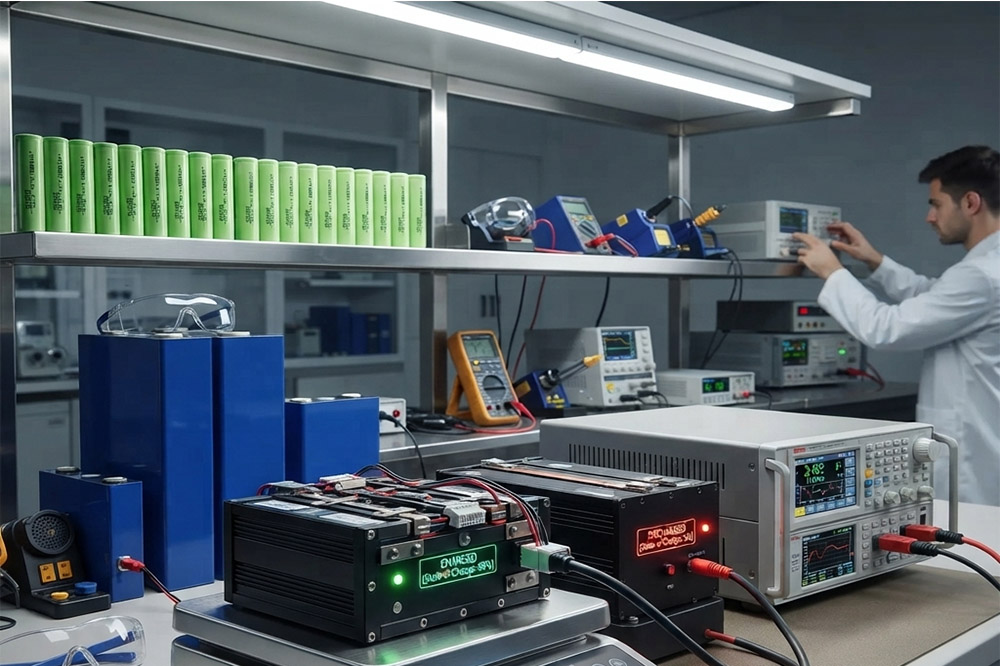
Do batteries weigh more when charged?
Yes, a charged battery technically weighs slightly more than a discharged battery because stored energy has mass. However, the weight difference is extremely small—far below what normal scales can detect. In real applications, battery weight is mainly determined by capacity, chemistry, materials, and design rather than the charging level.
If you have ever held a rechargeable battery before and after charging, you may have wondered:
Does charged battery weigh more than a discharged battery?
The short answer is yes, but only in theory.
A fully charged battery stores more energy than an empty battery. Since energy has mass according to Einstein’s famous equation E=mc², a charged battery technically becomes heavier.
However, the actual weight increase is unbelievably small. For normal lithium batteries, the difference is far below what common electronic scales can measure.
So why do people sometimes notice different weights between charged and discharged batteries?
The answer is usually not the stored electricity itself. The real differences come from battery design, materials, temperature, and manufacturing tolerance.
For battery manufacturers and engineers, the more important question is not whether charging changes weight. It is how to achieve the best balance between capacity, energy density, and battery weight.
Does Charged Battery Actually Weigh More?
When a battery is charging, electrical energy enters the battery and is converted into chemical energy.
Inside a lithium battery:
- Lithium ions move between electrodes
- Chemical energy is stored inside active materials
- The battery reaches a higher energy state
This stored energy technically adds mass.
Using:
E = mc²
we can calculate that the additional mass is extremely small.
For example:
A 100Wh lithium battery stores about 360,000 joules of energy.
The theoretical mass increase is:
around:
0.000000004 grams
That is much smaller than dust particles.
So if you put a 18650 battery on a laboratory scale, you will not see the number increase after charging.

Charged Battery vs Discharged Battery Weight: Why Do Some People See Differences?
Many users have tested:
- RC batteries
- power tool batteries
- electric vehicle batteries
- laptop batteries
Some report:
“My fully charged battery weighs more than my empty battery.”
This can happen, but the reason is usually unrelated to stored energy.
Several factors can affect the measurement.
1. Temperature Changes During Charging
Lithium batteries often become warmer while charging.
Temperature affects:
- battery materials
- internal pressure
- measurement accuracy
A battery measured immediately after charging may show a slightly different weight compared with a cold battery stored overnight.
2. Manufacturing Tolerance Between Cells
Two batteries with the same specification are not always exactly identical.
For example, two 18650 lithium batteries rated at 3000mAh may have small differences in:
- electrode material amount
- separator thickness
- electrolyte quantity
- casing weight
This is normal in battery manufacturing.
For bulk battery buyers, this is why cell consistency and quality control are often more important than the tiny weight change caused by charging.
3. Battery Pack Components Affect Weight More Than Energy
A complete battery pack contains much more than cells.
Weight also comes from:
- BMS protection board
- wires
- connectors
- housing
- insulation materials
For example, an OEM battery pack for an industrial device may weigh differently from a standard battery pack even if both use the same cells.
Does Battery Capacity Affect Weight?
Yes.
Capacity is one of the biggest factors affecting battery weight.
A larger capacity battery usually requires:
- more active materials
- more electrodes
- larger cell structure
For example:
A small 18650 lithium battery may provide:
- 2000mAh
- 2600mAh
- 3000mAh
- 3500mAh
Higher-capacity cells usually weigh slightly more.
However, weight does not increase at the same speed as capacity because battery technology continues improving.
This is where energy density becomes important.
Why 18650 Lithium Batteries Are Popular for Lightweight Applications
Apsenx supplies lithium battery solutions including cylindrical battery cells for applications requiring reliable performance and flexible design.
5
The 18650 lithium battery remains widely used because it offers a good balance between:
- size
- weight
- energy density
- cycle life
- discharge performance
Common applications include:
- power tools
- portable devices
- medical equipment
- robots
- industrial equipment
- backup power systems
For product designers, the question is usually not:
“Can we make the battery lighter?”
Instead:
“How much energy can we get from every gram?”
That is the key measurement.

Battery Weight Is More About Energy Density Than Charging Status
When engineers compare batteries, they usually look at:
Wh/kg (watt-hours per kilogram)
The formula is:
Energy density = Battery energy ÷ Battery weight
A battery with higher energy density can provide more power without adding extra weight.
For example:
Battery A:
- Weight: 5kg
- Energy: 500Wh
Energy density:
100Wh/kg
Battery B:
- Weight: 5kg
- Energy: 800Wh
Energy density:
160Wh/kg
Battery B gives more usable energy with the same weight.
This is especially important for:
- drones
- electric vehicles
- portable robots
- wearable equipment
Are LiFePO4 Batteries Heavier Than Other Lithium Batteries?
Compared with some high-energy lithium chemistries, LiFePO4 batteries are usually heavier for the same capacity.
But weight is only one part of battery selection.
6
LiFePO4 batteries are popular because they offer:
- excellent thermal stability
- long cycle life
- safer chemistry
- high reliability
For applications such as:
- solar energy storage
- golf carts
- RV power systems
- backup power
- industrial equipment
long service life is often more valuable than saving a few kilograms.
Apsenx provides LiFePO4 battery solutions designed for customers who need stable performance and long-term operation.
What Really Determines Lithium Battery Weight?
Charging status has almost no practical effect.
The main factors are:
Battery Chemistry
Different materials create different weight and energy characteristics.
Examples:
- NMC lithium batteries → higher energy density
- LiFePO4 batteries → longer life and higher safety
Battery Capacity
More Ah usually means:
- more active material
- higher battery weight
Battery Structure
A battery pack design affects:
- cooling system
- protection system
- enclosure
- connectors
Cell Size
Common lithium battery formats include:
- 18650
- 21700
- pouch cells
- prismatic cells
Different designs provide different advantages.

How Battery Manufacturers Reduce Weight
Reducing battery weight is not simply removing materials.
A good battery design needs balance.
Manufacturers improve weight efficiency through:
Higher energy density cells
Using advanced lithium chemistry can increase available energy without increasing size.
Optimized pack structure
Reducing unnecessary:
- wiring
- housing materials
- internal space
Custom battery design
A custom battery pack can be designed around:
- voltage requirement
- capacity
- discharge current
- installation space
This is often more effective than choosing a larger standard battery.
Choosing Between 18650 Lithium Battery and LiFePO4 Battery
Different applications need different priorities.
| Application | Recommended Battery |
|---|---|
| Portable electronics | 18650 lithium battery |
| Power tools | High discharge 18650 cells |
| Drones | High energy density lithium battery |
| Solar storage | LiFePO4 battery |
| Golf carts | LiFePO4 battery |
| Industrial equipment | Custom battery pack |

There is no single “best” battery.
The right choice depends on:
- required runtime
- available space
- weight limitation
- safety requirements
- expected cycle life
FAQ About Battery Weight and Charging
Do batteries become heavier when fully charged?
Technically yes, because stored energy has mass. Practically, the difference is too small to measure.
Can normal scale detect charged battery weight changes?
No. The mass increase is far below normal measurement accuracy.
Why does my battery weigh differently after charging?
Usually because of temperature, manufacturing differences, or measurement conditions.
Does bigger lithium battery always weigh more?
Usually yes, but higher energy density technology can provide more energy without a proportional weight increase.
Which lithium battery is lighter, 18650 or LiFePO4?
It depends on capacity and design. 18650 lithium batteries often have higher energy density, while LiFePO4 batteries provide better safety and cycle life.
Final Thoughts: Charging Does Not Make a Battery Noticeably Heavier
So, do batteries weigh more when charged?
The scientific answer is yes.
The practical answer is no.
The added weight from stored energy is too small to matter in real applications.
When selecting lithium batteries, engineers focus on factors that actually affect performance:
- energy density
- battery chemistry
- cycle life
- discharge capability
- pack design
Whether you need lightweight 18650 lithium batteries or long-life LiFePO4 battery solutions, choosing the right cell design is far more important than the tiny weight difference between a charged and discharged battery.
For OEM projects, bulk purchasing, and custom battery pack development, Apsenx provides lithium battery solutions based on application requirements.
-

12.8V 8Ah LiFePO4 Power Wall Battery
-

12V 100Ah LiFePO4 Solar Battery
-

12V 4400 mah Lithium ion 3S2P 18650 Battery Pack
-

18650 2000mAh 3.7 volt Lithium-ion Battery
-

18650 20V 3.0Ah Cordless Drill battery
-

18650 22.2V 7.8Ah 2600Mah 6S3P Rechargeable Battery Pack
-

18650 2600mAh Rechargeable Lithium-Ion Battery 3.7V
-

18650 3.7V 10Ah Li-Ion Power Battery Pack
-

18650 3.7V 3300mah Rechargeable Lithium ion Battery
-

18650 7S7P 24V 14Ah Lithium ion Electric Scooter Battery Pack
-

18650 battery 3.7V 1500mAh Lithium-Ion Battery
-

18650 Battery 3500 mah Rechargeable Battery Cells
-

18650 Electric Scooter 48V 13000mAh Lithium Battery
-

2600mAh 3S1P 11.1V 18650 Battery Packs
-

3.2V 280ah Lifepo4 Battery Cell
-

3.2V 320Ah LifePo4 Battery Cell
-

3.7V Li ion Rechargeable 3000mah 18650 Battery Cell
-

36V 5200mAh 10S2P 18650 Battery Pack
-

48V 200Ah LiFePO4 Battery Solar Power Wall
-

48v 4400mah 13S2P 18650 Rechargeable Battery Pack
-

7S2P 24V 18650 Lithium Battery Pack
-

Electric Scooter 36V 4400mAH 10S2P 18650 Battery Pack
-

ICR 18650 Battery 2200mah 3.7V
-

IP67 48V 100Ah Solid State LiFePO4 Battery
Leave a Reply