
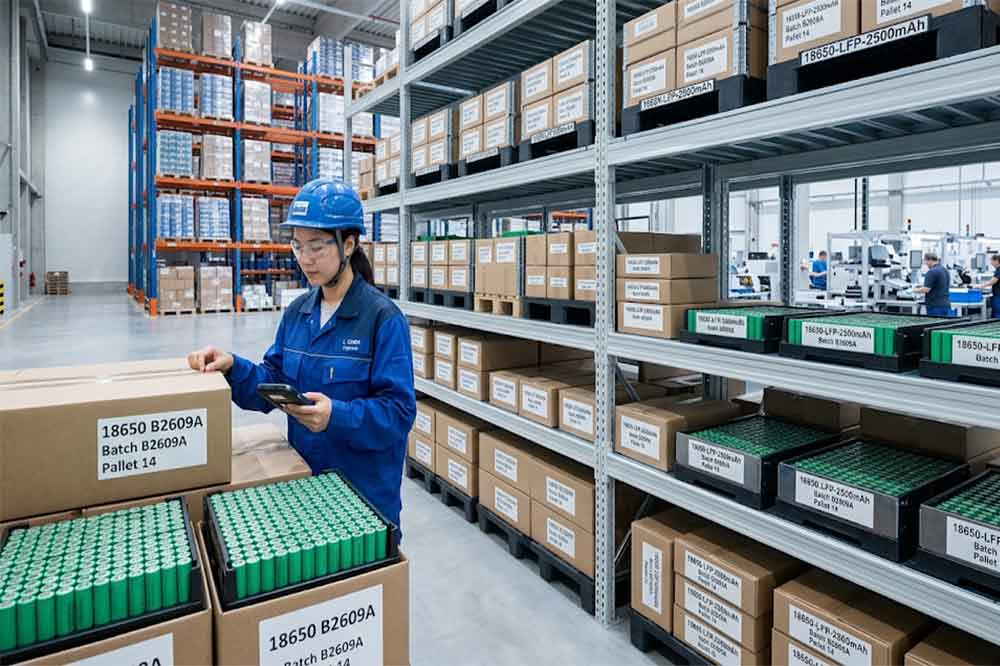
Choosing a standard 18650 battery supplier is an important step for OEM and wholesale buyers.
The cell itself is only part of the purchase.
Buyers also need to understand quality control, testing, production capacity, documents, MOQ, lead time, packaging, and future supply.
A supplier may offer the right cell specification but still be difficult to work with during repeat orders.
For this reason, a supplier should be evaluated before a large purchase.
This is especially important when the cells will be used in custom battery packs.
This guide explains what buyers should ask a standard 18650 battery supplier before placing a bulk order.
Start With the Exact Cell Specification
Before comparing suppliers, define the cell you need.
A clear specification makes supplier comparison easier.
Important information includes:
- Cell size
- Chemistry
- Nominal voltage
- Capacity
- Discharge current
- Internal resistance
- Terminal type
- Protection requirements
- Operating temperature
- Expected quantity
For example, saying “I need 18650 lithium batteries” is not enough for a serious OEM quotation.
A better request could specify:
18650 lithium-ion cell
3.6V nominal
3000mAh
Flat top
Required discharge current
Target annual quantity
The exact specification depends on the application.
For background information, see Standard 18650 Batteries: A Practical Guide for Buyers.
Ask What Type of 18650 Battery the Supplier Provides
The word “18650” describes a physical cell format.
It does not describe the complete electrical specification.
Two 18650 cells can have different:
- Capacity
- Chemistry
- Discharge current
- Internal resistance
- Terminal design
- Performance
Therefore, buyers should ask for the exact cell model.
The supplier should also provide a datasheet when available.
This makes the quotation easier to verify.
Ask for the Cell Datasheet
A datasheet is one of the first documents buyers should request.
It can provide information such as:
- Nominal voltage
- Charging voltage
- Capacity
- Discharge current
- Cutoff voltage
- Weight
- Dimensions
- Operating temperature
- Cycle information
- Storage conditions
The exact information varies between cell models.
A supplier that cannot clearly identify the proposed cell makes technical evaluation more difficult.
For OEM projects, the datasheet should match the actual cell model being quoted.

Check the Rated Capacity
Capacity is one of the most common specifications buyers compare.
However, the rated capacity should be reviewed together with the test conditions.
Ask the supplier:
- What is the rated capacity?
- How is capacity tested?
- What discharge current is used?
- What cutoff voltage is used?
- At what temperature is the test performed?
These details matter.
A capacity number without test conditions provides limited information.
For more information, see Standard 18650 Battery Capacity: 2000mAh, 2600mAh, 3000mAh or 3500mAh?
Check the Discharge Current
Capacity alone does not tell you how much current a cell can provide.
This is especially important for power tools, motor systems, industrial equipment, and other high-load applications.
Ask the supplier for both:
Continuous discharge current
and
Peak or pulse discharge current, when applicable.
The exact rating should come from the cell specification.
Avoid comparing current numbers from different suppliers without checking their test conditions.
For more information, see 18650 Battery Discharge Current: What Buyers Should Check.
Ask About Internal Resistance
Internal resistance can affect voltage drop and heat.
A simple relationship is:
Voltage drop ≈ Current × Resistance
This is why internal resistance becomes more important as the load increases.
For bulk OEM orders, ask:
- How is resistance measured?
- Which testing equipment is used?
- When is the test performed?
- What resistance range is expected?
- Can the supplier provide test records?
The measurement method matters.
Different instruments and test conditions can produce different results.
Ask How the Supplier Matches Cells
Cell matching is important when cells will be used in battery packs.
A supplier may match cells according to:
- Capacity
- Internal resistance
- Voltage
- Self-discharge
- Production batch
The exact process depends on the application.
A low-current device may need different matching requirements from a high-current battery pack.
Check Whether Cells Come From the Same Batch
Production batch information can help with traceability.
It can also make large-scale production easier to control.
However, same-batch cells are not automatically identical.
The supplier should still perform suitable testing.
For large OEM orders, buyers can ask for:
- Cell model
- Production batch
- Production date
- Test records
- Quantity available
- Storage conditions
This information can help with future quality checks.
Ask About Production Date and Storage
Lithium-ion cells are not intended to remain in storage indefinitely.
Storage conditions can affect battery performance over time.
Therefore, buyers should ask about:
- Production date
- Storage time
- Storage temperature
- Storage state of charge
- Warehouse conditions
Fresh production may be preferred for some projects.
However, the actual requirement depends on the application and purchasing plan.
Check the Cell Appearance
Visual inspection is a basic but useful quality-control step.
The supplier should check for:
- Damaged insulation
- Dents
- Corrosion
- Terminal damage
- Abnormal marks
- Contamination
The cell surface should be suitable for the intended battery assembly process.
For large orders, buyers can ask how incoming and outgoing cells are inspected.
Ask About Quality Control
A serious supplier should have a defined quality-control process.
The process may include:
Incoming inspection → Cell testing → Sorting → Matching → Assembly → Final testing
For loose cell orders, the process may stop after cell testing and sorting.
For custom battery packs, additional assembly and pack testing are required.
Ask the supplier what quality checks are performed before shipment.
Do Not Compare Suppliers by Price Alone
Price is easy to compare.
Quality control is harder to compare.
A very low quotation may look attractive at first.
However, the buyer should also consider:
- Cell specification
- Test conditions
- Cell grade
- Production batch
- Documents
- Packaging
- MOQ
- Lead time
- Warranty terms
- Repeat-order consistency
A lower unit price does not necessarily mean a lower total purchasing cost.
For OEM projects, production consistency can be more important than a small difference in cell price.
Understand Cell Grade
Buyers should ask the supplier how the proposed cell is classified.
The supplier should clearly explain the cell condition and specification.
Useful questions include:
- Is the cell new?
- Is it factory production?
- Is it from a current production batch?
- What is the cell model?
- What test results are available?
- Has the cell been stored for an extended period?
Do not rely only on terms such as “premium” or “top quality.”
Technical specifications and test data provide more useful information.
Ask for Samples Before Bulk Orders
Samples are useful for technical verification.
A sample order allows the buyer to check the proposed cell before committing to a large quantity.
The buyer can evaluate:
- Dimensions
- Weight
- Capacity
- Internal resistance
- Discharge performance
- Terminal design
- Physical condition
The test method should be consistent.
For an OEM battery project, the buyer can also build a prototype using the sample cells.
This provides more useful information than reviewing a quotation alone.

Test Samples Under the Actual Application
Laboratory specifications are important.
Real application testing is also valuable.
For example, a battery designer may test sample cells under the actual equipment load.
The test can measure:
- Voltage drop
- Temperature
- Runtime
- Current
- Capacity
- Charging behavior
This helps confirm whether the cell is suitable for the product.
A cell that looks good on paper may still need application testing.
Ask About Certificates and Documents
The required documents depend on the destination, transport method, product type, and application.
Common battery-related documents may include:
- UN38.3
- SDS or MSDS
- CE
- RoHS
- UL-related documentation
- Quality-management documents
Not every document applies to every cell or market.
Therefore, buyers should tell the supplier where the cells will be shipped and how they will be used.
The supplier can then confirm which documents are available and relevant.
Check UN38.3 Documentation
UN38.3 is especially relevant to lithium battery transportation.
Buyers should ask whether the exact battery cell or battery product has the required transportation test documentation.
The document should correspond to the product being shipped.
Do not assume that a document for one battery model automatically applies to another.
For international orders, document verification should happen before shipment.
Ask About MOQ
MOQ means minimum order quantity.
The MOQ may depend on:
- Cell model
- Production schedule
- Stock status
- Packaging
- Custom labeling
- Testing requirements
- OEM requirements
A standard stock cell may have a different MOQ from a custom battery pack.
Buyers should ask for the MOQ before planning the purchase quantity.
Check Stock or Production Lead Time
Lead time is another important purchasing factor.
Ask whether the cells are:
In stock
or
Made to order
These situations can have different delivery schedules.
A supplier should also explain whether testing, matching, packaging, or labeling adds extra time.
For OEM projects, lead time should be considered before the customer’s production schedule is confirmed.
Ask About Repeat Orders
A supplier may support a small first order without guaranteeing the same cell supply later.
Long-term OEM projects need more planning.
Ask:
- Can the same cell model be supplied again?
- How are future batches controlled?
- Can the supplier reserve production capacity?
- How are cell changes communicated?
- What happens if the original model becomes unavailable?
This is particularly important for products with long market cycles.
Check Cell Substitution Rules
Cell substitution can create problems if it happens without approval.
A replacement cell may have different:
- Capacity
- Internal resistance
- Dimensions
- Discharge current
- Charging characteristics
- Weight
Even small changes can affect the battery pack.
Therefore, OEM buyers should agree on a substitution process before mass production.
A supplier should notify the buyer before changing the approved cell model.
Ask About Packaging
Good packaging helps protect cells during transportation and storage.
The packaging should prevent unnecessary movement and physical damage.
Ask about:
- Cell trays
- Inner boxes
- Cartons
- Terminal protection
- Moisture protection
- Quantity per carton
- Shipping labels
The final packaging depends on the product and transport requirements.
For bulk orders, packaging should also make receiving and counting easier.
Check Shipping Requirements
Lithium-ion cells are regulated products for transportation.
Shipping requirements can vary by transport method and destination.
The supplier should understand the required shipping documents and packaging.
For international orders, discuss:
- Air or sea transportation
- Destination country
- Shipping quantity
- Packaging
- Required documents
- Delivery terms
This should happen before the goods are ready to ship.
Ask About OEM and Custom Support
Not every standard 18650 supplier is an OEM battery manufacturer.
If the project requires a complete battery pack, ask whether the supplier can support:
- Battery pack assembly
- BMS integration
- Nickel welding
- Connectors
- Wires
- Housing
- Labels
- Packaging
- Custom dimensions
This can simplify communication.
Instead of sourcing cells from one supplier and pack assembly from another, an OEM buyer may prefer one supplier for the complete project.
For more information, see How to Select 18650 Batteries for Custom Battery Pack Manufacturing.
Check the Supplier’s Production Capability
Production capability matters when the order becomes larger.
Ask about:
- Production area
- Assembly lines
- Testing equipment
- QC personnel
- Monthly capacity
- Warehouse capacity
- OEM experience
The exact numbers matter less than whether the supplier can support the required order volume consistently.
A supplier should be able to explain how the production process supports the requested quantity.
Ask About Quality Records
Quality records can improve traceability.
Depending on the project, records may include:
- Incoming inspection
- Capacity test results
- Resistance test results
- Cell matching records
- Production batch information
- Final inspection
- Shipment records
Not every project requires every record.
However, industrial OEM customers may need more detailed documentation than standard wholesale buyers.
Ask About Warranty and Quality Claims
Before placing a large order, understand how quality problems are handled.
Ask the supplier:
- What is the warranty period?
- How are defective cells handled?
- What evidence is required?
- How are claims reviewed?
- How are replacement cells arranged?
The exact terms should be agreed before the order.
A clear process can reduce disputes later.
Compare Suppliers With the Same Specification
A common purchasing mistake is comparing different products as if they were identical.
For example:
Supplier A offers:
3000mAh 18650 cell
Supplier B also offers:
3000mAh 18650 cell
The numbers look the same.
However, the cells may differ in:
- Manufacturer
- Model
- Discharge current
- Resistance
- Test conditions
- Production date
- Batch
- Documents
Therefore, supplier comparison should use the same technical specification.
A Simple Supplier Comparison Table
A buyer can create a table like this:
| Item | Supplier A | Supplier B | Supplier C |
|---|---|---|---|
| Cell model | Confirm | Confirm | Confirm |
| Capacity | Confirm | Confirm | Confirm |
| Discharge current | Confirm | Confirm | Confirm |
| Resistance | Confirm | Confirm | Confirm |
| MOQ | Confirm | Confirm | Confirm |
| Sample | Confirm | Confirm | Confirm |
| Documents | Confirm | Confirm | Confirm |
| Lead time | Confirm | Confirm | Confirm |
| Repeat supply | Confirm | Confirm | Confirm |
| OEM support | Confirm | Confirm | Confirm |
The goal is not simply to find the lowest quotation.
The goal is to make the suppliers easier to compare.
What Should You Include in an 18650 RFQ?
A clear RFQ can save time for both sides.
For example:
Product: 18650 lithium-ion cell
Capacity: 3000mAh
Nominal voltage: 3.6V or specified requirement
Terminal: Flat top
Discharge current: Required value
Quantity: Required quantity
Application: OEM battery pack
Destination: Shipping destination
Documents: Required compliance documents
Packaging: Bulk or specified packaging
Sample: Required before bulk order
The supplier can then respond with a more accurate quotation.
18650 Supplier Evaluation Checklist
Before placing a bulk order, check:
- Exact cell model
- Datasheet
- Capacity
- Test conditions
- Discharge current
- Internal resistance
- Terminal type
- Production batch
- Production date
- Storage conditions
- Cell matching
- Sample availability
- Quality-control process
- Required documents
- MOQ
- Lead time
- Packaging
- Shipping requirements
- Repeat-order capability
- Cell substitution policy
- OEM support
- Warranty terms
This checklist can be used during supplier comparison.
Common Mistakes When Choosing 18650 Supplier
Choosing the Lowest Price
A low price does not tell you enough about the actual cell.
Asking Only for Capacity
Capacity does not describe the complete performance of the cell.
Skipping Samples
A sample can reveal problems before a large purchase.
Ignoring Test Conditions
Two suppliers may report capacity or resistance using different methods.
Not Checking Production Date
Storage history can matter for battery cells.
Forgetting Future Supply
A supplier may support the first order but have limited long-term availability.
Accepting Cell Substitution Without Approval
A different cell model can change the battery design.
Checking Documents After Shipment
Required transportation and compliance documents should be confirmed before shipment.
Standard 18650 Battery Supplier: What Good Communication Looks Like
Good supplier communication is specific.
Instead of asking:
What is your best price for 18650 batteries?
A better request is:
We need 18650 lithium-ion cells for an OEM battery pack. The target capacity is 3000mAh. Please provide the cell model, datasheet, nominal voltage, maximum continuous discharge current, internal resistance range, MOQ, sample availability, production lead time, available documents, and bulk-order lead time.
This gives the supplier enough information to provide a useful response.
It also makes supplier comparison easier.

When Should You Place the Bulk Order?
The timing depends on the project.
For a new OEM product, the safer sequence is:
Specification → Supplier review → Sample → Testing → Prototype → Approval → Bulk order
This approach reduces the risk of ordering a large quantity before the cell is verified.
For an existing product with an approved cell, the process can be shorter.
However, buyers should still confirm the current batch and supply status.
Final Checklist Before Purchase
Before approving the purchase order, confirm:
Technical
- Cell model
- Capacity
- Voltage
- Current
- Resistance
- Dimensions
- Terminal type
Quality
- Sample test
- Cell matching
- Batch information
- Production date
- QC process
Documents
- Datasheet
- SDS/MSDS
- UN38.3 where applicable
- Other required documents
Commercial
- MOQ
- Quantity
- Lead time
- Payment terms
- Warranty
- Packaging
- Shipping
Long-term
- Repeat supply
- Cell substitution policy
- Batch consistency
- OEM support
A supplier that can answer these questions clearly is easier to evaluate.
Conclusion
Choosing a standard 18650 battery supplier should involve more than comparing quotations.
The buyer should verify the actual cell model, technical specifications, test methods, production information, quality-control process, documents, MOQ, and lead time.
For OEM projects, long-term supply also matters.
A suitable supplier should be able to support both the initial order and future production.
The practical process is:
Define the cell → compare suppliers → request samples → test the cells → approve the supplier → place the bulk order → control repeat production.
This approach gives buyers a clearer view of the actual product behind the quotation.
It also helps reduce surprises during bulk purchasing and custom battery pack production.
FAQ
How do I choose standard 18650 battery supplier?
Start by checking the exact cell model, capacity, discharge current, resistance, datasheet, sample availability, quality-control process, documents, MOQ, and lead time.
What should I ask 18650 battery supplier?
Ask about the cell model, test conditions, production batch, capacity, internal resistance, discharge current, samples, documents, MOQ, lead time, packaging, and repeat supply.
Should I order samples before buying 18650 batteries in bulk?
For a new supplier or OEM project, samples are useful. They allow buyers to verify the cell before committing to a large quantity.
What documents should 18650 battery supplier provide?
Depending on the market and shipment, buyers may need a datasheet, SDS/MSDS, UN38.3-related transportation documentation, and other applicable compliance documents.
Why does the production date matter for 18650 cells?
Production date provides useful information about cell age and storage history. It can also help buyers maintain better batch traceability.
-

12V 4400 mah Lithium ion 3S2P 18650 Battery Pack
-

18650 2000mAh 3.7 volt Lithium-ion Battery
-

18650 20V 3.0Ah Cordless Drill battery
-

18650 22.2V 7.8Ah 2600Mah 6S3P Rechargeable Battery Pack
-

18650 2600mAh Rechargeable Lithium-Ion Battery 3.7V
-

18650 3.7V 10Ah Li-Ion Power Battery Pack
-

18650 3.7V 3300mah Rechargeable Lithium ion Battery
-

18650 7S7P 24V 14Ah Lithium ion Electric Scooter Battery Pack
-

18650 battery 3.7V 1500mAh Lithium-Ion Battery
-

18650 Battery 3500 mah Rechargeable Battery Cells
-

18650 Electric Scooter 48V 13000mAh Lithium Battery
-

2600mAh 3S1P 11.1V 18650 Battery Packs
-

3.7V Li ion Rechargeable 3000mah 18650 Battery Cell
-

36V 5200mAh 10S2P 18650 Battery Pack
-

48v 4400mah 13S2P 18650 Rechargeable Battery Pack
-

7S2P 24V 18650 Lithium Battery Pack
-

Electric Scooter 36V 4400mAH 10S2P 18650 Battery Pack
-

ICR 18650 Battery 2200mah 3.7V
Leave a Reply