
Portable electronics often look simple from the outside. Inside, however, a battery must fit a limited space, supply enough current, work with the device’s charging system, and remain reliable over repeated use. Choosing a cell by capacity alone can lead to problems that are not obvious until the device reaches testing or production.
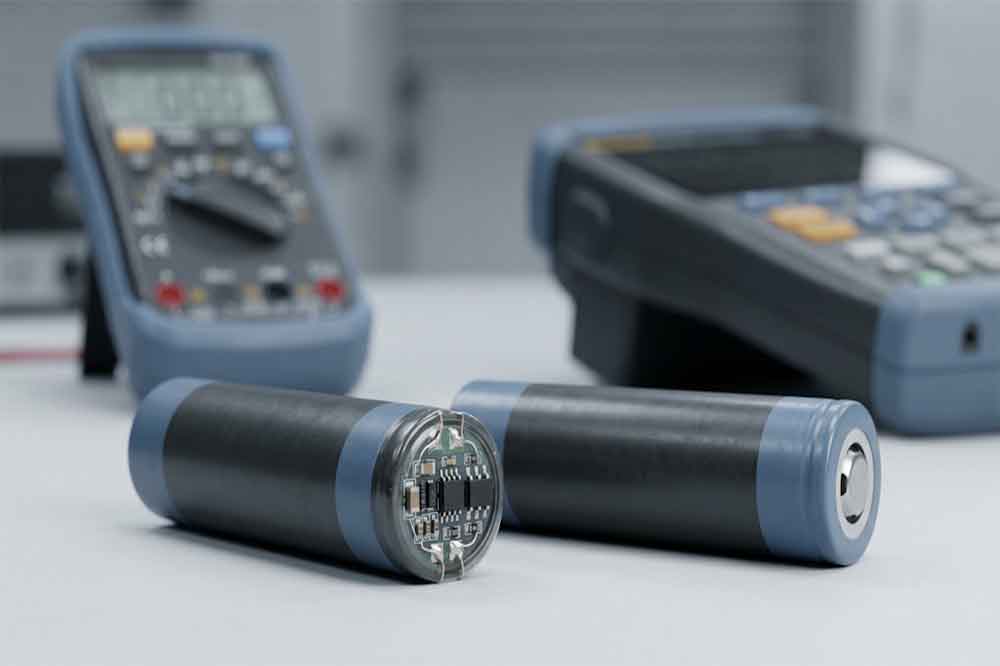
A protected 18650 battery for electronics combines a cylindrical lithium-ion cell with a small protection circuit, usually fitted at one end of the cell assembly. This circuit adds a layer of electrical protection, but it also affects the battery’s overall length, current capability, and compatibility with the equipment.
For product developers and purchasing teams, the important question is not simply whether a battery is protected. It is whether the complete battery assembly matches the device’s electrical and mechanical requirements.
Why Portable Electronics Use Protected 18650 Batteries
The 18650 format is used in many rechargeable devices because it offers a useful balance of capacity, size, and availability. Depending on the application, it may be found in portable instruments, selected communication devices, lighting equipment, monitoring products, and other electronic systems.
A protected version can be useful when the equipment uses a removable single-cell battery and the designer wants an additional layer of protection against certain electrical faults. The circuit may help interrupt operation when the cell voltage moves beyond its configured limits or when excessive current or a short circuit is detected.
That does not mean every portable electronic product needs a protected cell. Some devices already contain battery-management electronics, while others use custom battery packs with a separate battery management system (BMS). Adding another protection circuit without checking the design can create compatibility issues.
The intended use matters. A low-power data logger, for example, has different current demands from a portable instrument with a motor, radio transmitter, or bright LED. Battery selection should begin with the device’s actual operating conditions rather than a general assumption that one protected 18650 model suits every product.
For equipment used in medical environments or demanding industrial settings, read our guide to [protected 18650 batteries for medical and industrial devices] to understand protection limits, operating conditions, and OEM selection requirements
What the Protection Circuit Actually Does
A protected 18650 battery normally includes a small protection circuit connected to the cell. Depending on its design, the circuit monitors conditions such as cell voltage and current, then disconnects the load or charging path when a defined limit is reached.
The exact protection functions and thresholds vary by circuit. Buyers should request the relevant specifications instead of assuming that every protected battery has identical behavior.
Overcharge and Over-Discharge Protection
Lithium-ion cells have specified voltage limits for charging and discharging. Charging beyond the cell’s permitted limit or continuing to discharge below its recommended minimum can damage the cell and create safety risks.
A protection circuit can help interrupt charging or discharging when its voltage thresholds are reached. It is not a replacement for a compatible charger, appropriate charging control, or proper device-level design. The charger must still use a charging profile suitable for the exact cell chemistry and series configuration.
For equipment that remains connected to a charger for long periods, the charging system and battery protection should be assessed together. A protected cell cannot correct an unsuitable charger or a poorly designed charging circuit.
Overcurrent and Short-Circuit Protection
Portable electronics do not always draw a steady current. A wireless device may transmit in bursts, while a motor or high-output LED can create a temporary current surge during startup or a change in operating mode.
If the current exceeds the protection circuit’s operating threshold, the circuit may disconnect the battery. That response can protect against some fault conditions, but it may also cause unwanted shutdowns if the battery is not matched to the device’s peak demand.
Check the continuous discharge rating, allowable peak current, and protection trip behavior. A statement such as “overcurrent protection included” does not tell you whether the battery will support the actual load.

Check Battery Compatibility Before Choosing a Cell
Voltage and Charging Requirements
A standard 18650 lithium-ion cell is commonly specified with a nominal voltage of 3.6V or 3.7V, depending on the manufacturer’s convention. Its full-charge voltage is typically 4.2V for conventional lithium-ion chemistries designed for that limit, but the cell datasheet must confirm the permitted range.
Nominal voltage is not the same as full-charge voltage. The device must tolerate the battery’s full operating voltage range, and the charger must be compatible with the specific cell.
This distinction becomes especially important when replacing an existing battery. A device label may show nominal voltage only, while the internal electronics must handle the higher voltage immediately after charging.
Before ordering, compare the battery’s nominal voltage, charging limit, discharge cutoff, and chemistry with the device specification. For more detail, see the guide to protected 18650 battery voltage differences
Battery Dimensions and Terminal Style
The name “18650” describes a nominal cylindrical cell size, not a guarantee that every protected battery will fit the same holder. Adding a protection circuit and associated construction can make a protected version longer than an unprotected cell. The final dimensions also depend on the cell design, terminal construction, and outer wrapping.
Measure the available battery compartment, including its length, diameter, spring travel, and contact arrangement. Check whether the device requires a flat-top or button-top terminal, and confirm that the contact pressure is sufficient without forcing the battery into place.
This is particularly important for compact consumer electronics. A few millimeters of extra length may prevent the cover from closing or place unnecessary pressure on the contacts. Do not rely only on a product photograph or the nominal 18650 designation.
The protected 18650 battery dimensions guide explains the measurements buyers should verify before placing an order.

Continuous Discharge Current
Current demand can be more important than capacity. A battery with a high mAh rating may still be unsuitable if its protection circuit or cell cannot support the load.
For example, a portable measurement instrument may consume little current while displaying readings but draw more when its wireless module transmits data. A handheld device with a motor may draw a much larger startup current than it uses during steady operation.
Calculate the expected operating current and identify any short-duration peaks. Then compare these figures with the cell’s discharge rating and the protection circuit’s limits. Ask the supplier whether the quoted current is a continuous rating or a short-term maximum.
The protection circuit can become the limiting component even when the underlying cell is capable of delivering more current. For additional guidance, refer to protected 18650 discharge current limits .
Capacity, Runtime, and Real-World Power Consumption
Battery capacity is usually expressed in milliamp-hours (mAh). A higher capacity can provide longer runtime under comparable conditions, but the label alone cannot predict how long a device will operate.
Actual runtime depends on average current consumption, the device’s duty cycle, the usable portion of the battery’s capacity, temperature, cell age, and the point at which the device or protection circuit stops operation.
As a simplified example, a device drawing an average of 200mA from a battery rated at 2,000mAh might suggest around 10 hours of operation based on capacity divided by current. This is only a rough estimate. Real runtime may be shorter because the load is not perfectly constant and the full rated capacity may not be available under the device’s operating conditions.
For electronics that spend much of their time in standby, measure consumption in both sleep and active modes. A small standby current can become significant over several days or weeks. For products with intermittent radio transmission, test a representative usage pattern rather than running the device continuously and treating that result as normal operation.
Also consider how capacity is measured. Different discharge currents and cutoff voltages can produce different test results. When comparing supplier datasheets, make sure the test conditions are reasonably consistent.
When a Protected 18650 Battery May Not Be Suitable
Protection is useful, but a protected cell is not automatically the best choice for every design.
First, the additional circuit and construction can increase the overall battery length. A device designed around a tightly fitted unprotected cell may not have enough room.
Second, the circuit’s current threshold may not support the equipment’s startup surge or peak operating mode. The result may be an unexpected shutdown even when the cell itself has sufficient capacity.
Third, some products already use a dedicated BMS or have carefully specified charging and cutoff electronics. The battery and device protections should be reviewed as a complete system. Two layers of protection are not necessarily a problem, but their thresholds and reset behavior must be compatible.
Finally, not every application uses a removable single-cell battery. Equipment requiring several cells, custom wiring, communication functions, or a specific enclosure may need an engineered battery pack rather than a protected standalone 18650 cell.
For a flashlight application, the same questions about terminal style, length, and peak current remain relevant. The article on choosing a protected 18650 battery for a flashlight discusses these concerns in a specific device context.
What OEM Buyers Should Confirm With a Battery Supplier
For a product manufacturer, confirming a part number is only the start of battery qualification. The battery specification should be reviewed against the product’s electrical design, enclosure, charging method, and expected use.
Ask the supplier for the cell chemistry, nominal capacity, nominal voltage, full-charge voltage, discharge cutoff, continuous discharge rating, and permitted operating temperature range. Request the protected battery’s complete dimensions, including its terminals, and identify the required terminal style.
The protection circuit also deserves attention. Confirm which faults it is designed to detect, the relevant thresholds, and whether the circuit supports the device’s startup and peak current. If the product uses a proprietary charger or has its own battery-management circuitry, provide those details during the compatibility review.
For OEM or wholesale orders, it is sensible to evaluate samples in the actual device before approving production. Check charging behavior, runtime, startup performance, low-battery behavior, and recovery after a protection event. Test across representative operating temperatures where the product is expected to be used.
If the project requires a particular length, connector, label, or packaging format, communicate those requirements before sample approval. A battery that works electrically but does not fit the enclosure is still the wrong part.
A reliable selection process brings the cell, protection circuit, charger, and device together. That is a better basis for procurement than choosing the highest capacity or the lowest quoted price.

FAQ
1. Does every portable electronic device need a protected 18650 battery?
No. The choice depends on the device’s protection design, current demand, battery compartment, and charging system. Some products are designed for protected cells, while others require a different cell or a custom battery pack.
2. Is a protected 18650 battery larger than an unprotected one?
It can be. The added protection circuit and construction may increase the overall length. Check the supplier’s actual dimensions rather than relying only on the 18650 designation.
3. Can I use a higher-capacity protected 18650 battery?
Only if its voltage, dimensions, terminal style, discharge capability, and charging requirements are compatible with the device. A higher mAh rating alone does not guarantee longer runtime in every operating condition.
4. Can the protection circuit cause a device to shut down?
Yes. If the current or voltage reaches the circuit’s trip threshold, it may disconnect the battery. A mismatch between the circuit’s limits and the device’s peak demand can cause unwanted shutdowns.
5. What should OEM buyers request before ordering?
Request the cell datasheet, protection specifications, complete dimensions, discharge ratings, charging limits, and sample test results. Validate the battery in the target device before approving mass production.
Related Products
-

12V 4400 mah Lithium ion 3S2P 18650 Battery Pack
-

18650 2000mAh 3.7 volt Lithium-ion Battery
-

18650 20V 3.0Ah Cordless Drill battery
-

18650 22.2V 7.8Ah 2600Mah 6S3P Rechargeable Battery Pack
-

18650 2600mAh Rechargeable Lithium-Ion Battery 3.7V
-

18650 3.7V 10Ah Li-Ion Power Battery Pack
-

18650 3.7V 3300mah Rechargeable Lithium ion Battery
-

18650 7S7P 24V 14Ah Lithium ion Electric Scooter Battery Pack
-

18650 battery 3.7V 1500mAh Lithium-Ion Battery
-

18650 Battery 3500 mah Rechargeable Battery Cells
-

18650 Electric Scooter 48V 13000mAh Lithium Battery
-

2600mAh 3S1P 11.1V 18650 Battery Packs
-

3.7V Li ion Rechargeable 3000mah 18650 Battery Cell
-

36V 5200mAh 10S2P 18650 Battery Pack
-

48v 4400mah 13S2P 18650 Rechargeable Battery Pack
-

7S2P 24V 18650 Lithium Battery Pack
-

Electric Scooter 36V 4400mAH 10S2P 18650 Battery Pack
-

ICR 18650 Battery 2200mah 3.7V
Leave a Reply