
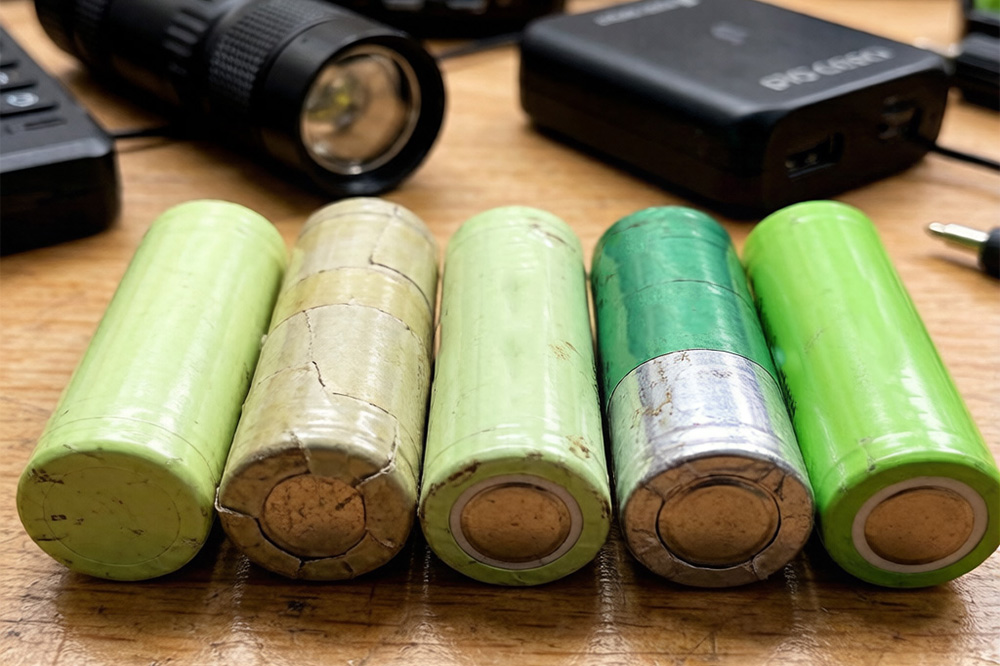
Are All 3000mAh 18650 Batteries The Same?
No — they are not all the same.At first glance, “3000mAh 18650 battery” sounds like a fixed standard. Same size, same capacity, so it should behave the same, right?
But once you actually start using them in flashlights, battery packs, solar storage, or DIY electronics, the differences show up pretty quickly. Sometimes subtly. Sometimes very obviously.
And this is where a lot of confusion starts.
Same number, different behavior
The “3000mAh” label only tells you how much energy a cell might store under specific test conditions. It doesn’t guarantee how fast it can deliver that energy, or how stable it stays under load.
People who’ve worked with these cells in real setups often notice something like this:
- One battery holds voltage steady longer
- Another drops voltage quickly under heavy load
- Two “3000mAh” cells give noticeably different runtime
That’s because capacity is only one part of the picture.
Inside the cell, chemistry and construction vary. Even small differences in electrode quality or internal resistance can change how the battery behaves in real devices.

Interchangeable? Not always in practice
Technically, most 18650 cells share the same physical size, so they can “fit” in the same slot.
But compatibility is more than just fitting.
In real-world use (especially in battery packs or high-drain devices), issues can appear:
- Mixed internal resistance can cause uneven discharge
- Some cells heat up faster than others
- Battery management systems may cut off earlier than expected
- Total usable capacity ends up lower than expected
This is why people building battery packs often avoid mixing cells, even if they all say 3000mAh.
High-drain vs low-drain matters more than people expect
A common misunderstanding is assuming all 3000mAh batteries can handle the same load.
They can’t.
Some are designed for energy storage (long runtime, moderate load). Others are built for high-drain use (fast power delivery for tools, vaping devices, high-powered flashlights, etc.).
When you push a low-drain cell too hard, you might see:
- Voltage sag
- Excess heat
- Shortened lifespan
- Reduced safety margin
In discussions among flashlight users and DIY builders, this is probably one of the most repeated “learn it the hard way” lessons.

Capacity rating isn’t always equally reliable
Another subtle issue: not every “3000mAh” label reflects the same testing standard or honesty level.
Some cells are rated under ideal lab conditions, while others reflect more conservative or realistic testing.
That’s why real-world runtime comparisons often don’t match the printed spec.
It’s also why experienced users tend to trust consistent sourcing over headline numbers.
A quick comparison that makes it clearer
Think of it like bottled water.
Two bottles may both say “500ml,” but:
- one might have better filtration
- one might be pressurized differently
- one might taste slightly different depending on mineral content
Same volume, different experience.
18650 batteries behave in a similar way — same size, same label, but not identical performance.
Where this becomes important in real use
You don’t really notice battery differences when the load is light.
But it becomes obvious in:
- LED flashlights running at high brightness
- DIY battery packs
- Solar energy storage systems
- Electric tools
- High-drain portable devices
In these setups, consistency matters more than peak capacity.
A mismatched cell can drag down the whole system.

So what should you actually look for?
Instead of only focusing on “3000mAh,” it helps to think in a broader way:
- Consistent discharge rating
- Internal resistance stability
- Cycle life (how many charge/discharge cycles it survives)
- Whether the cells are matched in batch (for packs)
- Verified sourcing and quality control
Capacity is just one number on the label — not the full story.
A practical note for buyers and bulk users
If you’re sourcing 18650 batteries for production, assembly, or resale, the real concern usually isn’t “what’s the highest mAh?”
It’s more like:
- Are these cells consistent across batches?
- Do they behave the same under load?
- Will they age evenly in a pack?
This is where supplier consistency matters more than marketing specs.
For deeper specifications and product range reference, you can check here:18650 lithium battery
Conclusion
If there’s one thing people usually realize after working with these batteries for a while, it’s this:
3000mAh is a label, not a guarantee of identical performance.
And once you’ve seen a few real setups behave differently, you stop trusting the number alone.
You start looking at how the battery actually behaves — not just what’s printed on the wrapper.
-

12V 4400 mah Lithium ion 3S2P 18650 Battery Pack
-

18650 2000mAh 3.7 volt Lithium-ion Battery
-

18650 20V 3.0Ah Cordless Drill battery
-

18650 22.2V 7.8Ah 2600Mah 6S3P Rechargeable Battery Pack
-

18650 2600mAh Rechargeable Lithium-Ion Battery 3.7V
-

18650 3.7V 10Ah Li-Ion Power Battery Pack
-

18650 3.7V 3300mah Rechargeable Lithium ion Battery
-

18650 7S7P 24V 14Ah Lithium ion Electric Scooter Battery Pack
-

18650 battery 3.7V 1500mAh Lithium-Ion Battery
-

18650 Battery 3500 mah Rechargeable Battery Cells
-

18650 Electric Scooter 48V 13000mAh Lithium Battery
-

2600mAh 3S1P 11.1V 18650 Battery Packs
-

3.7V Li ion Rechargeable 3000mah 18650 Battery Cell
-

36V 5200mAh 10S2P 18650 Battery Pack
-

48v 4400mah 13S2P 18650 Rechargeable Battery Pack
-

7S2P 24V 18650 Lithium Battery Pack
-

Electric Scooter 36V 4400mAH 10S2P 18650 Battery Pack
-

ICR 18650 Battery 2200mah 3.7V
Leave a Reply