
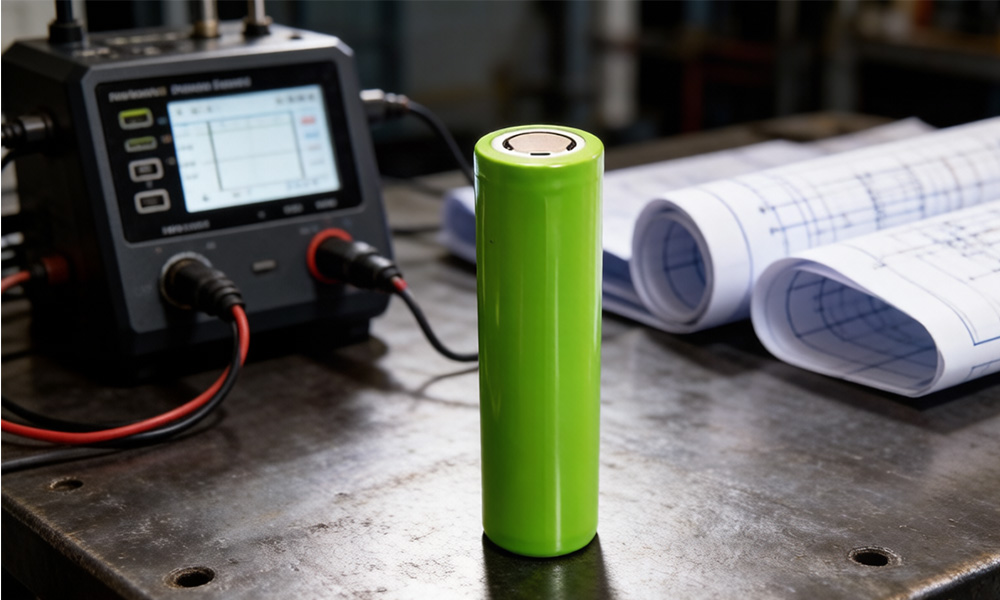
If you’re shopping for a high quality 18650 battery, the process looks easy at first.
One battery claims 3500mAh.
Another promises longer runtime.
A third advertises ultra-high discharge performance.
On paper, comparing them seems straightforward.
In reality, it rarely is.
After spending years around flashlight enthusiasts, battery pack manufacturers, and industrial buyers, I’ve noticed something interesting. The batteries that perform best in the real world are not always the ones with the most impressive specifications.
Sometimes two cells with nearly identical datasheets behave completely differently after six months of use.
That surprises a lot of first-time buyers.
When a Battery Looks Great on Paper but Fails in Production
A manufacturer of portable lighting equipment once shared a problem that sounded familiar.
The prototype stage went smoothly.
Runtime met expectations.
Temperature stayed within limits.
Everything seemed ready for mass production.
Then customer complaints started arriving several months after launch.
The batteries were losing capacity faster than expected.
Engineers checked the charger.
They checked the protection circuit.
They checked the firmware.
The actual issue turned out to be the battery supply chain.
The specifications printed on the cell hadn’t changed, but the source of the cells had.
From a purchasing perspective, that’s one of the biggest lessons in the lithium battery industry: a specification sheet tells only part of the story.
Consistency often matters more than impressive numbers.

Why Experienced Users Become Skeptical of “5000mAh” 18650 Batteries
Most people naturally assume higher capacity is better.
That’s reasonable.
The problem is that every battery format has physical limitations.
An 18650 cell is fixed in size:
- Approximately 18mm in diameter
- Approximately 65mm in length
There is only so much energy that can fit inside that space.
This is why experienced users on flashlight forums tend to react cautiously when they see claims like:
- 5000mAh
- 6800mAh
- 8800mAh
- 9900mAh
Instead of excitement, the first reaction is usually suspicion.
Over the years, many hobbyists have tested batteries that looked impressive online but delivered far less capacity than advertised.
One quick clue is weight.
While battery weight alone cannot determine quality, cells with unrealistic capacity claims are often noticeably lighter than expected.
It’s not proof, but it’s often the first warning sign.
High Capacity Doesn’t Automatically Mean High Quality
This is probably one of the biggest misunderstandings in the market.
People often use the terms interchangeably.
They shouldn’t.
A battery can have excellent capacity while performing poorly under load.
Likewise, a battery with slightly lower capacity may deliver a much better overall user experience.
In battery communities, experienced users often pay attention to factors such as:
- Voltage stability
- Internal resistance
- Heat generation
- Cycle life
- Batch consistency
Imagine two batteries rated at 3500mAh.
The first performs exceptionally well during the first 100 cycles but begins degrading rapidly afterward.
The second starts with slightly lower capacity but remains stable for hundreds of additional cycles.
For a consumer, either battery may seem acceptable.
For an OEM manufacturer dealing with warranty claims, the second battery is usually far more valuable.

The Highest Capacity Cell Isn’t Always the Best Choice
Last year I spoke with a company developing remote agricultural monitoring equipment.
Their devices spent most of the day sleeping and transmitted data only a few times daily.
The customer initially wanted the highest-capacity battery available.
After reviewing the system, it became clear that battery capacity wasn’t the main problem.
Standby power consumption was.
Once the engineering team optimized the device’s sleep mode, runtime increased significantly without changing the battery at all.
This kind of situation appears more often than people think.
Many projects focus on battery capacity when the real bottleneck is elsewhere.
A larger battery isn’t always the smartest solution.
Sometimes system efficiency delivers a much bigger improvement.
Why Flashlight Enthusiasts Talk About Voltage Curves
Most consumers never think about discharge curves.
Battery enthusiasts discuss them constantly.
Here’s why.
Suppose two batteries both have a rated capacity of 3000mAh.
The numbers suggest they should perform similarly.
In practice, they may feel completely different.
Some batteries experience voltage sag early during discharge.
Brightness drops sooner.
Performance feels weaker.
Other batteries maintain a more stable voltage for a longer period.
The flashlight stays brighter.
The device feels more consistent.
Capacity is only one part of runtime.
Voltage behavior often has a surprisingly large impact on actual performance.
The Biggest Concern for OEM Buyers Isn’t Usually Price
It’s consistency.
A supplier may offer batteries at a lower cost.
The samples perform well.
Everything looks promising.
Then production begins.
A few months later, quality variations start appearing.
Internal resistance changes.
Capacity spread increases.
Battery packs become harder to balance.
Protection systems trigger more frequently.
Customer complaints rise.
At that point, the original savings become insignificant compared to warranty costs and reputation damage.
This is why experienced procurement teams ask a different question.
Not:
“What’s your lowest price?”
But:
“Will the batteries you ship six months from now perform exactly like the batteries you ship today?”
The answer to that question often reveals far more about supplier quality.
High Drain and High Capacity Usually Require Compromise
Many buyers search for a battery that offers:
- Maximum capacity
- Maximum discharge current
- Long cycle life
- Low operating temperature
- Low cost
The reality is less convenient.
Battery design involves trade-offs.
A camper using a headlamp during multi-day trips may prioritize runtime.
An industrial device powering high-output LEDs may prioritize current delivery.
A cordless power tool may focus on discharge performance.
Each application values something different.
The best battery is rarely the one with the highest specification in every category.
It’s the one optimized for the actual application.

One Number That Reveals More Than Most Buyers Realize
If I’m reviewing a battery test report, capacity isn’t always the first thing I look at.
Often, I check internal resistance.
Internal resistance can reveal a surprising amount about cell quality.
Lower resistance generally means:
- Better power delivery
- Reduced voltage drop
- Less heat generation
- Improved high-load performance
In many industrial applications, changes in internal resistance become noticeable long before capacity loss becomes obvious.
Some engineers monitor resistance trends throughout a battery’s life because it provides an earlier indication of aging.
Questions Worth Asking Before Buying 18650 Batteries in Bulk
Many buyers focus immediately on capacity and pricing.
Those factors matter, but they rarely tell the full story.
For OEM projects and wholesale purchasing, questions like these are often more important:
- Can the cell source be traced?
- Are batch test reports available?
- How long have the cells been in storage?
- Are cells capacity-matched before shipment?
- How consistent are production batches?
- Is long-term supply stability available?
These questions may not sound exciting.
They won’t appear in flashy advertisements.
But they often determine whether a battery project succeeds or becomes a costly support issue later.
In the end, high quality 18650 battery is rarely defined by the largest number printed on the wrapper.
It’s usually defined by something much less visible:
Stable performance, predictable behavior, and consistency from one shipment to the next.
-

12V 4400 mah Lithium ion 3S2P 18650 Battery Pack
-

18650 2000mAh 3.7 volt Lithium-ion Battery
-

18650 20V 3.0Ah Cordless Drill battery
-

18650 22.2V 7.8Ah 2600Mah 6S3P Rechargeable Battery Pack
-

18650 2600mAh Rechargeable Lithium-Ion Battery 3.7V
-

18650 3.7V 10Ah Li-Ion Power Battery Pack
-

18650 3.7V 3300mah Rechargeable Lithium ion Battery
-

18650 7S7P 24V 14Ah Lithium ion Electric Scooter Battery Pack
-

18650 battery 3.7V 1500mAh Lithium-Ion Battery
-

18650 Battery 3500 mah Rechargeable Battery Cells
-

18650 Electric Scooter 48V 13000mAh Lithium Battery
-

2600mAh 3S1P 11.1V 18650 Battery Packs
-

3.7V Li ion Rechargeable 3000mah 18650 Battery Cell
-

36V 5200mAh 10S2P 18650 Battery Pack
-

48v 4400mah 13S2P 18650 Rechargeable Battery Pack
-

7S2P 24V 18650 Lithium Battery Pack
-

Electric Scooter 36V 4400mAH 10S2P 18650 Battery Pack
-

ICR 18650 Battery 2200mah 3.7V
Leave a Reply